What is MSc Clinical Embryology Course?Course FAQs
MSc Clinical Embryology Course is a postgraduate program designed for students who want to build a career in IVF, assisted reproductive technology, fertility science and embryology laboratory practice. The course focuses on human reproductive biology, gamete handling, embryo culture, IVF procedures, ICSI basics, cryopreservation, laboratory safety and quality control. Students learn both theoretical concepts and practical applications used in modern IVF centres. This course is suitable for life science graduates, biotechnology students, microbiology students, zoology graduates and candidates from related medical or biological science backgrounds. A good MSc Clinical Embryology program helps students develop the skills required to work as embryologists, IVF lab executives, research associates and reproductive medicine professionals.
Who is eligible for MSc Clinical Embryology Course?Course FAQs
Eligibility for MSc Clinical Embryology Course usually depends on the institute and university norms. In most cases, students with a bachelor’s degree in life sciences, biotechnology, microbiology, zoology, biochemistry, genetics, medical laboratory technology or related biological science fields can apply. Some institutes may also consider MBBS, BDS, BPharm, MPharm, nursing or allied health science graduates depending on the course structure. Students should check the official admission criteria before applying. Candidates who are interested in fertility science, IVF laboratory work, reproductive medicine and clinical research can benefit from this program. A science background is important because the course includes cell biology, reproductive physiology, embryology techniques and laboratory-based learning.
What is the duration of MSc Clinical Embryology Course?Course FAQs
The duration of MSc Clinical Embryology Course is generally 2 years. The program is usually divided into semesters and includes classroom learning, practical training, laboratory exposure, assignments, case discussions and project work. During the course, students study reproductive biology, andrology, embryology procedures, IVF lab management, embryo culture, cryopreservation, quality control and ethical aspects of assisted reproduction. Some institutes may also include internship or clinical observation as part of the learning process. The duration may vary slightly depending on university guidelines, but a two-year structure gives students enough time to understand both theory and practical embryology skills required for IVF and fertility centres.
What is Clinical Embryology Course?Course FAQs
Clinical Embryology Course is a specialized program focused on the study of human reproduction, fertilization, embryo development and assisted reproductive technologies. It prepares students for careers in IVF laboratories, fertility clinics, reproductive medicine centres and research organizations. The course teaches important topics such as semen analysis, oocyte handling, sperm preparation, IVF procedures, ICSI overview, embryo grading, cryopreservation, lab safety and documentation. Clinical embryology is a skill-based field, so practical exposure is very important. Students who want to become embryologists or work in the IVF industry should choose a course that offers strong laboratory learning, experienced faculty and placement assistance.
What is the difference between MSc Clinical Embryology and Clinical Embryology Certificate Course?Course FAQs
MSc Clinical Embryology is a full postgraduate degree program, usually completed in two years, while a Clinical Embryology Certificate Course is generally a short-term training program. MSc Clinical Embryology provides deeper academic knowledge, structured curriculum, practical exposure and better career growth opportunities. A certificate course is useful for candidates who want basic exposure, skill enhancement or introductory training in IVF lab techniques. For long-term career development as an embryologist, MSc Clinical Embryology is usually more valuable. However, certificate courses can be useful for working professionals, doctors, lab technicians or students who want short-term practical training before choosing a full degree program.
What is IVF Embryology Course?Course FAQs
IVF Embryology Course is a specialized training program that focuses on assisted reproductive technology and IVF laboratory procedures. The course helps students understand how eggs, sperm and embryos are handled inside an IVF lab. Key learning areas may include semen preparation, oocyte assessment, fertilization techniques, embryo culture, embryo grading, cryopreservation, lab equipment handling and quality control. IVF embryology is highly practical, so students should look for a course that provides hands-on training or real laboratory exposure. This course is useful for students who want to work in fertility clinics, IVF centres, reproductive medicine labs and embryology-related healthcare roles.
What are the career opportunities after MSc Clinical Embryology?Course FAQs
After completing MSc Clinical Embryology, students can explore career opportunities in IVF centres, fertility hospitals, reproductive medicine clinics, embryology laboratories and research institutions. Common job roles include junior embryologist, clinical embryologist, IVF lab executive, andrology lab assistant, research associate, fertility coordinator and laboratory quality control assistant. With experience, candidates can grow into senior embryologist or IVF lab manager roles. The demand for trained embryology professionals is increasing because fertility treatments and assisted reproductive technologies are becoming more common. Career growth depends on practical skills, lab exposure, communication, ethics, documentation and continuous learning in reproductive medicine.
Is placement assistance provided after Clinical Embryology Course?Course FAQs
Many good Clinical Embryology institutes provide placement assistance, but students should verify the details before admission. Placement assistance may include resume preparation, interview guidance, industry connections, internship support, referrals to IVF centres and career counselling. Since embryology is a practical and skill-based field, institutes with strong IVF lab exposure and industry network can provide better career support. Students should not only look at placement promises but also check faculty experience, practical training facilities, alumni feedback and tie-ups with fertility centres. A strong placement support system can help students start their career faster after completing the course.
What is the average salary after Clinical Embryology Course?Course FAQs
Salary after Clinical Embryology Course depends on qualification, practical skills, location, institute reputation, internship exposure and the type of IVF centre. Freshers may start with entry-level roles such as junior embryologist, lab assistant or IVF lab executive. With experience and strong hands-on skills, salary can increase significantly. Senior embryologists and IVF lab managers may earn higher packages depending on expertise and clinic volume. Students should focus on practical learning, lab discipline, documentation, embryo handling knowledge and continuous upskilling because these factors directly affect career growth. Salary should be seen as a growth journey, not just the first job package.
How can I apply for MSc Clinical Embryology Admission?Course FAQs
Students can apply for MSc Clinical Embryology Admission by filling out the enquiry or admission form on the institute website. After submitting basic details such as name, phone number, email, qualification and course interest, the admission counsellor usually contacts the student for eligibility checking and counselling. The next steps may include document verification, course guidance, fee discussion, scholarship information and admission confirmation. Students should keep academic documents, ID proof, photographs and qualification certificates ready. Before applying, candidates should confirm course duration, eligibility, university collaboration, practical training, placement assistance and scholarship availability.
What is the admission process for MSc Clinical Embryology Course?Course FAQs
The admission process for MSc Clinical Embryology Course is designed to make the application simple and transparent. Candidates usually begin by submitting an online enquiry or application form with their personal and academic details. After the enquiry is received, the admission team contacts the candidate to explain the course structure, eligibility criteria, curriculum, fee details, scholarship opportunities and career prospects. Students are then asked to submit academic documents for verification. Once eligibility is confirmed, they receive admission guidance, fee payment instructions and joining details. Before confirming admission, students should also understand the practical training facilities, laboratory exposure, internship opportunities and placement assistance provided by the institute.
Is direct admission available for MSc Clinical Embryology Course?Course FAQs
Many institutes provide direct admission based on eligibility criteria and seat availability. Candidates who meet the required educational qualifications may be eligible to apply without appearing for a separate entrance examination, depending on the institute or university policy. Direct admission generally includes counselling, document verification and fee confirmation before the admission is finalized. Students should verify whether the institute offers university-approved admission procedures and whether practical training, laboratory facilities and placement support are included. Choosing an institute with transparent admission policies and experienced faculty can help students make a better career decision.
Is there any entrance exam for MSc Clinical Embryology Admission?Course FAQs
Entrance examination requirements depend on the admission policy of the institute or university. Some universities conduct entrance tests, while others provide admission based on academic performance, counselling and document verification. Candidates should always check the latest admission guidelines before applying. Even if an entrance examination is not mandatory, students should prepare themselves with a basic understanding of biology, genetics, biotechnology and human reproduction because these subjects form the foundation of clinical embryology education. A good academic background and interest in reproductive medicine can improve learning throughout the course.
What documents are required for MSc Clinical Embryology Admission?Course FAQs
Most institutes require candidates to submit educational certificates, mark sheets, government identity proof, passport-size photographs and address proof during admission. Some institutes may also request migration certificates, transfer certificates or category certificates wherever applicable. Candidates should keep both original documents and photocopies ready for verification. It is advisable to confirm the complete document checklist with the admission office before visiting the campus. Submitting accurate documents on time helps ensure that the admission process is completed smoothly without unnecessary delays.
What is the course fee for MSc Clinical Embryology?Course FAQs
The course fee for MSc Clinical Embryology varies depending on the university, institute, facilities offered, practical laboratory exposure and industry collaborations. Students should compare not only the tuition fee but also the value provided through laboratory training, experienced faculty, infrastructure, placement assistance and internship opportunities. Some institutes also offer scholarships, installment options or education loan guidance to support deserving candidates. Instead of selecting a course only on the basis of fees, students should evaluate the overall quality of education and career opportunities available after completion of the program.
Are scholarships available for Clinical Embryology students?Course FAQs
Many institutes offer scholarships based on academic performance, merit, early admission or special scholarship schemes announced during the admission season. Scholarship availability, eligibility criteria and benefits may differ from one institute to another. Students should enquire about scholarship deadlines, required documents and applicable terms before completing their admission. Receiving a scholarship can reduce the financial burden and encourage students to focus more on academic excellence and practical learning. It is always recommended to apply early because scholarship seats are often limited.
Does the Clinical Embryology Course provide practical training?Course FAQs
Practical training is one of the most important components of a Clinical Embryology Course. Students learn laboratory techniques related to sperm preparation, oocyte handling, embryo culture, cryopreservation, laboratory quality control, documentation and IVF workflow under expert supervision. Practical exposure helps students understand real laboratory procedures and prepares them for professional responsibilities in fertility clinics and IVF centres. Before taking admission, candidates should confirm the availability of modern laboratory facilities, practical sessions and industry-oriented training because practical knowledge plays a major role in career development within the embryology field.
What is the difference between Clinical Embryology and IVF Embryology?Course FAQs
Clinical Embryology is a broader discipline that covers reproductive biology, embryo development, laboratory techniques, ethics and assisted reproductive technology. IVF Embryology specifically focuses on laboratory procedures used in in-vitro fertilization treatment, including fertilization techniques, embryo culture, embryo grading and cryopreservation. Students interested in building a long-term career in fertility science generally begin with Clinical Embryology and later specialize in IVF laboratory practices through advanced training and practical experience. Both fields are closely connected and offer excellent career opportunities in fertility centres and reproductive medicine.
What are the job opportunities after completing an IVF Embryology Course?Course FAQs
After completing an IVF Embryology Course, students may find employment opportunities in IVF clinics, fertility hospitals, reproductive medicine centres, embryology laboratories and research organizations. Common job profiles include junior embryologist, IVF laboratory executive, embryology technician, research associate, quality control assistant and fertility laboratory coordinator. With practical experience and continuous skill development, professionals can progress to senior embryologist or laboratory management roles. The increasing demand for assisted reproductive technology has created new opportunities for qualified embryology professionals across India and internationally.
Why should students choose Embryopath for Clinical Embryology training?Course FAQs
Students should choose an institute that emphasizes practical learning, experienced faculty, modern laboratory facilities and career-oriented education. Embryopath focuses on providing structured academic learning along with laboratory exposure, mentorship and placement assistance. Students receive guidance from qualified professionals and gain knowledge that aligns with current practices in reproductive medicine and assisted reproductive technology. The learning environment encourages skill development, ethical laboratory practices and professional growth, helping students prepare for careers in IVF centres, fertility clinics and embryology laboratories. Selecting an institute with a strong academic foundation and industry exposure can significantly improve long-term career prospects.
Which is the best Clinical Embryology Institute in India?Course FAQs
The best Clinical Embryology Institute in India is one that combines academic excellence with practical laboratory training, experienced faculty, modern IVF infrastructure and strong placement assistance. Students should compare institutes based on curriculum, hands-on training, laboratory exposure, university collaborations, faculty expertise, student support and career outcomes rather than choosing only on the basis of fees. An institute that regularly updates its curriculum according to current IVF practices and provides industry exposure can help students build a successful career in reproductive medicine. Reading student reviews, visiting the campus and understanding the training methodology before admission can help candidates make an informed decision.
What skills are required to become a successful Clinical Embryologist?Course FAQs
A successful Clinical Embryologist requires scientific knowledge, laboratory precision, analytical thinking, patience and attention to detail. Since embryologists work with reproductive cells and embryos, maintaining laboratory standards and following quality control procedures are extremely important. Communication skills, ethical responsibility, documentation practices and the ability to work under pressure are also valuable. Continuous learning is essential because assisted reproductive technology continues to evolve with new laboratory techniques and research. Students who develop both theoretical knowledge and practical laboratory skills have better career opportunities in the IVF industry.
Can students work abroad after completing a Clinical Embryology Course?Course FAQs
Yes, many students aim to build international careers after gaining the required qualifications, practical experience and professional skills. Opportunities depend on the regulations of the destination country, licensing requirements, work experience and employer expectations. Many developed countries have growing demand for qualified embryology professionals because fertility treatments continue to increase worldwide. Students interested in overseas careers should focus on practical laboratory training, quality management systems, scientific knowledge and professional communication. Building strong technical skills during the course improves future career prospects both in India and internationally.
What practical laboratory training is included in a Clinical Embryology Course?Course FAQs
A quality Clinical Embryology Course usually includes laboratory exposure covering semen analysis, sperm preparation, oocyte handling, embryo culture, embryo assessment, cryopreservation concepts, laboratory quality control, documentation procedures and equipment handling. Students also learn laboratory safety, infection control, ethical practices and standard operating procedures followed in IVF laboratories. Practical sessions help bridge the gap between classroom education and professional work environments. Choosing an institute with well-equipped laboratories and supervised practical training helps students become more confident before entering the healthcare industry.
Is Clinical Embryology a good career option in India?Course FAQs
Clinical Embryology is considered one of the emerging healthcare career options because infertility treatment and assisted reproductive technology services are expanding across India. The demand for qualified embryologists continues to increase as more fertility centres and IVF clinics are established. Students with strong academic knowledge, practical laboratory experience and professional ethics have good long-term career potential. Besides employment opportunities, continuous advancements in reproductive medicine also create opportunities in research, laboratory management, academics and specialized fertility services. Career growth depends on practical expertise, continuous learning and industry experience.
What is the difference between an Embryologist and an IVF Specialist?Course FAQs
An Embryologist is primarily responsible for laboratory procedures involving eggs, sperm and embryos during IVF treatment. Their work includes embryo culture, fertilization techniques, embryo assessment, laboratory quality control and documentation. An IVF Specialist, on the other hand, is generally a medical doctor specializing in fertility treatment and patient management. While doctors diagnose infertility and manage treatment plans, embryologists perform the scientific laboratory procedures that support successful assisted reproductive treatments. Both professionals work together as part of an IVF team to provide comprehensive fertility care.
Why is practical training important in Clinical Embryology?Course FAQs
Clinical Embryology is a highly practical profession where theoretical knowledge alone is not sufficient. Students need laboratory exposure to understand equipment handling, embryo culture techniques, quality control procedures and scientific documentation. Practical learning develops confidence, improves technical accuracy and prepares students for real clinical environments. Employers generally prefer candidates who have hands-on laboratory experience because they require less initial training after recruitment. Students should therefore select institutes that emphasize supervised laboratory practice alongside classroom education.
How does placement assistance help students after completing the course?Course FAQs
Placement assistance supports students by connecting them with employment opportunities in IVF centres, fertility hospitals, reproductive medicine clinics and research laboratories. Institutes may provide resume preparation, interview guidance, career counselling, internship opportunities and employer referrals. Placement support increases student confidence and helps them transition from academic learning to professional practice. However, final job selection depends on individual performance, technical skills, communication abilities and interview results. Students should actively participate in training sessions and practical learning to improve employability.
What should students consider before choosing a Clinical Embryology Institute?Course FAQs
Before selecting an institute, students should carefully evaluate the curriculum, faculty qualifications, laboratory facilities, practical training opportunities, university collaborations, placement assistance, student reviews, infrastructure and academic reputation. They should also understand the fee structure, scholarship options, internship availability and career support services. Visiting the campus, interacting with faculty members and discussing career opportunities with admission counsellors can help students make a better decision. Choosing the right institute is an important step toward building a successful career in clinical embryology and reproductive medicine.
How can students prepare for a successful career in Clinical Embryology?Course FAQs
Students can prepare for a successful career by building a strong foundation in biology, genetics, reproductive science and laboratory techniques. During the course, they should actively participate in practical sessions, laboratory demonstrations, seminars, workshops and research activities. Developing communication skills, maintaining scientific accuracy and following laboratory ethics are equally important. Staying updated with advances in assisted reproductive technology and learning from experienced faculty members further enhances professional growth. A combination of academic knowledge, practical expertise and continuous learning provides the best foundation for long-term success in the field of Clinical Embryology.
Why should I choose Embryopath for MSc Clinical Embryology Course in India?Course FAQs
Embryopath is committed to providing industry-focused education through its MSc Clinical Embryology Course. The program is offered in academic collaboration with GD Goenka University, giving students access to a structured curriculum that combines theoretical knowledge with practical laboratory exposure. Students receive guidance from experienced faculty members, modern laboratory learning opportunities and career-oriented training. Those looking for the Best MSc Clinical Embryology Course in India should evaluate faculty expertise, practical learning, curriculum quality and placement support before making their admission decision.
Is the MSc Clinical Embryology Course offered in collaboration with GD Goenka University?Course FAQs
Yes. Embryopath offers the MSc Clinical Embryology Course in academic collaboration with GD Goenka University. The collaboration aims to provide students with a well-structured academic program supported by practical learning, scientific knowledge and industry-oriented training. Students are encouraged to contact the admission team to understand the latest eligibility criteria, admission process, curriculum and scholarship opportunities available for the current academic session.
Why is Embryopath considered a leading Clinical Embryology Training Institute?Course FAQs
Embryopath focuses on practical learning, experienced faculty, laboratory exposure and career development. Students receive training designed to prepare them for professional roles in IVF laboratories and fertility centres. As a Clinical Embryology Training Institute, the emphasis is on developing technical skills, scientific understanding and laboratory confidence. The institute also supports students with academic guidance, career counselling and placement assistance to help them prepare for opportunities in reproductive medicine.
Does Embryopath provide placement assistance after the Clinical Embryology Course?Course FAQs
Yes. Embryopath provides placement assistance to eligible students through career guidance, interview preparation and industry support. Students enrolled in the Clinical Embryology Course, MSc Clinical Embryology Course or IVF Embryology Course are encouraged to participate actively in practical training and skill development, as technical competence plays an important role in employment opportunities. Placement outcomes depend on individual performance, available opportunities and employer requirements.
What makes Embryopath different from other Embryology Institutes in India?Course FAQs
Embryopath differentiates itself through its focus on academic quality, practical laboratory exposure and industry-oriented learning. Offered in collaboration with GD Goenka University, the programs are designed to prepare students for careers in IVF laboratories and reproductive medicine. Students should compare institutes based on faculty, laboratory infrastructure, curriculum, placement assistance and practical learning rather than relying only on fee comparisons.
Can students from any state in India apply for admission to Embryopath?Course FAQs
Yes. Students from different states across India can apply, provided they meet the eligibility criteria for the chosen program. Whether applying for the MSc Clinical Embryology Course, Clinical Embryology Course, IVF Embryology Course or PG Course in Clinical Embryology, candidates should complete the admission enquiry process and submit the required documents for verification. The admission team provides counselling and guidance throughout the process.
Does Embryopath provide hands-on IVF laboratory training?Course FAQs
Practical learning is an important part of the educational approach at Embryopath. Students enrolled in the IVF Embryology Course, Clinical Embryology Training Institute programs and MSc Clinical Embryology Course receive laboratory-oriented learning under academic supervision. Practical sessions are intended to help students understand laboratory procedures, documentation standards, quality control and professional practices followed in assisted reproductive technology.
How do I apply for admission to Embryopath?Course FAQs
Students can apply by filling out the online admission enquiry form available on the Embryopath website. After the enquiry is submitted, the admission team contacts the applicant to discuss eligibility, course options, fees, scholarship opportunities and the admission process. Candidates interested in the MSc Clinical Embryology Admission 2026, Clinical Embryology Course Admission or Embryology Course in India should apply early because admissions may be subject to seat availability.
Does Embryopath offer scholarships for Clinical Embryology Courses?Course FAQs
Embryopath may offer scholarships or admission benefits based on the institute's current admission policy and applicable eligibility criteria. Students applying for the MSc Clinical Embryology Course, PG Course in Clinical Embryology or IVF Embryology Course are advised to contact the admission office for the latest information on scholarship schemes, documentation requirements and application deadlines. Scholarship availability can vary from one admission session to another.
Why should I choose Embryopath and GD Goenka University for a career in Clinical Embryology?Course FAQs
Choosing the right institute is one of the most important decisions for students planning a career in reproductive medicine. Embryopath, in academic collaboration with GD Goenka University, aims to provide quality education, practical laboratory exposure, experienced faculty, career guidance and placement assistance. Students looking for the Best Embryology Institute in India, Clinical Embryology Institute, MSc Clinical Embryology Course or IVF Embryology Training Institute should evaluate the curriculum, laboratory facilities, academic environment and long-term career support before making their final decision.




















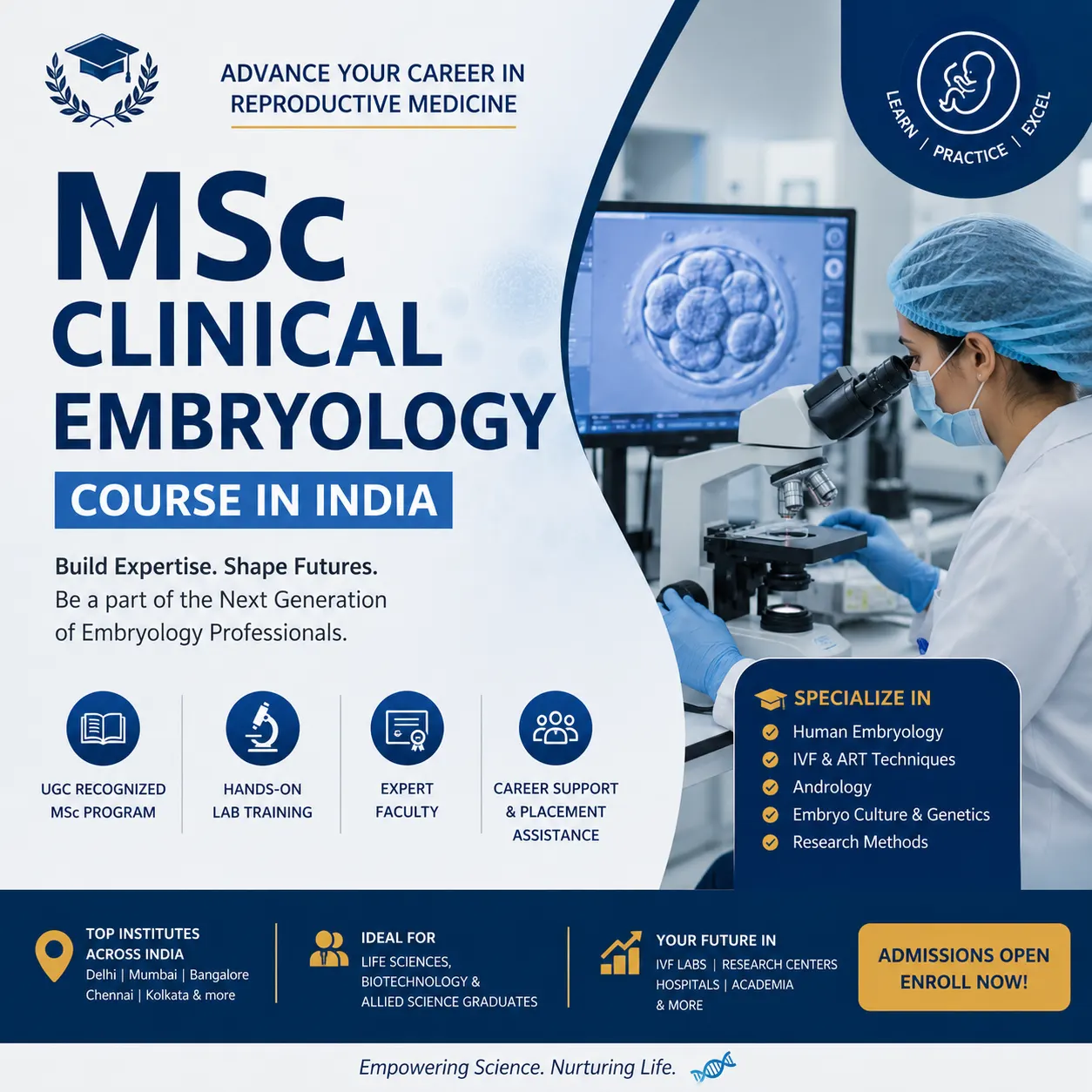 MSc Clinical Embryology