
Clinical Embryology Training Fees | EmbryoPath India
Understanding Clinical Embryology Training Fees is an essential step for students who are planning a professional career in reproductive medicine and assisted reproductive technology (ART). Choosing the right institute involves evaluating not only the fee structure but also the quality of education, practical laboratory exposure, academic recognition, faculty expertise, and long-term career opportunities.
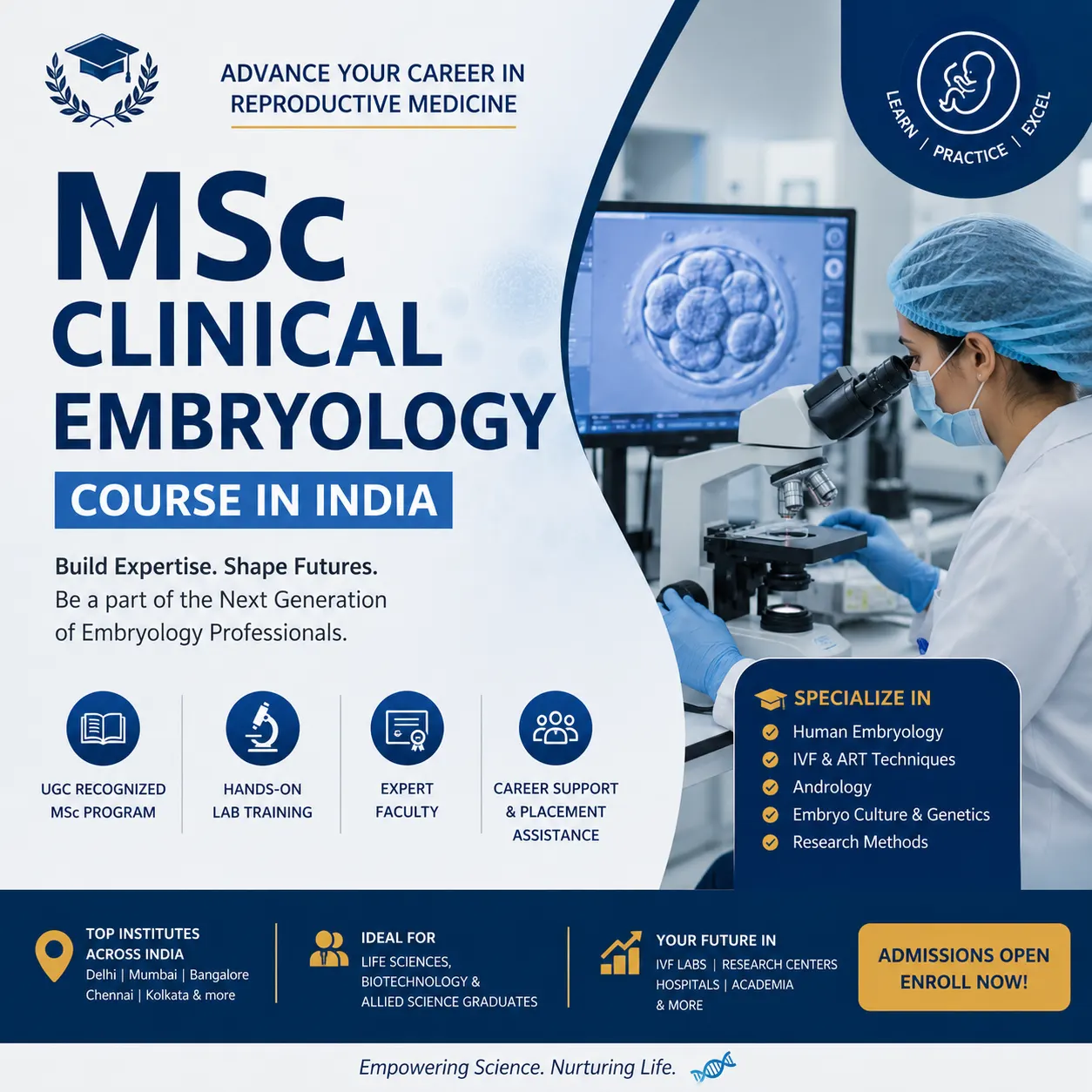
EmbryoPath, in academic collaboration with GD Goenka University, offers a structured learning environment designed for aspiring clinical embryologists. The institute emphasizes practical knowledge, laboratory experience, scientific learning, and professional development to help students prepare for careers in IVF laboratories and fertility centres across India.
Why Clinical Embryology Education Matters
Clinical embryology plays a vital role in modern fertility treatment. Embryologists work alongside fertility specialists to perform laboratory procedures that contribute to assisted reproductive technologies such as IVF and ICSI. Proper education enables students to understand laboratory protocols, quality management, embryo culture techniques, cryopreservation principles, and ethical laboratory practices.
Selecting a training program should involve considering educational quality, laboratory facilities, faculty support, curriculum relevance, and career guidance in addition to the overall investment in education.
Understanding Clinical Embryology Training Fees
When comparing Clinical Embryology Training Fees, students should look beyond the tuition amount and consider the overall academic value offered by the institute. A comprehensive program often includes theoretical learning, practical laboratory sessions, mentorship, academic resources, and career support.
Fee structures may vary depending on several factors, including:
- Course duration
- Curriculum depth
- Hands-on laboratory exposure
- Faculty expertise
- Academic collaborations
- Laboratory infrastructure
- Research opportunities
- Career guidance services
- Certification and academic recognition
Students are encouraged to contact EmbryoPath directly for the latest and most accurate fee details, admission schedules, and available payment options.
Who Can Apply?
Clinical embryology education is suitable for students who wish to build specialized expertise in reproductive sciences and IVF laboratory practices. The course is particularly valuable for graduates interested in scientific research, fertility treatment, and laboratory-based healthcare careers.
- Life Science graduates
- Biotechnology graduates
- Microbiology graduates
- Zoology graduates
- Biochemistry graduates
- Biomedical Science graduates
- Medical graduates
- Students interested in IVF laboratory careers
Applicants should review the official eligibility requirements provided by EmbryoPath before applying.
What Students Learn During the Course
The curriculum combines scientific concepts with practical laboratory applications to prepare students for real-world clinical embryology environments.
Core Academic Topics
- Human reproductive biology
- Clinical embryology fundamentals
- Gamete biology
- Embryo development
- Laboratory quality management
- Laboratory safety protocols
- IVF laboratory workflow
- Ethics in reproductive medicine
Practical Learning Areas
- Laboratory observation
- Equipment familiarization
- Embryology laboratory procedures
- Microscope handling
- Culture media preparation concepts
- Cryopreservation principles
- Documentation and laboratory records
- Quality assurance practices
Learning Outcomes
After successfully completing the program, students are expected to possess a strong understanding of reproductive biology, embryology laboratory procedures, scientific documentation, laboratory ethics, and quality standards followed in assisted reproductive technology laboratories.
- Understanding IVF laboratory operations
- Knowledge of embryology laboratory protocols
- Improved scientific and analytical skills
- Professional laboratory documentation practices
- Awareness of quality management systems
- Confidence in laboratory-based healthcare environments
Why Choose EmbryoPath?
EmbryoPath has established itself as a dedicated institute focused on clinical embryology education. Through its academic collaboration with GD Goenka University, students receive structured learning supported by experienced faculty members and modern educational methodologies.
Some key advantages include:
- Industry-oriented curriculum
- Academic collaboration with GD Goenka University
- Focus on practical laboratory learning
- Experienced academic mentors
- Modern laboratory environment
- Comprehensive scientific education
- Career-focused guidance
- Professional learning atmosphere
- Continuous academic support
- Emphasis on ethical laboratory practices
Students seeking quality education in reproductive sciences can benefit from a balanced approach that integrates theoretical knowledge with practical exposure.
Career Scope After This Course
Clinical embryology continues to be a growing field as fertility awareness and assisted reproductive technologies expand across India. Qualified professionals with appropriate education and laboratory skills may explore opportunities in both healthcare and research environments.
Potential career pathways include:
- Clinical Embryology Laboratories
- IVF Centres
- Fertility Clinics
- Hospitals
- Research Institutions
- Academic Organizations
- Healthcare Laboratories
- Medical Education Institutes
- Biotechnology Organizations
Career opportunities may vary depending on qualifications, experience, institutional requirements, and employer recruitment policies.
How to Evaluate Clinical Embryology Training Fees
Rather than focusing only on the overall fee amount, students should compare the complete educational value offered by different institutes.
- Curriculum quality
- Faculty experience
- Practical laboratory exposure
- Academic recognition
- Infrastructure
- Career support
- Student mentoring
- Learning resources
- Professional development opportunities
A well-designed educational program often contributes significantly to long-term career readiness.
Admission Guidance
Students interested in joining EmbryoPath should begin by reviewing the eligibility criteria and available course information. Preparing academic documents, understanding the admission process, and obtaining updated information regarding Clinical Embryology Training Fees can help applicants make informed decisions.
The admissions team can provide guidance regarding course structure, eligibility, documentation requirements, academic schedules, and fee-related information.
Apply for Admission Guidance
If you are planning to build a career in clinical embryology and IVF laboratory sciences, EmbryoPath offers professional guidance throughout the admission process. Learn more about course eligibility, academic collaboration with GD Goenka University, laboratory-based education, curriculum highlights, and the latest Clinical Embryology Training Fees by contacting the admissions team. Early guidance can help you choose the most suitable educational pathway based on your academic background and career goals.
Frequently Asked Questions
1. What do Clinical Embryology Training Fees generally include?
Clinical Embryology Training Fees typically relate to the educational program offered by an institute. Depending on the institution, the fee structure may cover academic instruction, practical laboratory sessions, learning resources, faculty guidance, and institutional support. Students should always request the latest official fee details directly from the institute before completing the admission process.
2. Why should students compare more than just the course fees?
Choosing a program based only on cost may not provide the best educational value. Students should evaluate curriculum quality, laboratory infrastructure, academic collaboration, faculty expertise, practical exposure, career guidance, and institutional reputation. These factors contribute significantly to professional development and future career opportunities in clinical embryology.
3. Who is eligible to apply for a clinical embryology training program?
Eligibility varies according to institutional guidelines. Programs are generally intended for graduates from life sciences, biotechnology, microbiology, zoology, biochemistry, biomedical sciences, and certain medical disciplines. Applicants should carefully review the official eligibility criteria published by EmbryoPath before submitting their application.
4. Does practical laboratory training play an important role in clinical embryology education?
Yes. Practical laboratory exposure helps students understand laboratory workflows, equipment handling, quality management practices, documentation procedures, and scientific techniques relevant to assisted reproductive technology. Hands-on learning complements theoretical education and supports better professional preparedness for laboratory-based careers.
5. What career opportunities are available after completing clinical embryology education?
Graduates may pursue opportunities in IVF laboratories, fertility centres, hospitals, research organizations, biotechnology companies, academic institutions, and healthcare laboratories. Employment opportunities depend on educational qualifications, practical skills, recruitment requirements, and individual career progression within the reproductive medicine sector.
6. Why choose EmbryoPath for clinical embryology education?
EmbryoPath provides structured academic learning with an emphasis on scientific knowledge and practical laboratory education. Supported by its academic collaboration with GD Goenka University, the institute focuses on quality education, experienced faculty, industry-relevant curriculum, and student guidance designed to help learners prepare for careers in clinical embryology and assisted reproductive technology.

















 MSc Clinical Embryology