
IVF Embryology Course Fees | EmbryoPath India
Understanding IVF Embryology Course Fees is one of the first steps for students planning a professional career in clinical embryology. While the course fee is an important factor, students should also evaluate the quality of education, practical laboratory exposure, faculty expertise, academic recognition, and career support before making a decision.
EmbryoPath, in academic collaboration with GD Goenka University, offers industry-focused clinical embryology education designed for aspiring embryologists in India. The curriculum combines theoretical knowledge with practical laboratory training, helping students build the skills required for modern IVF laboratories and reproductive medicine centres.
Why Understanding IVF Embryology Course Fees Matters
Course fees represent an investment in professional education. Instead of comparing institutions only on cost, students should assess the overall value offered through academic quality, laboratory infrastructure, practical training opportunities, mentorship, and career preparation.
A well-designed embryology program helps students gain confidence in laboratory techniques while understanding ethical standards, quality control, patient safety, and scientific advancements in assisted reproductive technology.
Factors That Influence IVF Embryology Course Fees
- Academic collaboration with recognized universities
- Duration and structure of the course
- Availability of advanced IVF laboratory training
- Faculty experience and mentorship
- Hands-on practical sessions
- Modern laboratory equipment and technology
- Career guidance and placement support
- Certification and academic recognition
Students should carefully evaluate these factors while comparing different institutions offering clinical embryology education.
Who Can Apply for a Clinical Embryology Course?
Clinical embryology programs are suitable for graduates interested in reproductive science and assisted reproductive technology. Eligibility requirements may vary depending on the program.
- B.Sc. graduates in Life Sciences or Biological Sciences
- M.Sc. graduates in relevant disciplines
- Biotechnology graduates
- Microbiology graduates
- Zoology graduates
- Biochemistry graduates
- Medical science graduates interested in IVF laboratory careers
Students should always review the latest admission guidelines before applying.
What Students Learn During the Course
A structured clinical embryology curriculum introduces students to the scientific principles behind assisted reproductive technology while providing practical laboratory exposure.
Core Learning Areas
- Human reproductive biology
- Clinical embryology fundamentals
- IVF laboratory procedures
- Gamete handling techniques
- Embryo culture principles
- Embryo grading methodologies
- Cryopreservation concepts
- Laboratory quality assurance
- Ethics in assisted reproductive technology
- Laboratory documentation and safety protocols
The curriculum is designed to build both scientific understanding and laboratory competence required in IVF settings.
Importance of Practical Laboratory Training
Clinical embryology is a laboratory-based profession where practical exposure plays a significant role in skill development. Students benefit from supervised demonstrations, laboratory observations, equipment familiarization, and guided practical sessions that help bridge the gap between classroom learning and professional practice.
Practical learning also develops confidence, attention to detail, laboratory discipline, and understanding of quality standards followed in reproductive medicine laboratories.
Why Choose EmbryoPath?
EmbryoPath is committed to providing quality clinical embryology education with an emphasis on practical learning, academic excellence, and professional development. Through its academic collaboration with GD Goenka University, students receive education aligned with current industry expectations.
- Industry-oriented curriculum
- Experienced academic mentors
- Modern laboratory learning environment
- Focus on practical skill development
- Structured academic guidance
- Professional learning approach
- Student-focused educational support
- Career-oriented training methodology
The objective is to prepare students with the knowledge and confidence required to pursue opportunities in reproductive medicine and assisted reproductive technology.
Learning Outcomes
Upon successful completion of the course, students are expected to develop a comprehensive understanding of clinical embryology concepts and laboratory practices.
- Understand reproductive biology principles
- Develop laboratory handling skills
- Learn embryo culture techniques
- Understand laboratory quality management
- Improve scientific observation abilities
- Follow ethical laboratory practices
- Build professional communication skills
- Prepare for careers in IVF laboratories
Career Scope After This Course
The growing demand for fertility treatment services in India has increased the need for trained professionals in clinical embryology. Students completing specialized embryology education may explore opportunities in various healthcare and research environments depending on their qualifications, experience, and employer requirements.
- IVF Centres
- Fertility Clinics
- Clinical Embryology Laboratories
- Research Institutions
- Academic Institutions
- Reproductive Medicine Centres
- Healthcare Diagnostic Laboratories
- Laboratory Support Services
Continuous learning, practical experience, and professional development further enhance long-term career growth in this specialized healthcare field.
How to Evaluate Course Fees Beyond the Price
Students should avoid selecting an institution solely based on lower fees. A comprehensive evaluation should include the academic structure, faculty expertise, laboratory facilities, practical exposure, university collaboration, student support services, and long-term career value.
Choosing a quality educational institute often contributes more to future professional success than focusing only on the initial course cost.
Admission Guidance
The admission process generally involves reviewing academic eligibility, submitting required documents, and completing the institute's application procedure. Students are encouraged to gather complete information regarding eligibility, curriculum, fee structure, academic schedules, and available guidance before finalizing their admission.
Early preparation allows applicants to organize documents and understand the expectations of the program while making informed educational decisions.
Apply for Admission Guidance
If you are planning to build a career in clinical embryology, EmbryoPath can help you understand the admission process, eligibility requirements, academic curriculum, practical training opportunities, and overall educational value. Connect with the admissions team to receive detailed guidance and explore the most suitable learning pathway for your professional goals in assisted reproductive technology.
Frequently Asked Questions
1. What do IVF Embryology Course Fees generally include?
IVF Embryology Course Fees may include tuition, academic instruction, laboratory learning, practical sessions, and institutional academic resources. The exact components can vary depending on the institute and program structure. Students should always request a detailed fee breakdown and understand what facilities and academic support are covered before completing the admission process.
2. Does a higher course fee always indicate better education?
Not necessarily. Students should evaluate faculty expertise, laboratory infrastructure, university collaboration, curriculum quality, practical exposure, and career guidance along with the fee structure. A balanced assessment helps identify programs that provide strong educational value and professional preparation rather than focusing only on the overall cost.
3. Who is eligible to apply for a clinical embryology course?
Eligibility generally depends on the educational qualifications specified by the institution. Graduates from life sciences, biotechnology, microbiology, zoology, biochemistry, and related medical science backgrounds are commonly considered for admission. Applicants should verify the latest eligibility criteria published by the institute before applying.
4. Why is practical laboratory training important in embryology?
Clinical embryology is a laboratory-intensive discipline that requires technical accuracy, scientific understanding, and adherence to quality standards. Practical exposure helps students become familiar with laboratory workflows, equipment, documentation practices, and professional procedures that are essential for working in assisted reproductive technology laboratories.
5. What career opportunities are available after completing the course?
Graduates may pursue opportunities in IVF centres, fertility clinics, reproductive medicine laboratories, healthcare institutions, research organizations, and academic settings. Career progression depends on educational qualifications, practical experience, professional skills, and employer requirements within the reproductive healthcare sector.
6. Why should students consider EmbryoPath with GD Goenka University?
EmbryoPath, in academic collaboration with GD Goenka University, emphasizes structured learning, practical education, academic guidance, and industry-oriented training. Students benefit from a curriculum designed to strengthen theoretical understanding while supporting the development of laboratory skills relevant to modern clinical embryology and assisted reproductive technology.

















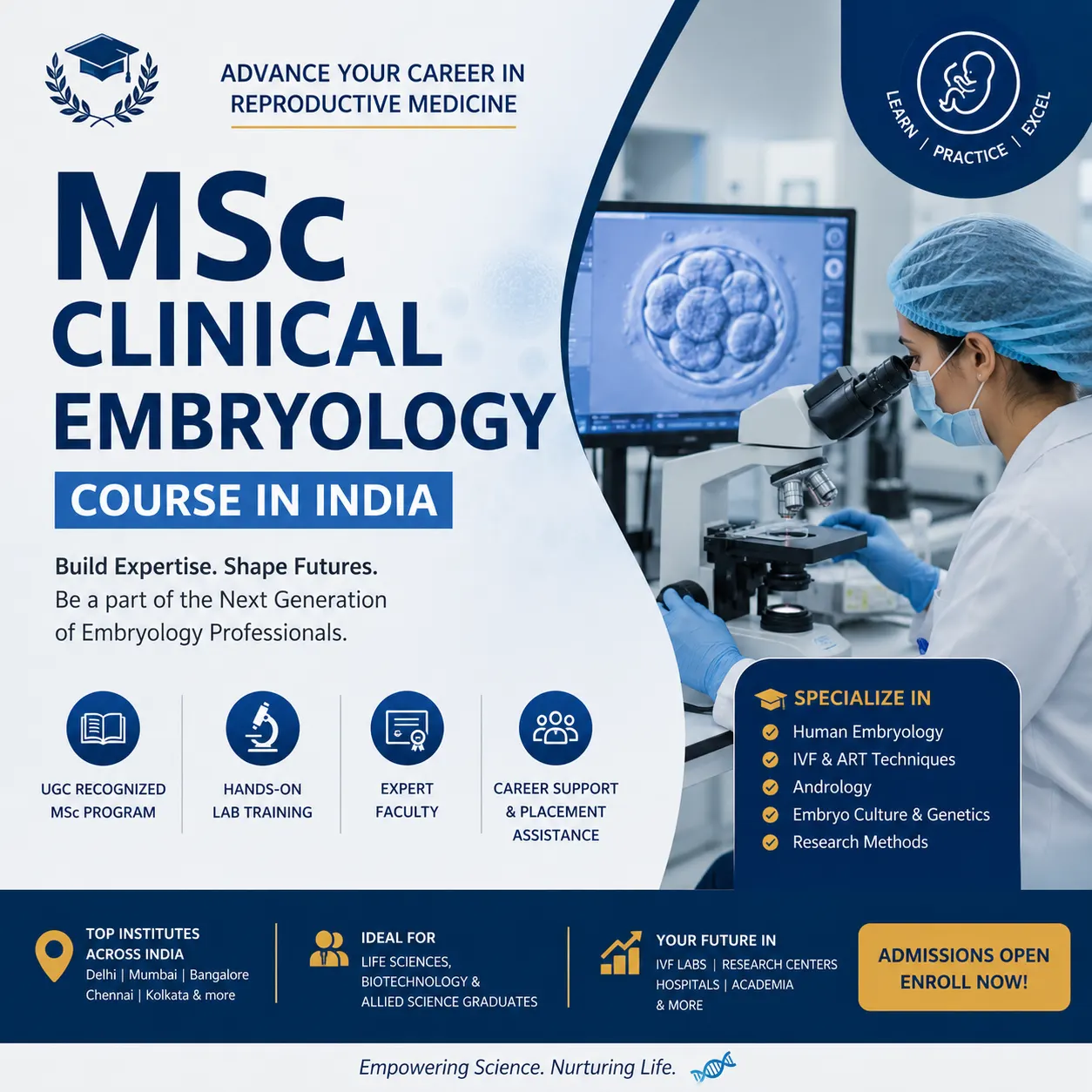 MSc Clinical Embryology