
Career in Clinical Embryology | EmbryoPath
Clinical embryology has emerged as one of the most promising career paths within reproductive medicine, especially as India witnesses steady growth in IVF and fertility treatment centers. A career in clinical embryology involves working closely with reproductive specialists to handle, assess, and manage embryos and gametes in a laboratory setting. For students from biology, life sciences, or medical science backgrounds, this field offers a specialized, meaningful, and growing professional path. At EmbryoPath, in academic collaboration with GD Goenka University, students receive structured guidance to help them understand what this career truly involves and how to prepare for it.
Understanding a Career in Clinical Embryology
Clinical embryologists play a vital role within IVF laboratories and fertility clinics. Their work supports embryologists, gynaecologists, and reproductive specialists in procedures related to assisted reproductive technology (ART). Since this is a highly technical and sensitive area of healthcare, individuals pursuing this career need focused theoretical knowledge along with practical laboratory exposure. A career in clinical embryology is not just about scientific interest; it requires patience, precision, and a strong sense of responsibility, as the work directly impacts patient outcomes.
Why This Career Path Is Gaining Importance
With increasing awareness about fertility treatments and a rising number of IVF centers across India, the demand for trained professionals in clinical embryology continues to grow. This makes it a relevant and forward-looking career option for students who want to work in a specialized healthcare niche rather than a conventional clinical role. EmbryoPath recognizes this shift and focuses on preparing students with relevant, practical, and updated knowledge suited to real laboratory environments.
Eligibility for a Career in Clinical Embryology
Students interested in this career path generally come from specific academic backgrounds. While exact eligibility may vary depending on the course level, common requirements include:
- A background in Biology, Life Sciences, Biotechnology, Zoology, or a related field at the graduate level
- Basic understanding of human reproductive biology and cell biology
- Interest in laboratory-based, hands-on scientific work
- Strong attention to detail and ability to follow strict protocols
- Willingness to undergo supervised, practical training
Since clinical embryology is a specialized field, structured academic support becomes essential. This is where guidance from EmbryoPath, backed by academic collaboration with GD Goenka University, helps students build the right foundation.
Key Learning Outcomes for Aspiring Embryologists
A well-structured learning path in clinical embryology helps students develop both theoretical understanding and applied laboratory skills. Typical learning outcomes for students pursuing this career include:
- Understanding the fundamentals of human reproductive physiology
- Learning about gamete handling and embryo development stages
- Gaining exposure to laboratory equipment and safety protocols used in IVF settings
- Developing skills related to documentation, quality control, and lab hygiene
- Building awareness of ethical and regulatory considerations in reproductive medicine
These outcomes are designed to help students transition confidently from academic learning to practical, real-world laboratory environments.
Career Scope After This Course
A career in clinical embryology opens doors to several professional opportunities within the growing fertility and reproductive healthcare sector. After completing relevant training, students may explore roles such as:
- Junior Embryologist in IVF laboratories
- Laboratory Technician in fertility clinics
- Research Assistant in reproductive science units
- Support roles in andrology and cryopreservation labs
- Further academic or research pursuits in reproductive biology
Career growth in this field largely depends on the quality of training received, hands-on exposure, and continuous learning. As fertility treatment awareness increases across India, professionals with the right foundational knowledge are likely to find themselves better positioned for entry-level and growth opportunities in this niche sector.
Why Choose EmbryoPath?
EmbryoPath has been developed with a clear focus on helping students build a strong foundation for a career in clinical embryology. In academic collaboration with GD Goenka University, EmbryoPath aims to bridge the gap between theoretical biology education and the practical demands of reproductive science careers.
Students choosing EmbryoPath can expect:
- Structured learning modules aligned with industry-relevant concepts
- Guidance rooted in academic credibility through GD Goenka University's collaboration
- A learning environment focused on clarity, ethics, and scientific accuracy
- Support for students trying to understand career pathways in embryology honestly and realistically
Rather than making exaggerated promises, EmbryoPath focuses on providing transparent, informative, and academically grounded guidance so students can make informed decisions about their future.
Admission Guidance
For students exploring a career in clinical embryology, understanding the admission process is an important first step. Prospective students are encouraged to:
- Verify their educational background against the eligibility criteria for embryology-related courses
- Understand the course structure, duration, and academic collaboration with GD Goenka University
- Reach out to EmbryoPath for detailed information on the admission process, documentation, and course guidance
- Plan their academic timeline in advance, especially if transitioning from a general biology or life sciences background
Since this is a specialized academic path, personalized admission guidance can help students avoid confusion and make well-informed choices early on.
Apply for Admission Guidance
If you are considering a career in clinical embryology and want to understand your eligibility, course options, and admission process, EmbryoPath is here to help. In academic collaboration with GD Goenka University, EmbryoPath provides students with clear, honest guidance to support their academic and career decisions. Reach out today to get personalized admission guidance and take the first step toward a specialized career in reproductive science.
Frequently Asked Questions
What does a career in clinical embryology actually involve?
A career in clinical embryology involves working in laboratory settings related to assisted reproductive technology, such as IVF clinics. Professionals in this field assist in handling gametes and embryos under strict protocols, supporting reproductive specialists. It requires scientific knowledge, precision, and hands-on training. This career suits students who are genuinely interested in reproductive biology and laboratory-based work rather than purely clinical patient interaction roles.
Who is eligible to pursue a career in clinical embryology?
Students with a background in Biology, Life Sciences, Biotechnology, Zoology, or related fields at the graduate level are generally eligible to explore this career path. A basic understanding of human reproductive biology is helpful. Since specific eligibility criteria may vary by course, students are encouraged to connect with EmbryoPath for accurate, updated eligibility information relevant to their academic background.
How does EmbryoPath support students interested in this career?
EmbryoPath, in academic collaboration with GD Goenka University, offers structured guidance to help students understand the fundamentals of clinical embryology. The focus is on building academic clarity and awareness about laboratory practices, eligibility, and career pathways. EmbryoPath aims to support students with transparent information rather than making unrealistic promises about outcomes or placements.
What kind of skills are important for this career?
Skills such as attention to detail, patience, ability to follow strict laboratory protocols, and a strong interest in reproductive biology are important for this career. Since the work involves handling sensitive biological material, precision and responsibility are essential. Students are also expected to develop documentation and quality-control awareness as part of their practical learning journey.
What are the career opportunities after training in clinical embryology?
After relevant training, individuals may explore opportunities such as junior embryologist roles, laboratory technician positions in fertility clinics, or research assistant roles in reproductive science units. Career growth depends on the quality of training, practical exposure, and ongoing learning. As IVF awareness grows in India, this field is expected to offer steady opportunities for well-trained professionals.
How can I get admission guidance from EmbryoPath?
Students interested in admission guidance can reach out directly to EmbryoPath for detailed information regarding eligibility, course structure, and the academic collaboration with GD Goenka University. Early planning and accurate information can help students make confident, well-informed decisions about pursuing a career in clinical embryology, without relying on assumptions or incomplete information.


















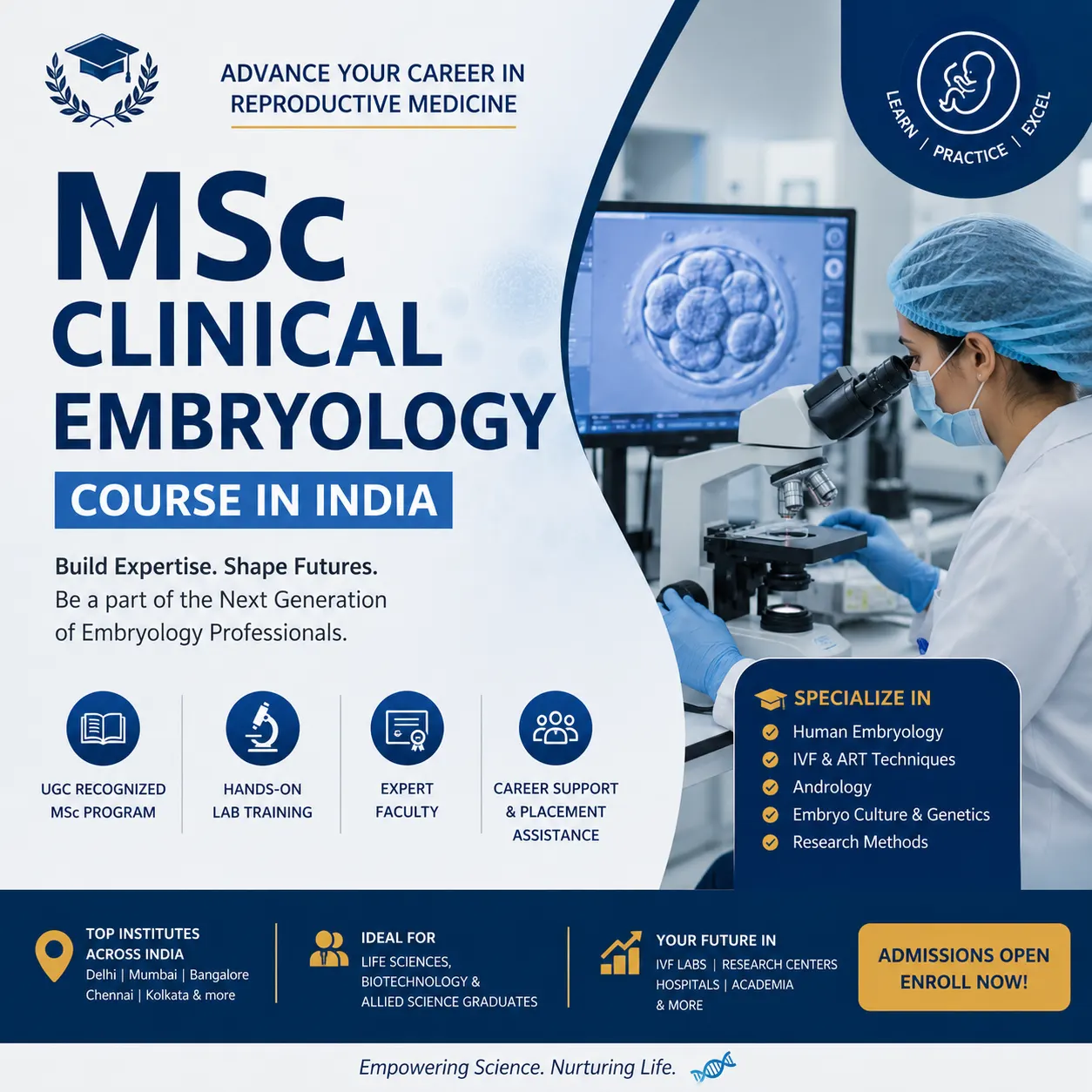 MSc Clinical Embryology