
Embryologist Course Fees | EmbryoPath India
Understanding Embryologist Course Fees is one of the first steps for students planning a rewarding career in clinical embryology. Choosing the right institution involves evaluating academic quality, practical laboratory exposure, faculty expertise, career opportunities, and overall educational value. While fees are an important consideration, students should also focus on the quality of education and hands-on training that prepares them for employment in modern reproductive science laboratories.
EmbryoPath, in academic collaboration with GD Goenka University, provides industry-oriented clinical embryology education designed to prepare students for careers in reproductive laboratory science. The curriculum emphasizes practical learning, scientific understanding, laboratory techniques, ethics, and professional development to help graduates build strong foundations for the future.
Why Understanding Embryologist Course Fees Matters
Every educational investment should be evaluated carefully. Rather than comparing tuition alone, students should assess the complete learning experience, including laboratory exposure, experienced faculty, academic support, industry relevance, and career guidance.
When evaluating an embryology programme, consider factors such as:
- Comprehensive academic curriculum
- Practical laboratory-based learning
- Modern reproductive science laboratory exposure
- Qualified faculty members
- Academic collaboration with reputed universities
- Career guidance and professional development
- Research-oriented learning environment
- Long-term career opportunities
What Influences Embryologist Course Fees?
Course fees generally reflect the resources required to deliver quality education. Clinical embryology is a specialized field that involves advanced laboratory training, sophisticated equipment, and expert supervision. Institutions offering extensive practical education often invest significantly in laboratory infrastructure and academic resources.
Common factors that influence overall course fees include:
- Duration of the programme
- Laboratory facilities and equipment
- Hands-on practical sessions
- Faculty qualifications and experience
- Academic collaborations
- Research opportunities
- Learning materials and academic support
- Career counselling and placement assistance
Who Can Apply?
Clinical embryology welcomes students from life sciences and medical science backgrounds who wish to develop specialized expertise in reproductive science. The programme is suitable for individuals interested in laboratory science, precision techniques, research, and scientifically-focused academic learning.
Applicants commonly include:
- Life Science graduates
- Biotechnology graduates
- Microbiology graduates
- Zoology graduates
- Biomedical Science graduates
- Medical graduates
- Postgraduate science students
- Professionals seeking specialization in reproductive laboratory science
What Students Learn During the Programme
The curriculum combines scientific knowledge with extensive laboratory-based learning. Students gain an understanding of reproductive biology while developing practical skills required in modern reproductive science laboratories.
Core Academic Areas
- Human reproductive biology
- Clinical embryology fundamentals
- Gamete biology
- Embryo development
- Reproductive laboratory science procedures
- Embryo culture techniques
- Cryobiology principles
- Laboratory quality assurance
- Ethics in reproductive laboratory science
- Laboratory documentation and compliance
Practical Learning Experience
Practical exposure forms a significant component of embryology education. Students observe laboratory protocols, understand equipment usage, learn quality control procedures, and become familiar with professional standards followed in reproductive science laboratories. This combination of classroom learning and laboratory practice helps improve confidence and technical competence.
Learning Outcomes
After successfully completing the programme, students are expected to possess a strong understanding of reproductive science along with laboratory-based competencies that support professional growth.
- Knowledge of clinical embryology principles
- Understanding of reproductive laboratory science workflow
- Laboratory safety awareness
- Scientific analytical skills
- Documentation and quality management knowledge
- Professional communication skills
- Ethical understanding in reproductive science education
- Research-oriented thinking
Why Choose EmbryoPath?
EmbryoPath focuses on providing structured education that aligns with the evolving requirements of clinical embryology. Through its academic collaboration with GD Goenka University, students receive education designed to balance theoretical understanding with practical laboratory experience.
Key advantages include:
- Industry-focused curriculum
- Academic collaboration with GD Goenka University
- Experienced faculty members
- Laboratory-oriented education
- Modern learning environment
- Focus on professional ethics
- Career guidance support
- Student-centred academic approach
Career Scope After This Course
Clinical embryology continues to develop alongside advancements in reproductive laboratory science. Qualified professionals are valued for their scientific knowledge, laboratory skills, and attention to quality standards. Graduates may pursue opportunities across different sectors depending on their qualifications, experience, and employer requirements.
Potential career pathways include:
- Clinical Embryology Laboratories
- Reproductive Science Laboratories
- Reproductive Science Institutes
- Research Laboratories
- Academic Institutions
- Biotechnology Organisations
- Science Research Projects
- Laboratory Quality Management Roles
Continuous learning, professional development, and practical experience can further enhance career growth within this specialized academic discipline.
Admission Guidance
Students interested in enrolling should carefully review the eligibility criteria, programme structure, documentation requirements, and admission schedule. Prospective applicants are encouraged to contact EmbryoPath directly for the latest information regarding admission procedures, programme availability, important dates, and current Embryologist Course Fees.
Preparing the necessary academic documents in advance can help ensure a smoother admission process. Admission counsellors can also provide guidance regarding programme selection, eligibility verification, and application procedures.
Apply for Admission Guidance
If you are planning a career in clinical embryology, now is the right time to explore your educational options. Connect with the admission team at EmbryoPath to receive accurate information about programme details, eligibility requirements, admission timelines, and Embryologist Course Fees. The experienced counselling team can help you understand the curriculum, laboratory training opportunities, academic collaboration with GD Goenka University, and the steps involved in beginning your journey toward a professional career in reproductive laboratory science.
Frequently Asked Questions
1. Why are Embryologist Course Fees different across institutions?
Embryologist Course Fees can vary depending on several factors, including the duration of the programme, laboratory infrastructure, faculty expertise, practical training opportunities, academic collaborations, and student support services. Institutions offering extensive laboratory education and industry-oriented learning may have different fee structures based on the resources required to deliver specialized education.
2. Does the course include practical laboratory training?
Clinical embryology programmes are generally designed to combine classroom learning with laboratory-based education. Students typically study reproductive biology, laboratory protocols, embryo culture principles, quality assurance, documentation, and professional practices. The exact practical exposure depends on the curriculum and institutional academic framework.
3. Who is eligible to apply for a clinical embryology programme?
Eligibility requirements may differ between institutions. Many programmes are suitable for graduates from life sciences, biotechnology, microbiology, zoology, biomedical sciences, and certain medical disciplines. Applicants should always review the official eligibility criteria published by the institute before submitting their application.
4. What career opportunities are available after completing the course?
Graduates may pursue careers in reproductive science laboratories, science institutes, reproductive laboratory science laboratories, research organisations, science institutions, biotechnology companies, and academic environments. Employment opportunities depend on educational qualifications, practical competencies, employer expectations, and applicable regulatory requirements within the science sector.
5. Why should students choose EmbryoPath for clinical embryology education?
EmbryoPath focuses on delivering structured clinical embryology education supported by academic collaboration with GD Goenka University. The programme emphasizes scientific knowledge, laboratory-oriented learning, professional ethics, experienced faculty guidance, and career-focused education that supports students in building strong professional foundations.
6. How can students obtain the latest Embryologist Course Fees information?
The most reliable way to obtain current Embryologist Course Fees is by contacting EmbryoPath directly through its official admission channels. The admission team can provide updated fee details, explain programme components, discuss eligibility requirements, clarify the admission process, and answer questions related to academic planning before students submit their applications.



















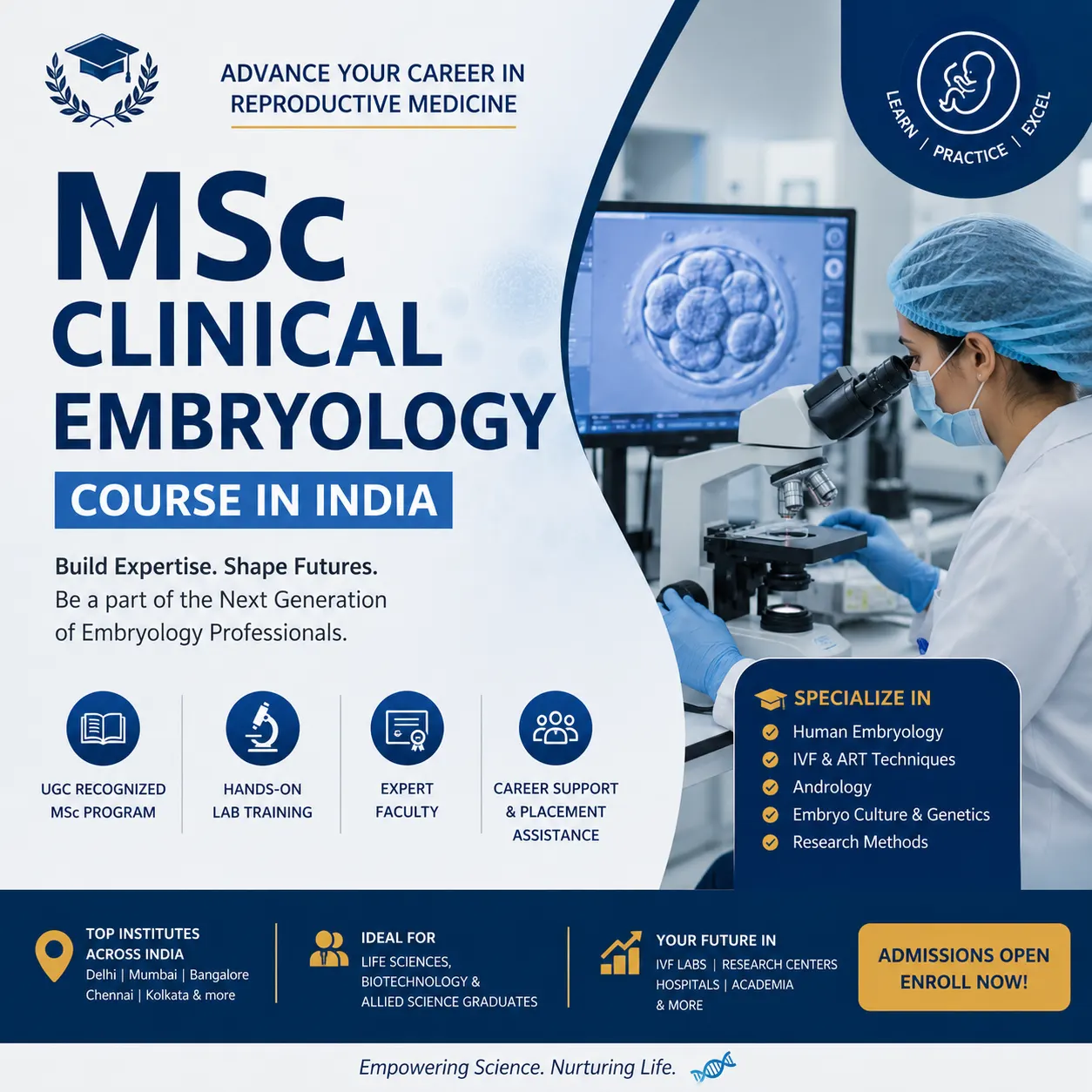 MSc Clinical Embryology