IVF Lab Course in India | EmbryoPath
The field of assisted reproductive technology is growing steadily across India, and with it comes a rising demand for skilled professionals who understand how an IVF laboratory actually functions. If you are a biology, life science, or medical science student, or simply someone curious about a meaningful career in fertility care, an IVF Lab Course can be the practical starting point you need. At EmbryoPath, in academic collaboration with GD Goenka University, this course is designed to bridge the gap between theoretical knowledge and real laboratory competence.
What Is an IVF Lab Course?
An IVF Lab Course introduces learners to the working environment of a clinical embryology laboratory, where eggs, sperm, and embryos are handled under controlled conditions to support assisted reproduction. Rather than focusing only on textbook concepts, this course is structured to help students understand laboratory workflows, safety protocols, equipment handling, and the fundamentals of embryo culture. It is a foundational step for anyone who wants to eventually work as an embryologist, IVF lab technician, or reproductive science professional.
Why This Course Matters Right Now
Fertility clinics and IVF centres across India are expanding, and this growth has created a genuine need for trained laboratory personnel. Many science graduates have strong academic knowledge but limited exposure to hands-on laboratory practices used specifically in IVF settings. An IVF Lab Course fills this gap by offering structured, applied learning that mirrors real clinical laboratory expectations, making candidates more prepared and more confident when they enter the workforce.
Who Can Enroll: Eligibility Overview
The IVF Lab Course at EmbryoPath is designed to be accessible to a wide range of learners while maintaining academic relevance. Typical eligibility includes:
- Graduates or students in Biology, Zoology, Biotechnology, Microbiology, or Life Sciences
- Medical science students, including those pursuing MBBS, BDS, or allied health sciences
- Nursing graduates interested in reproductive and fertility care
- Candidates with a genuine interest in embryology and assisted reproduction, subject to institute evaluation
Exact eligibility criteria may vary slightly based on the specific course level, so candidates are encouraged to check current requirements during the admission guidance process.
What You Will Learn
The course is built around practical understanding rather than rote memorization. Learners are introduced to core areas such as:
- Basic principles of clinical embryology and reproductive biology
- IVF laboratory setup, equipment, and quality control practices
- Handling and observation techniques related to gametes and embryos
- Laboratory safety, hygiene, and documentation standards
- An overview of assisted reproductive technology procedures used in fertility clinics
By the end of the course, students should have a clearer, more confident understanding of how an IVF laboratory operates on a day-to-day basis.
Why Choose EmbryoPath?
EmbryoPath focuses specifically on clinical embryology education, which means the curriculum is not a generic add-on to a broader biology program but a dedicated, purpose-built learning pathway. Through academic collaboration with GD Goenka University, the course carries added academic credibility, giving students a structured and recognized learning experience. EmbryoPath emphasizes practical exposure, updated course content, and guidance that is relevant to how Indian fertility clinics actually operate, rather than relying only on outdated theoretical material.
Students choosing EmbryoPath also benefit from a learning environment that is specifically tailored to career readiness. The goal is not just to teach concepts, but to help students walk into interviews and laboratory roles with a working understanding of embryology practices.
Career Scope After This Course
Completing an IVF Lab Course can open doors to several entry-level and growth-oriented roles within the fertility and reproductive healthcare sector. Potential career directions include:
- IVF Laboratory Technician or Assistant
- Junior Embryologist (with further specialization and experience)
- Andrology Lab Assistant
- Research Assistant in reproductive biology or embryology-related research
- Support roles within fertility clinics, hospitals, and diagnostic laboratories
As with any specialized clinical field, career growth often depends on additional certifications, hands-on experience, and continued learning. This course is best viewed as a strong foundational step rather than an end point, giving students a realistic and honest starting position in the embryology field.
Admission Guidance
Choosing the right course and understanding the enrollment process can feel overwhelming, especially for students who are new to clinical embryology as a field. EmbryoPath offers admission guidance to help candidates understand course structure, eligibility, and the overall learning path before they commit. This includes clarifying doubts about prerequisites, course duration, and how the program aligns with a student's academic background and career goals.
Parents and students alike are encouraged to use this guidance process to make an informed decision, rather than choosing a course based on assumptions or incomplete information.
Apply for Admission Guidance
If you are considering a career in clinical embryology or want to understand whether the IVF Lab Course is the right fit for your academic background, EmbryoPath's admission guidance team is available to help. Reach out through the EmbryoPath website to get your questions answered, understand eligibility clearly, and take the next step toward a focused, practical career in embryology, supported by academic collaboration with GD Goenka University.
Frequently Asked Questions
Who should consider taking an IVF Lab Course?
This course is suitable for biology, life science, and medical science students who are interested in reproductive health and clinical embryology. It also suits graduates exploring a career shift into fertility-related laboratory work. Parents researching options for their children can use this course as a well-structured, academically backed pathway. The course is particularly useful for those who want practical exposure alongside their existing academic knowledge in science-related fields.
Do I need a medical background to join this course?
A medical background is not strictly mandatory, though it can be helpful. Students from biology, zoology, biotechnology, and life sciences backgrounds are generally eligible, along with medical and nursing students. EmbryoPath evaluates candidates based on their academic history and genuine interest in embryology. It is recommended to go through the admission guidance process to confirm eligibility based on your specific educational background before enrolling.
What kind of practical exposure does the course include?
The course emphasizes hands-on understanding of IVF laboratory practices, including equipment familiarity, laboratory safety protocols, and observation-based learning related to embryology procedures. While exact practical components may vary by course level, the overall approach is designed to move beyond theory and give students a realistic sense of how a clinical embryology laboratory functions in practice, better preparing them for real-world roles.
How does GD Goenka University's collaboration add value?
The academic collaboration with GD Goenka University adds structure and credibility to the course, ensuring that the curriculum follows recognized academic standards. This partnership helps students feel more confident about the quality and legitimacy of their learning experience. It also reflects EmbryoPath's commitment to combining specialized embryology training with established academic oversight, rather than offering an informal or unstructured course.
What career opportunities can I expect after completing the course?
Graduates may pursue roles such as IVF laboratory technician, andrology lab assistant, or research assistant in reproductive biology settings. With further experience and specialization, some professionals progress toward embryologist roles. It is important to understand that career growth in this field typically requires continued learning and practical experience, and this course serves as a strong foundational step rather than a guaranteed placement into a specific role.
How do I get started with admission guidance?
You can begin by reaching out through the EmbryoPath website to request admission guidance. The team will help clarify eligibility, course structure, and how the IVF Lab Course aligns with your academic background and career goals. This step is recommended before enrollment so that you have a clear, realistic understanding of what the course involves and how it fits into your long-term plans in clinical embryology.












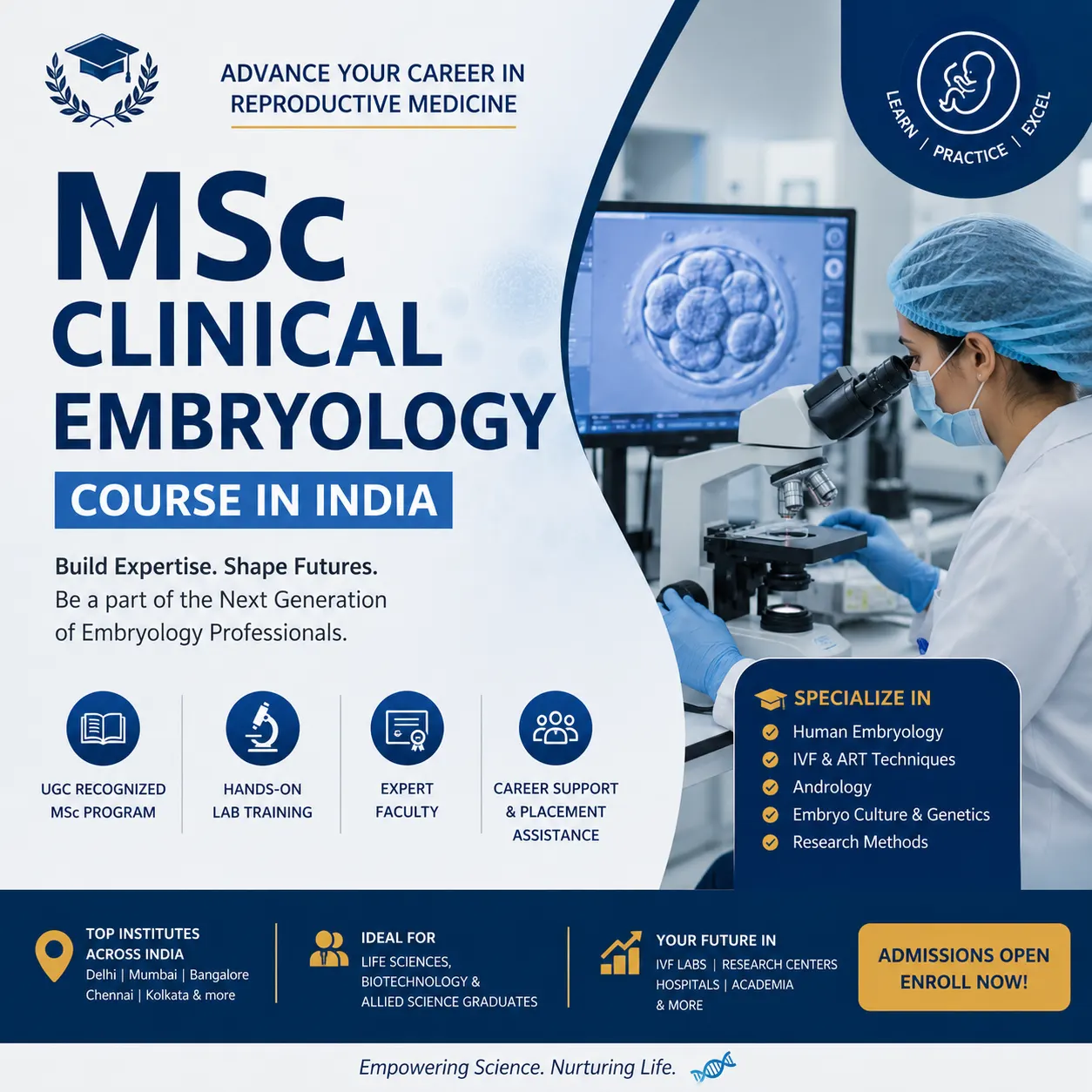 MSc Clinical Embryology