
MSc Clinical Embryology Institute | EmbryoPath India
Selecting the right MSc Clinical Embryology Institute is an important step for students who wish to build a meaningful career in reproductive science and clinical embryology laboratory education. EmbryoPath, in academic collaboration with GD Goenka University, provides a structured academic environment where students gain theoretical knowledge alongside valuable laboratory exposure. The program is designed to help learners understand modern embryology practices, laboratory procedures, ethics, quality standards, and scientific advancements that support clinical embryology and reproductive science education.
As clinical embryology and reproductive science continue to advance across India, qualified embryology professionals are becoming increasingly valuable in clinical embryology laboratories, research organizations, healthcare institutions, and academic institutions. A comprehensive postgraduate education helps students build confidence while preparing them for professional opportunities in this growing academic and laboratory-based field.
Why Choose an MSc Clinical Embryology Institute?
Clinical embryology combines biology, reproductive science, laboratory sciences, and professional laboratory education. A quality postgraduate institute provides students with opportunities to understand the scientific principles behind reproductive biology, embryo development, cryobiology concepts, laboratory quality management, and ethical responsibilities within clinical embryology education.
Students benefit from an academic curriculum that balances classroom learning with laboratory-oriented education, allowing them to understand how embryology contributes to professional laboratory practice and reproductive science learning.
About EmbryoPath
EmbryoPath is dedicated to developing future clinical embryology professionals through structured education and practical learning experiences. In academic collaboration with GD Goenka University, the institute focuses on delivering an industry-relevant curriculum that aligns with current developments in clinical embryology and reproductive science.
The learning environment encourages scientific thinking, technical understanding, ethical responsibility, and continuous professional growth. Students are supported by experienced faculty members who guide them throughout their academic journey while emphasizing laboratory quality and professional practices.
Program Highlights
- Academic collaboration with GD Goenka University.
- Industry-focused postgraduate curriculum.
- Comprehensive theoretical instruction.
- Laboratory-oriented practical learning.
- Exposure to advanced laboratory procedures.
- Learning aligned with current reproductive science practices.
- Guidance from experienced academic professionals.
- Emphasis on laboratory ethics and quality assurance.
- Career-oriented educational approach.
- Supportive learning environment for professional development.
Who Can Apply?
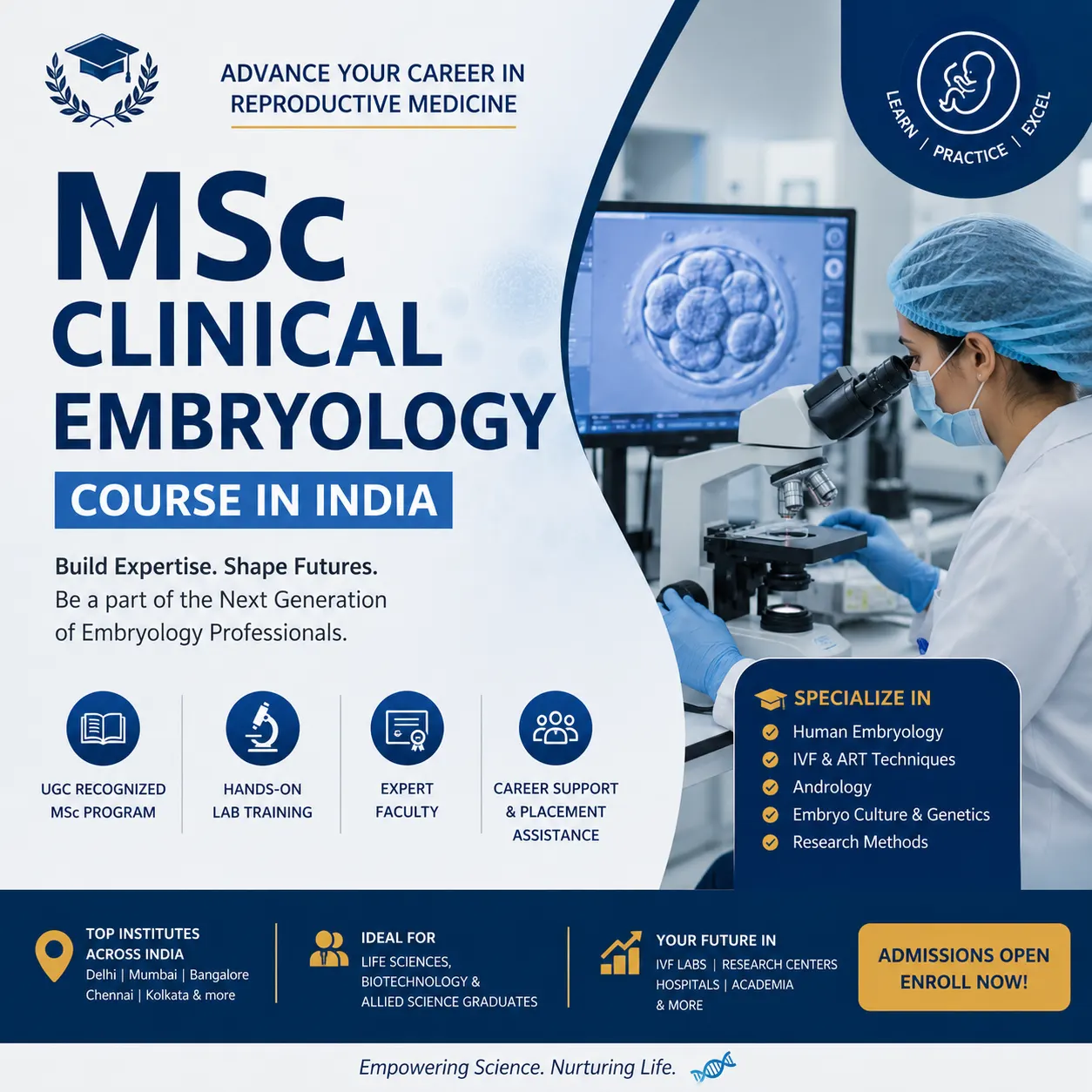
The MSc Clinical Embryology program is suitable for graduates who are interested in reproductive sciences and laboratory-based healthcare careers. Students with educational backgrounds in life sciences, biological sciences, biotechnology, microbiology, zoology, biomedical sciences, medical laboratory sciences, pharmacy, veterinary sciences, nursing, or other relevant disciplines may explore eligibility based on the applicable admission criteria.
Applicants should possess a genuine interest in laboratory science, attention to detail, scientific reasoning, and a willingness to learn advanced reproductive science and laboratory concepts.
What Students Learn
The curriculum is designed to provide a comprehensive understanding of clinical embryology through theoretical concepts and laboratory learning.
- Human reproductive biology.
- Male and female reproductive physiology.
- Embryology fundamentals.
- Laboratory specimen handling principles.
- Embryo development.
- Laboratory safety practices.
- Quality assurance in clinical embryology laboratories.
- Cryobiology and preservation concepts.
- Laboratory documentation.
- Ethical and regulatory considerations.
- Research methodology.
- Scientific communication skills.
Learning Outcomes
Upon successful completion of the program, students develop knowledge and practical understanding of reproductive biology and laboratory sciences. They become familiar with laboratory workflows, embryo development principles, cryobiology concepts, laboratory quality systems, and scientific documentation.
Graduates also strengthen analytical thinking, laboratory discipline, ethical awareness, teamwork, and professional communication, which are valuable skills in clinical embryology, reproductive science, and research environments.
Practical Learning Experience
Hands-on learning plays an important role in embryology education. Students gain exposure to laboratory environments where they observe standard operating procedures, laboratory protocols, equipment handling, quality practices, and scientific workflows. Practical education helps bridge the gap between classroom concepts and professional laboratory applications while reinforcing technical understanding.
Importance of Clinical Embryology in Modern Healthcare Education
Clinical embryology has become an important component of reproductive science and laboratory-based education. Advances in laboratory practices and reproductive science have created increasing demand for trained professionals who understand laboratory procedures, scientific accuracy, and quality systems. Well-trained embryology professionals contribute to laboratory quality, scientific documentation, ethical practices, and professional standards within clinical embryology laboratories.
As reproductive science continues to evolve, postgraduate education enables students to remain informed about scientific developments and emerging laboratory technologies.
Why Choose EmbryoPath?
EmbryoPath provides an academic environment focused on knowledge, professionalism, and practical learning. Its collaboration with GD Goenka University strengthens the educational framework while supporting academic excellence.
- Industry-oriented curriculum.
- Experienced academic guidance.
- Practical laboratory exposure.
- Focus on ethical professional practices.
- Modern learning methodologies.
- Student-focused academic support.
- Strong emphasis on quality education.
- Preparation for evolving reproductive science careers.
Career Scope After This Course
An MSc in Clinical Embryology opens opportunities across various sectors of clinical embryology, reproductive science, healthcare education, research, and laboratory practice. As advanced laboratory education continues to expand in India, graduates with specialized education may pursue professional roles in different organizations depending on individual qualifications, experience, employer requirements, and applicable regulations.
- Clinical Embryology Laboratories.
- Reproductive Science Laboratories.
- Advanced Clinical Laboratory Settings.
- Clinical Research Organizations.
- Healthcare Research Institutes.
- Diagnostic Laboratories.
- Medical Universities.
- Teaching and Academic Institutions.
- Biotechnology Organizations.
- Healthcare Education Sector.
Continuous learning, professional ethics, and practical expertise further strengthen long-term career growth within clinical embryology and reproductive science.
Admission Guidance
Students interested in pursuing postgraduate education in clinical embryology should carefully review eligibility requirements, academic qualifications, admission schedules, and documentation requirements. Early preparation allows applicants to complete the admission process smoothly while understanding program expectations and academic commitments.
EmbryoPath provides admission guidance to help prospective students understand the application process, eligibility criteria, course structure, and academic pathway associated with the MSc Clinical Embryology program offered in collaboration with GD Goenka University.
Apply for Admission Guidance
If you are planning a career in reproductive science and clinical embryology laboratory practice, EmbryoPath welcomes your interest in its MSc Clinical Embryology program. Connect with the admission team to learn about eligibility, application procedures, academic schedules, curriculum details, and available guidance. Taking the first step toward specialized education today can help you prepare for future opportunities in India's growing clinical embryology and reproductive science sector.
Frequently Asked Questions
1. What makes a good MSc Clinical Embryology Institute?
A quality institute offers a balanced curriculum combining theoretical education with laboratory-oriented learning. Students should look for experienced faculty, structured academic support, practical exposure, ethical education, and collaborations with recognized universities. Choosing an institute that focuses on scientific knowledge, quality standards, and professional development helps learners prepare for careers in clinical embryology and reproductive science.
2. Who is eligible to apply for the MSc Clinical Embryology program?
The program is generally suitable for graduates from life sciences, biological sciences, biotechnology, microbiology, zoology, biomedical sciences, medical laboratory sciences, pharmacy, nursing, veterinary sciences, and related academic backgrounds. Applicants should always verify the latest eligibility criteria and admission requirements before submitting their applications to ensure they meet the necessary academic qualifications.
3. Does the program include practical laboratory learning?
Yes. Practical learning forms an important component of clinical embryology education. Students receive laboratory-oriented exposure designed to help them understand scientific procedures, laboratory workflows, quality systems, equipment handling, documentation, and professional practices commonly followed in reproductive science laboratories while complementing classroom-based theoretical instruction.
4. What career opportunities are available after completing this degree?
Graduates may explore opportunities in clinical embryology laboratories, reproductive science laboratories, research organizations, healthcare institutions, biotechnology companies, universities, and academic environments. Career progression depends on individual qualifications, practical experience, professional development, employer requirements, and applicable regulatory standards within the healthcare sector.
5. Why is academic collaboration with GD Goenka University beneficial?
An academic collaboration with GD Goenka University provides students with a structured educational framework supported by established academic standards. It enhances curriculum delivery, promotes quality education, encourages scientific learning, and helps students pursue postgraduate studies within an organized university-affiliated academic environment focused on professional growth.
6. Why should students consider EmbryoPath for clinical embryology education?
EmbryoPath focuses on delivering industry-relevant education through a combination of academic instruction and laboratory-oriented learning. Supported by its collaboration with GD Goenka University, the institute emphasizes scientific understanding, ethical practice, professional development, and student guidance, helping learners prepare for rewarding careers in reproductive science and modern embryology laboratories.




















 MSc Clinical Embryology