Become an Embryologist | Embryology Course India
Choosing to become an embryologist opens the door to one of the most specialized and rewarding careers in reproductive science education. Clinical embryologists play an essential role in reproductive laboratory science by supporting academic and research work through advanced laboratory procedures. As reproductive science awareness continues to grow across India, the demand for qualified professionals with specialized embryology knowledge is steadily increasing.
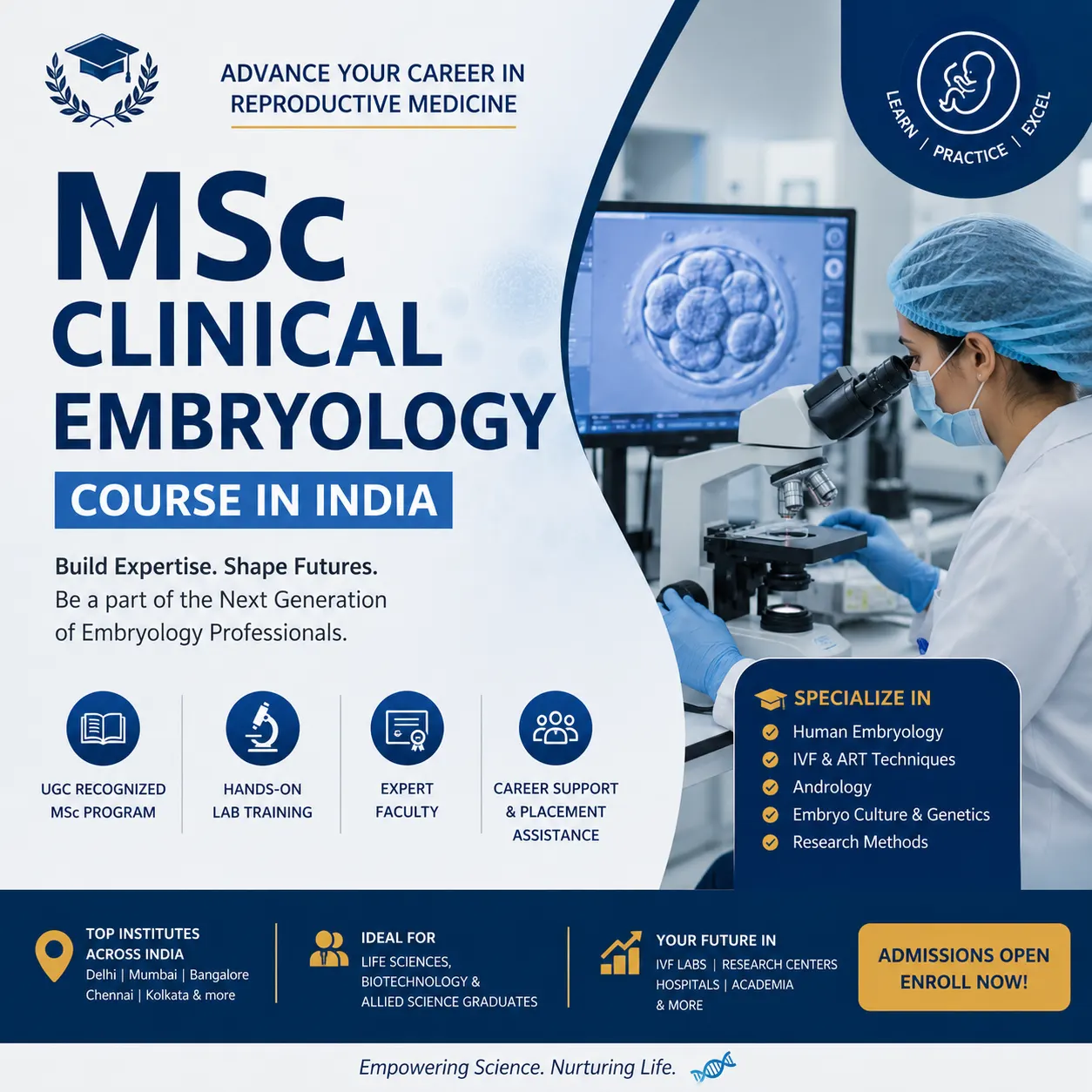
EmbryoPath, in academic collaboration with GD Goenka University, provides structured clinical embryology education designed to help eligible graduates develop both theoretical understanding and practical laboratory competencies. The program focuses on scientific learning, ethical practices, laboratory techniques, and professional development to prepare students for opportunities within modern reproductive science laboratories and reproductive science education.
What Does an Embryologist Do?
An embryologist is a laboratory professional specializing in reproductive biology and reproductive laboratory science. These professionals work closely with laboratory scientists to perform laboratory procedures that support academic and research work while maintaining strict quality standards and laboratory protocols.
Typical responsibilities include:
- Handling reproductive cells under controlled laboratory conditions.
- Supporting reproductive laboratory science procedures.
- Monitoring embryo development.
- Maintaining laboratory quality assurance.
- Following ethical and scientific laboratory practices.
- Recording and maintaining accurate laboratory documentation.
Why Choose Clinical Embryology as a Career?
Clinical embryology is a rapidly developing science discipline that combines biology, laboratory science, and reproductive science. Students interested in laboratory-based science careers often find embryology intellectually engaging and professionally rewarding.
Some advantages of choosing this field include:
- Growing demand for trained embryology professionals.
- Opportunities to work in advanced reproductive science laboratories.
- Continuous learning through scientific advancements.
- Professional career growth in reproductive science education.
- Scope for research and academic development.
- Specialized expertise in reproductive laboratory science.
Who Can Become an Embryologist?
Students from life sciences, biological sciences, biotechnology, zoology, microbiology, biochemistry, medical sciences, veterinary sciences, pharmacy, and related disciplines often pursue clinical embryology education. Eligibility may vary depending on institutional admission policies and academic qualifications.
A strong interest in laboratory science, attention to detail, ethical responsibility, and scientific curiosity are valuable qualities for aspiring embryologists.
Skills Required to Become an Embryologist
Professional embryologists require a combination of scientific knowledge, laboratory precision, and analytical thinking. During structured training, students gradually develop competencies that support safe and efficient laboratory practices.
- Laboratory handling skills
- Microscopy techniques
- Scientific observation
- Critical thinking
- Attention to detail
- Documentation and reporting
- Quality control awareness
- Professional communication
- Ethical decision-making
- Team collaboration
What You Learn During Clinical Embryology Education
A well-designed clinical embryology curriculum combines classroom instruction with laboratory-oriented learning experiences. Students gain an understanding of reproductive biology while becoming familiar with laboratory workflows commonly followed in reproductive laboratory science.
Core Learning Areas
- Human reproductive biology
- Cell biology and developmental biology
- Foundations of reproductive laboratory science
- Reproductive science laboratory principles
- Laboratory quality management
- Cryobiology concepts
- Laboratory safety protocols
- Ethics in reproductive science
- Scientific documentation
- Professional laboratory practices
Learning Outcomes
Upon successful completion of clinical embryology education, students are expected to develop knowledge and practical understanding that support professional responsibilities within reproductive science education laboratories.
- Understand reproductive science fundamentals.
- Develop laboratory-oriented technical skills.
- Apply scientific principles in academic settings.
- Understand quality assurance procedures.
- Maintain ethical laboratory standards.
- Improve scientific communication and documentation.
- Build confidence for professional career opportunities.
Why Choose EmbryoPath?
EmbryoPath is dedicated to providing quality clinical embryology education through an academic collaboration with GD Goenka University. The institution emphasizes academic excellence, practical learning, and professional development to help students prepare for careers in reproductive laboratory science.
Students benefit from an education environment focused on scientific accuracy, laboratory exposure, experienced faculty guidance, and industry-relevant learning practices. The curriculum is designed to bridge academic knowledge with professional expectations while encouraging continuous learning and responsible laboratory practices.
- Industry-oriented curriculum
- Academic collaboration with GD Goenka University
- Experienced faculty guidance
- Laboratory-focused education
- Professional learning environment
- Career-oriented academic approach
- Student-centered learning support
Career Scope After This Course
Clinical embryology offers diverse professional opportunities within reproductive science education. As reproductive science education continues expanding across India, trained professionals with relevant laboratory education may explore various career pathways depending on qualifications, experience, employer requirements, and applicable regulations.
Potential career opportunities include:
- Clinical Embryology Laboratories
- Reproductive Science Institutes
- Reproductive Science Centres
- Research Laboratories
- Academic Institutions
- Reproductive Science Education Organizations
- Laboratory Quality Management
- Scientific Research Projects
Admission Guidance
Students interested in pursuing clinical embryology education should carefully review eligibility criteria, academic qualifications, and admission procedures before applying. Selecting a structured program that combines theoretical instruction with laboratory-oriented education can contribute to long-term professional development.
EmbryoPath provides admission guidance to help applicants understand course requirements, documentation, eligibility, and the overall admission process. Prospective students and parents can also seek information regarding curriculum structure, academic support, and learning outcomes before making an informed decision.
Apply for Admission Guidance
If you aspire to become an embryologist, now is an excellent time to begin your educational journey. Connect with the admission team at EmbryoPath to learn more about eligibility, course structure, academic collaboration with GD Goenka University, and the application process. Receive personalized guidance to identify the most suitable learning pathway aligned with your educational background and career aspirations in clinical embryology.
Frequently Asked Questions
1. How can I become an embryologist in India?
To become an embryologist in India, students generally begin with an eligible educational background in life sciences, biological sciences, biotechnology, medical sciences, pharmacy, or related disciplines. Pursuing structured clinical embryology education helps develop scientific knowledge, laboratory understanding, and professional competencies required for careers in reproductive laboratory science and reproductive science laboratory environments.
2. Who is eligible to study clinical embryology?
Eligibility depends on institutional requirements and academic qualifications. Graduates from life sciences, biotechnology, zoology, microbiology, biochemistry, pharmacy, veterinary sciences, medical sciences, and related fields are commonly eligible to apply. Applicants should always review the latest admission criteria provided by the institution before submitting their applications.
3. What career opportunities are available after completing clinical embryology education?
Graduates may explore opportunities in reproductive science laboratories, science institutes, reproductive science education organizations, research institutions, academic environments, and laboratory quality management. Employment opportunities depend on educational qualifications, professional competencies, employer expectations, applicable regulations, and ongoing professional development within the reproductive science education sector.
4. Why should students choose EmbryoPath for clinical embryology education?
EmbryoPath focuses on structured clinical embryology education with academic collaboration through GD Goenka University. Students benefit from industry-oriented learning, experienced faculty guidance, laboratory-focused education, scientific curriculum, and career-oriented academic support designed to strengthen both theoretical understanding and practical professional development.
5. What skills are important for a successful embryology career?
Successful embryologists typically possess strong scientific understanding, laboratory precision, analytical thinking, attention to detail, ethical responsibility, documentation skills, communication abilities, and the willingness to continuously learn as reproductive technologies evolve. These competencies contribute to maintaining quality standards within modern academic laboratory environments.
6. Is clinical embryology a good long-term career option?
Clinical embryology continues to grow alongside advances in reproductive laboratory science and reproductive science education. For students interested in laboratory sciences and reproductive science, the field offers opportunities for continuous learning, professional development, research involvement, and specialized science careers. Individual career progression depends on education, experience, skills, and professional commitment.



















 MSc Clinical Embryology