Embryology Course Duration | Course Timeline Guide
The Embryology Course Duration is one of the most important considerations for students planning a career in clinical embryology and assisted reproductive technology. Understanding how long the program lasts, what subjects are covered, and how practical laboratory training is incorporated helps students make informed educational decisions. Clinical embryology is a specialized discipline that combines reproductive biology, laboratory science, and modern IVF techniques to support fertility treatments.
EmbryoPath, in academic collaboration with GD Goenka University, offers a structured learning environment where students gain theoretical knowledge alongside practical laboratory exposure. The curriculum is designed to prepare learners for professional roles within India's growing fertility and reproductive healthcare sector while emphasizing ethics, scientific accuracy, and responsible laboratory practices.
Understanding Embryology Course Duration
The duration of a clinical embryology program varies depending on the academic level, curriculum structure, practical training requirements, and institutional guidelines. A well-designed program balances classroom instruction with supervised laboratory experience, allowing students to progressively develop both scientific understanding and technical competence.
Instead of focusing only on classroom lectures, quality embryology education includes laboratory observation, practical demonstrations, research-based learning, case discussions, and exposure to modern IVF laboratory protocols. This balanced approach enables students to understand reproductive science in both academic and clinical settings.
Why Course Duration Matters
Selecting a program with an appropriate learning timeline ensures students receive comprehensive education rather than rushed theoretical instruction. Clinical embryology requires precision, patience, technical accuracy, and continuous learning. Adequate study duration allows learners to gradually master laboratory procedures while building confidence in professional practices.
- Provides sufficient theoretical understanding.
- Allows gradual development of laboratory skills.
- Supports supervised practical exposure.
- Encourages ethical and responsible scientific practice.
- Improves readiness for professional opportunities.
- Enhances confidence before entering IVF laboratories.
Who Can Apply?
Clinical embryology attracts students from diverse life science and medical science backgrounds. Individuals with strong interest in reproductive biology, laboratory science, and assisted reproductive technology are well suited for this field.
Applicants may include graduates from biological sciences, biotechnology, microbiology, zoology, genetics, biochemistry, biomedical sciences, pharmacy, veterinary sciences, medical sciences, and related disciplines, subject to the eligibility criteria prescribed by the institution.
What Students Learn During the Program
A structured embryology curriculum introduces students to the scientific principles that support fertility treatment and laboratory-based reproductive medicine. Learning is delivered through classroom sessions, laboratory demonstrations, discussions, assignments, and practical training.
Core Academic Topics
- Human reproductive biology
- Cell biology and developmental biology
- Gamete physiology
- Embryo development
- Genetics and reproductive medicine
- Clinical embryology principles
- Laboratory quality management
- Ethics in assisted reproductive technology
Practical Learning Areas
- Laboratory orientation
- Microscope handling techniques
- Laboratory safety protocols
- Culture media preparation concepts
- Embryo grading principles
- Quality assurance practices
- Documentation and laboratory record maintenance
- Professional laboratory workflow understanding
Learning Outcomes
Upon successful completion of the program, students develop both academic knowledge and practical awareness of reproductive laboratory procedures. The curriculum emphasizes scientific reasoning, laboratory discipline, ethical responsibility, communication, and continuous professional development.
- Understand reproductive physiology.
- Interpret embryology laboratory procedures.
- Develop laboratory observation skills.
- Apply quality assurance principles.
- Understand IVF laboratory workflow.
- Strengthen scientific communication.
- Build analytical thinking abilities.
- Prepare for advanced reproductive science careers.
Importance of Practical Laboratory Training
Clinical embryology is a practical science where laboratory exposure plays a significant role in professional learning. Students benefit from observing laboratory protocols, understanding equipment usage, learning quality control procedures, and becoming familiar with professional laboratory environments.
EmbryoPath focuses on integrating practical education with theoretical learning so students can appreciate how scientific concepts are applied within assisted reproductive technology laboratories. This approach supports better understanding and prepares learners for future professional responsibilities.
Why Choose EmbryoPath?
EmbryoPath has established itself as a dedicated institution for clinical embryology education by combining structured academics with laboratory-oriented learning. Through its academic collaboration with GD Goenka University, students receive education aligned with contemporary reproductive science while learning from experienced faculty and modern educational practices.
- Academic collaboration with GD Goenka University.
- Industry-focused curriculum.
- Experienced faculty members.
- Practical laboratory-oriented education.
- Student-focused academic environment.
- Comprehensive reproductive science education.
- Professional learning approach.
- Career-oriented guidance for aspiring embryologists.
Career Scope After This Course
The demand for trained professionals in reproductive medicine continues to grow as fertility awareness and assisted reproductive technologies expand across India. Clinical embryology provides opportunities for students interested in laboratory science and reproductive healthcare.
Depending on qualifications, skills, institutional requirements, and applicable recruitment criteria, graduates may explore opportunities in:
- IVF centres
- Fertility clinics
- Clinical embryology laboratories
- Reproductive research organizations
- Medical education institutions
- Biotechnology companies
- Academic research projects
- Advanced higher education programs
Admission Guidance
Students planning to pursue clinical embryology should carefully review eligibility requirements, academic qualifications, admission timelines, and documentation before applying. Choosing the right institute involves evaluating curriculum quality, laboratory exposure, faculty expertise, academic collaborations, and career support.
EmbryoPath provides admission guidance to help applicants understand the program structure, eligibility criteria, application process, and academic expectations. Prospective students are encouraged to communicate with the admission team for updated information regarding available batches and institutional procedures.
Apply for Admission Guidance
If you are planning to build a professional career in reproductive science and assisted reproductive technology, EmbryoPath can help you understand the complete admission process. In academic collaboration with GD Goenka University, the institute offers structured clinical embryology education designed for aspiring professionals seeking quality learning, practical exposure, and career-oriented academic development. Contact the admission team to receive personalized guidance regarding eligibility, documentation, program details, and the application process.
Frequently Asked Questions
1. What is the typical Embryology Course Duration?
The Embryology Course Duration depends on the academic curriculum, institutional structure, and practical training requirements. Different programs may vary in length based on classroom instruction, laboratory exposure, assessments, and academic objectives. Students should always review the official program details before applying to understand the complete learning schedule and expected academic commitment.
2. Why is practical training important during an embryology program?
Practical laboratory exposure helps students understand how theoretical concepts are applied in real reproductive science settings. Supervised learning allows students to become familiar with laboratory protocols, quality management principles, documentation procedures, and professional practices. Practical education complements classroom learning and supports the development of technical awareness and scientific confidence.
3. Who is eligible to apply for a clinical embryology course?
Eligibility generally depends on the educational qualifications specified by the institution. Students from biology, biotechnology, microbiology, genetics, zoology, biochemistry, biomedical sciences, pharmacy, medical sciences, veterinary sciences, and related life science disciplines may be eligible, subject to the admission guidelines and academic requirements established by the institute.
4. What career opportunities are available after completing the program?
Graduates may explore opportunities in IVF centres, fertility clinics, reproductive science laboratories, biotechnology organizations, research institutions, higher education, and academic settings. Career opportunities depend on individual qualifications, practical skills, institutional requirements, recruitment policies, and continued professional development within the reproductive healthcare sector.
5. Why should students choose EmbryoPath?
EmbryoPath provides structured clinical embryology education with academic collaboration from GD Goenka University. The institute emphasizes balanced theoretical learning, laboratory-oriented education, experienced faculty guidance, and career-focused academic development. Students benefit from a curriculum designed to strengthen scientific understanding while preparing them for future opportunities in reproductive science.
6. How can students apply for admission?
Prospective students can begin by reviewing the eligibility requirements and collecting the necessary academic documents. The admission team at EmbryoPath provides guidance regarding the application process, program information, and admission procedures. Applicants should follow the official admission instructions and complete all required formalities within the prescribed timelines.
















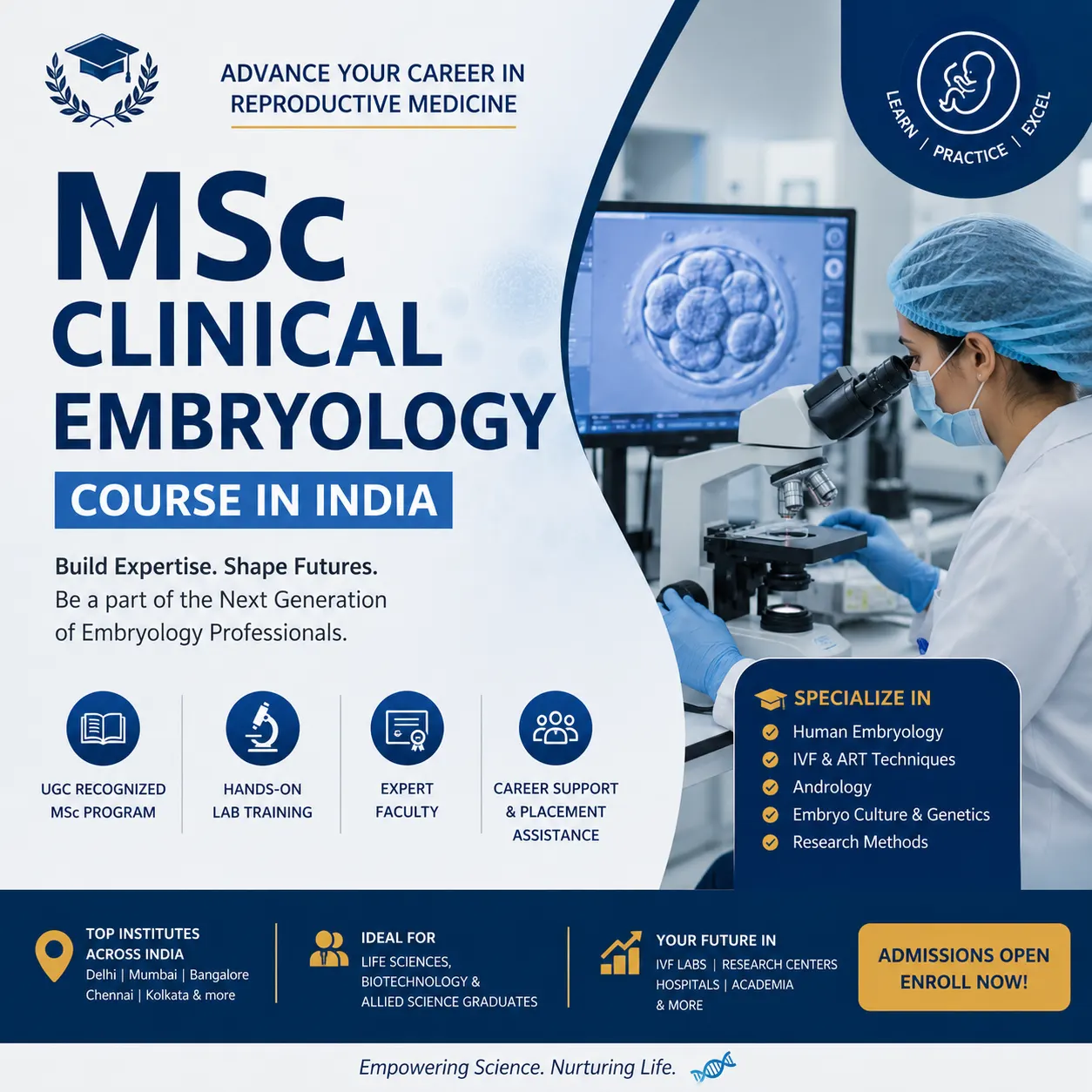 MSc Clinical Embryology