
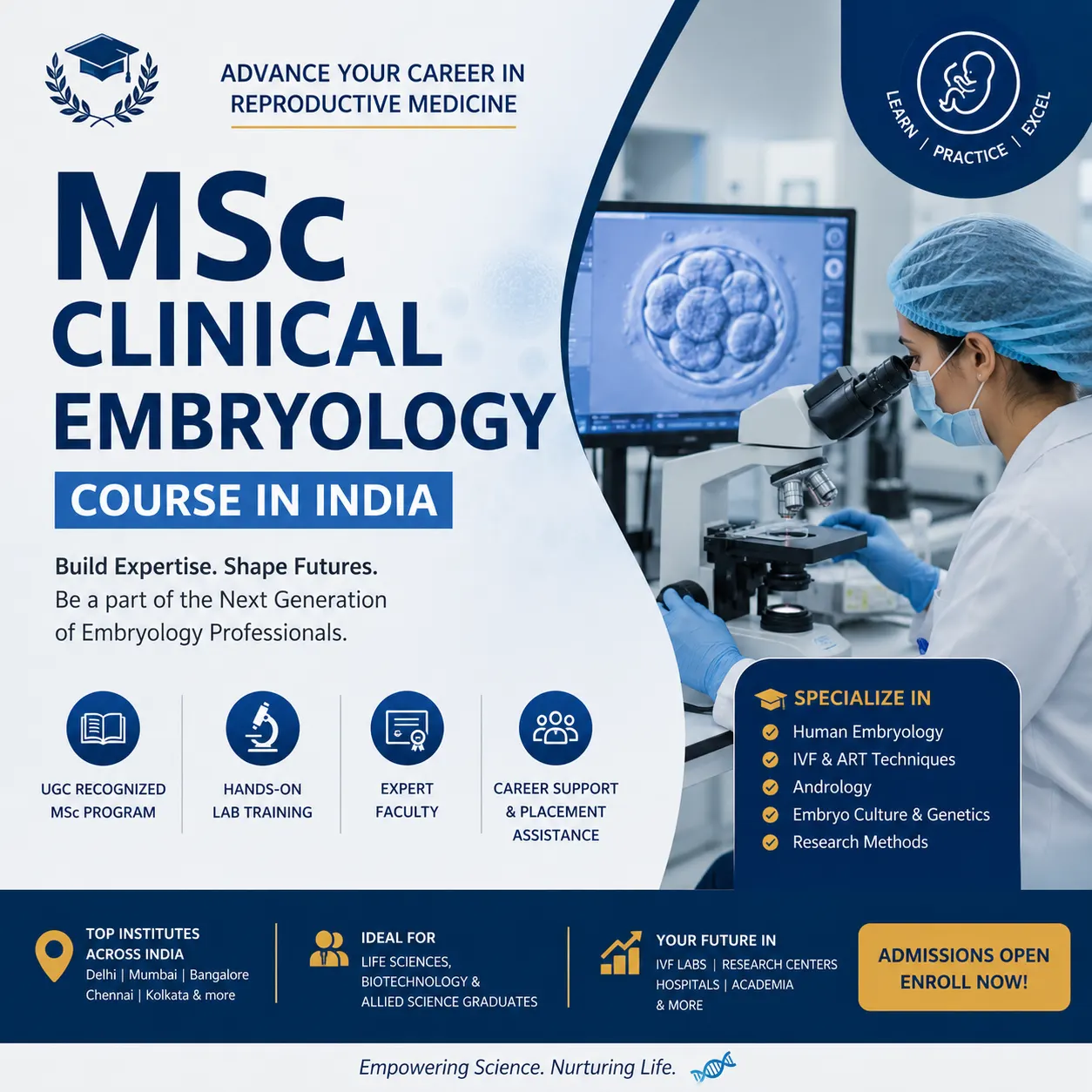
MSc Clinical Embryology Course in India
MSc Clinical Embryology Course in India
The MSc Clinical Embryology Course in India is an advanced postgraduate pathway for students who want to build a meaningful career in clinical embryology, reproductive laboratory science, reproductive science, and academic science education. As reproductive science awareness becomes more advanced and widely accepted across India, the need for trained embryology professionals is increasing in reproductive science laboratories, science institutes, academic centres, research laboratories, and academic institutions.
EmbryoPath offers structured academic guidance for students interested in clinical embryology education in academic collaboration with GD Goenka University. The program is designed for learners who want to understand the scientific, technical, ethical, and laboratory-based aspects of embryology while preparing themselves for a professional future in reproductive science.
Clinical embryology is not only about laboratory procedures. It is a responsible field where accuracy, discipline, observation, documentation, and ethical practice matter at every step. Students who choose this career should have a genuine interest in biology, human reproduction, laboratory science, and scientifically-focused academic learning.
About the MSc Clinical Embryology Course
The MSc Clinical Embryology Course focuses on the study of reproductive biology, gamete science, fertilization, early embryo development, reproductive science fundamentals, laboratory workflow, and reproductive laboratory science. It helps students understand how embryology supports academic science education and how laboratory-based decisions can contribute to reproductive science outcomes.
The course introduces learners to important academic areas such as male and female reproductive systems, ovarian physiology, sperm function, oocyte biology, embryo grading concepts, culture systems, cryobiology principles, laboratory safety, quality control, and scientific ethics. These subjects help students develop a strong foundation before moving toward advanced reproductive laboratory science understanding.
At EmbryoPath, the learning approach is focused on clarity and career relevance. In collaboration with GD Goenka University, students receive an academic environment where theoretical concepts are connected with practical awareness. The aim is to help students understand what happens inside a reproductive science laboratory and why embryologists play an important role in academic and research teams.
Why Clinical Embryology Is Important in India
India has seen significant growth in reproductive science awareness, laboratory education, reproductive science, and reproductive laboratory science services. Many students now seek academic training for careers in this field, and reproductive science laboratories require trained professionals who understand laboratory discipline and reproductive science. This has made clinical embryology an important academic and career field for science graduates.
A clinical embryologist works closely with laboratory scientists, andrology specialists, academic staff, counsellors, and laboratory teams. The role requires technical awareness, attention to detail, and respect for ethical standards. Students entering this field must understand that embryology is a sensitive scientific profession where academic knowledge and responsibility go together.
For students from biology, biotechnology, microbiology, zoology, medical science, and life science backgrounds, this course can open a focused route toward reproductive science education. Instead of choosing a general academic path, learners can specialize in a field connected with modern laboratory science and academic-based science education.
Eligibility for MSc Clinical Embryology Course in India
Eligibility criteria may vary according to university guidelines and academic regulations. In general, students from life sciences, biological sciences, biotechnology, microbiology, zoology, reproductive biology, medical laboratory science, or related medical science backgrounds may be considered suitable for this program. Candidates should check the latest admission requirements before applying.
- Students with a background in biology or life sciences may apply as per eligibility norms.
- Candidates interested in clinical embryology, reproductive science, and laboratory-based education can consider this course.
- Graduates who want to specialize in reproductive science and reproductive laboratory science may find this program relevant.
- Applicants should have patience, discipline, observation skills, and interest in scientific learning.
- Final eligibility depends on academic rules, documentation, and institutional admission guidelines.
EmbryoPath helps students understand admission-related details clearly so they can make an informed decision. The guidance process is especially useful for students and parents who want to know whether the course matches the student's academic background and career goals.
What Students Learn During the Course
The MSc Clinical Embryology Course in India is designed to develop academic understanding of reproductive science and embryology-related laboratory concepts. Students learn the basics of human reproduction, reproductive science fundamentals, reproductive laboratory science procedures, laboratory protocols, and embryo development stages.
- Human reproductive anatomy and physiology
- Male and female reproductive biology basics
- Gamete biology and fertilization process
- Embryo development and embryo assessment concepts
- Laboratory workflow awareness in clinical embryology
- Culture media, incubator environment, and lab quality control
- Cryobiology principles and safety practices
- Ethical, legal, and documentation responsibilities in reproductive laboratory science
Learning Outcomes of the Program
After completing the program, students are expected to gain a clearer understanding of reproductive biology, embryology concepts, reproductive laboratory science workflow, and ethical responsibilities involved in reproductive science education. The course helps learners connect academic knowledge with the practical expectations of laboratory-based reproductive science settings.
- Understand the role of embryology in reproductive laboratory science.
- Develop knowledge of gamete handling and embryo development concepts.
- Learn the importance of laboratory safety, quality control, and documentation.
- Build awareness of ethical practices in reproductive science.
- Prepare for entry-level career opportunities in reproductive science and laboratory-related fields.
Why Choose EmbryoPath?
EmbryoPath focuses on providing clear, career-oriented academic guidance for students who want to enter the field of clinical embryology. With academic collaboration from GD Goenka University, students receive a structured learning pathway that supports both academic understanding and professional direction.
The institute helps students understand course details, eligibility, admission steps, career possibilities, and the skills required for reproductive science laboratory careers. The goal is to guide learners responsibly without overpromising outcomes.
Career Scope After This Course
After completing an MSc Clinical Embryology Course in India, students may explore career opportunities in reproductive science laboratories, science institutes, reproductive laboratory science centres, academic departments, research labs, and academic institutions. Career growth depends on practical exposure, individual skills, institutional requirements, and continuous professional learning.
Possible roles may include clinical embryology trainee, laboratory assistant, embryology lab coordinator, reproductive laboratory science professional, research assistant, or academic support role in reproductive science. Students who continue to develop technical knowledge and laboratory discipline can build a strong long-term career in this field.
Admission Guidance
Choosing the right postgraduate course is an important decision for students and parents. EmbryoPath provides admission guidance to help candidates understand eligibility, academic collaboration details, course structure, documents required, and the next steps for application.
Students should apply only after reviewing their academic background, career interest, and commitment to laboratory-based science education. The admission guidance process helps learners make a confident and informed decision.
Apply for Admission Guidance
If you are planning to build a career in clinical embryology, reproductive laboratory science, and reproductive science, connect with EmbryoPath for guidance on the MSc Clinical Embryology Course in India. Get clarity about eligibility, admission process, course details, and career direction before taking your next step.
Frequently Asked Questions
What is an MSc Clinical Embryology Course in India?
An MSc Clinical Embryology Course in India is a postgraduate program focused on reproductive biology, embryo development, reproductive science fundamentals, laboratory concepts, and reproductive laboratory science. It helps students understand the role of embryology in academic science education and prepares them for academic and career opportunities in reproductive science laboratories, science institutes, and academic settings.
Who can apply for MSc Clinical Embryology?
Students from life sciences, biotechnology, microbiology, zoology, reproductive biology, medical laboratory science, or related medical science backgrounds may be eligible, depending on university and institutional guidelines. Candidates should have interest in reproductive science, laboratory work, and science education. Exact eligibility should always be confirmed before applying because admission rules may vary by academic authority.
Is MSc Clinical Embryology a good career option?
Yes, clinical embryology can be a strong career option for students interested in reproductive science, laboratory science, and academic-based education. India's clinical embryology sector is growing, and trained embryology professionals are needed in reproductive science laboratories and science institutes. However, career success depends on academic learning, practical exposure, ethical conduct, accuracy, and continuous professional skill development.
What subjects are covered in this course?
The course generally covers reproductive anatomy, physiology, reproductive science fundamentals, gamete biology, fertilization, embryo development, reproductive laboratory science principles, laboratory workflow, cryobiology concepts, quality control, documentation, and scientific ethics. The exact syllabus may differ according to academic guidelines, but the main focus remains on understanding embryology and its role in academic science education.
Why choose EmbryoPath for this course?
EmbryoPath provides structured academic and admission guidance for students interested in clinical embryology education. In academic collaboration with GD Goenka University, EmbryoPath focuses on clarity, career relevance, ethical awareness, and student support. The guidance helps candidates understand whether the course matches their academic background, professional goals, and interest in reproductive science education.
How can I apply for admission?
Students can contact EmbryoPath to receive admission guidance for the MSc Clinical Embryology Course in India. The team can explain eligibility, required documents, academic collaboration details, course structure, and application steps. Before applying, students should review their educational background and career goals to ensure the program is the right fit for them.




















 MSc Clinical Embryology