
MSc Clinical Embryology Duration | EmbryoPath Guide
If you are exploring a career in clinical embryology and reproductive laboratory science, understanding the MSc Clinical Embryology duration is one of the first steps toward planning your academic journey. This postgraduate program is designed for students who want to specialize in reproductive science, embryo handling techniques, and laboratory-based scientific training. At EmbryoPath, in academic collaboration with GD Goenka University, students receive a structured, industry-relevant curriculum that prepares them for real-world roles in India's growing clinical embryology education sector.
This page explains the complete course duration, semester structure, eligibility criteria, learning outcomes, and career opportunities associated with the MSc Clinical Embryology program, helping you make an informed decision about your future in clinical embryology.
What is the MSc Clinical Embryology Duration?
The MSc Clinical Embryology duration is typically two years, spread across four semesters. This timeline allows students to gradually build knowledge from foundational reproductive biology to advanced laboratory-based embryology practices. The structured semester system ensures that theoretical learning is balanced with practical exposure, which is essential in a field that demands precision and hands-on skill.
- Semester 1 & 2: Core subjects including reproductive anatomy, physiology, genetics, and laboratory basics
- Semester 3: Advanced embryology techniques, andrology, and reproductive laboratory protocols
- Semester 4: Clinical embryology training, dissertation work, and practical internship exposure
While the standard duration is two years, actual academic pacing may vary slightly depending on university guidelines, semester examination schedules, and practical training requirements set by the affiliating institution.
Why This Course Duration Matters
Clinical embryology is a highly specialized field where accuracy and technical expertise directly impact laboratory outcomes. A two-year structured duration ensures that students are not rushed through critical concepts like oocyte handling, embryo culture, cryobiology, and laboratory protocol training. Instead, the program allows time for supervised practical training, which is essential before entering a professional reproductive laboratory environment.
Eligibility Criteria for MSc Clinical Embryology
Before enrolling, students should understand the basic eligibility requirements associated with this program. While specific criteria may vary by institution, general eligibility typically includes:
- A bachelor's degree in life sciences, biotechnology, zoology, microbiology, or a related science field
- Minimum aggregate marks as specified by the affiliating university
- Basic understanding of biology and laboratory sciences at the undergraduate level
- Some programs may consider candidates with a background in nursing, biomedical science, or allied science fields
Students are encouraged to verify exact eligibility requirements through official admission guidance before applying.
Learning Outcomes of the MSc Clinical Embryology Program
By the end of the program duration, students are expected to develop a strong combination of theoretical knowledge and practical laboratory competence. Key learning outcomes include:
- Understanding human reproductive physiology and genetics
- Hands-on exposure to clinical embryology laboratory equipment and protocols
- Knowledge of embryo culture, grading, and cryobiology concepts
- Awareness of ethical and regulatory standards in reproductive science
- Preparedness for laboratory-based roles in embryology and diagnostic settings
Why Choose EmbryoPath?
EmbryoPath, in academic collaboration with GD Goenka University, offers a curriculum designed to bridge the gap between classroom learning and real laboratory practice. The program focuses on structured semester-wise progression, ensuring students are not overwhelmed but steadily guided through increasingly advanced topics.
Choosing EmbryoPath means gaining access to a curriculum aligned with current industry expectations in India's expanding clinical embryology education sector. The collaboration with GD Goenka University adds academic credibility, while EmbryoPath's focus on practical exposure helps students transition confidently from education to employment.
Career Scope After This Course
India's clinical embryology and reproductive science sector has seen significant growth in recent years, creating consistent demand for trained embryology professionals. After completing the MSc Clinical Embryology duration, graduates can explore career opportunities such as:
- Clinical Embryologist in reproductive science laboratories
- Laboratory Technician or Laboratory Coordinator
- Research Associate in reproductive science institutions
- Andrology Laboratory Specialist
- Academic or teaching roles in embryology-related programs
With the right combination of theoretical knowledge and practical training, graduates can build long-term careers in laboratories, research institutions, diagnostic centers, and academic organizations across India and internationally.
Admission Guidance
Choosing the right postgraduate program requires more than just understanding duration and eligibility. Prospective students should also evaluate curriculum depth, practical training opportunities, faculty expertise, and university affiliation before making a decision.
EmbryoPath provides admission guidance to help students understand program structure, documentation requirements, and application timelines associated with the MSc Clinical Embryology program offered in collaboration with GD Goenka University. This guidance is particularly useful for students transitioning from a general life sciences background into a specialized clinical embryology field.
Apply for Admission Guidance
If you are considering a career in clinical embryology and want clarity on course duration, eligibility, and application process, EmbryoPath's admission team is available to guide you. Connect with EmbryoPath today to take the next step toward a specialized career in reproductive science and laboratory-based embryology education.
Frequently Asked Questions
What is the total duration of the MSc Clinical Embryology course?
The MSc Clinical Embryology duration is generally two years, divided into four semesters. This timeline allows students to progress from foundational reproductive biology concepts to advanced clinical embryology techniques. The structured format ensures adequate time for both classroom learning and supervised practical training, which is essential for developing competence in reproductive laboratory protocols before entering professional practice.
Is MSc Clinical Embryology a good career option in India?
Yes, MSc Clinical Embryology offers strong career potential in India due to the growing demand for reproductive science education and laboratory expertise. Trained embryologists are needed across research institutions, academic laboratories, and diagnostic centers. With specialized skills in embryo handling and reproductive laboratory science, graduates can build stable, long-term careers in a field that continues to expand steadily across urban and semi-urban academic centers.
Who is eligible for the MSc Clinical Embryology program?
Eligibility typically requires a bachelor's degree in life sciences, biotechnology, zoology, microbiology, or a related science discipline. Some programs may also consider candidates from nursing or biomedical backgrounds. Minimum aggregate marks may apply depending on the affiliating university's guidelines. Students are advised to confirm specific eligibility criteria through official admission guidance before submitting their application.
Does the MSc Clinical Embryology course include practical training?
Yes, practical training is a core component of the MSc Clinical Embryology curriculum. Students gain hands-on exposure to laboratory techniques such as embryo culture, cryobiology concepts, and andrology procedures. This practical component is typically integrated throughout the semesters, with more intensive laboratory exposure in later stages, helping students build the technical confidence required for real-world reproductive laboratory environments.
What subjects are covered during the MSc Clinical Embryology duration?
The curriculum covers reproductive anatomy, physiology, genetics, andrology, and reproductive laboratory science protocols. Early semesters focus on foundational biological sciences, while later semesters introduce advanced embryology techniques and laboratory applications. This progressive structure ensures students develop both theoretical understanding and practical skills necessary for working in specialized reproductive science laboratory settings.
How does EmbryoPath support students during this program?
EmbryoPath, in collaboration with GD Goenka University, supports students through structured academic guidance, practical training exposure, and admission assistance. The program is designed to help students understand course structure, eligibility requirements, and career pathways clearly. This support system aims to make the transition from academic study to professional clinical embryology practice smoother and more industry-aligned.





















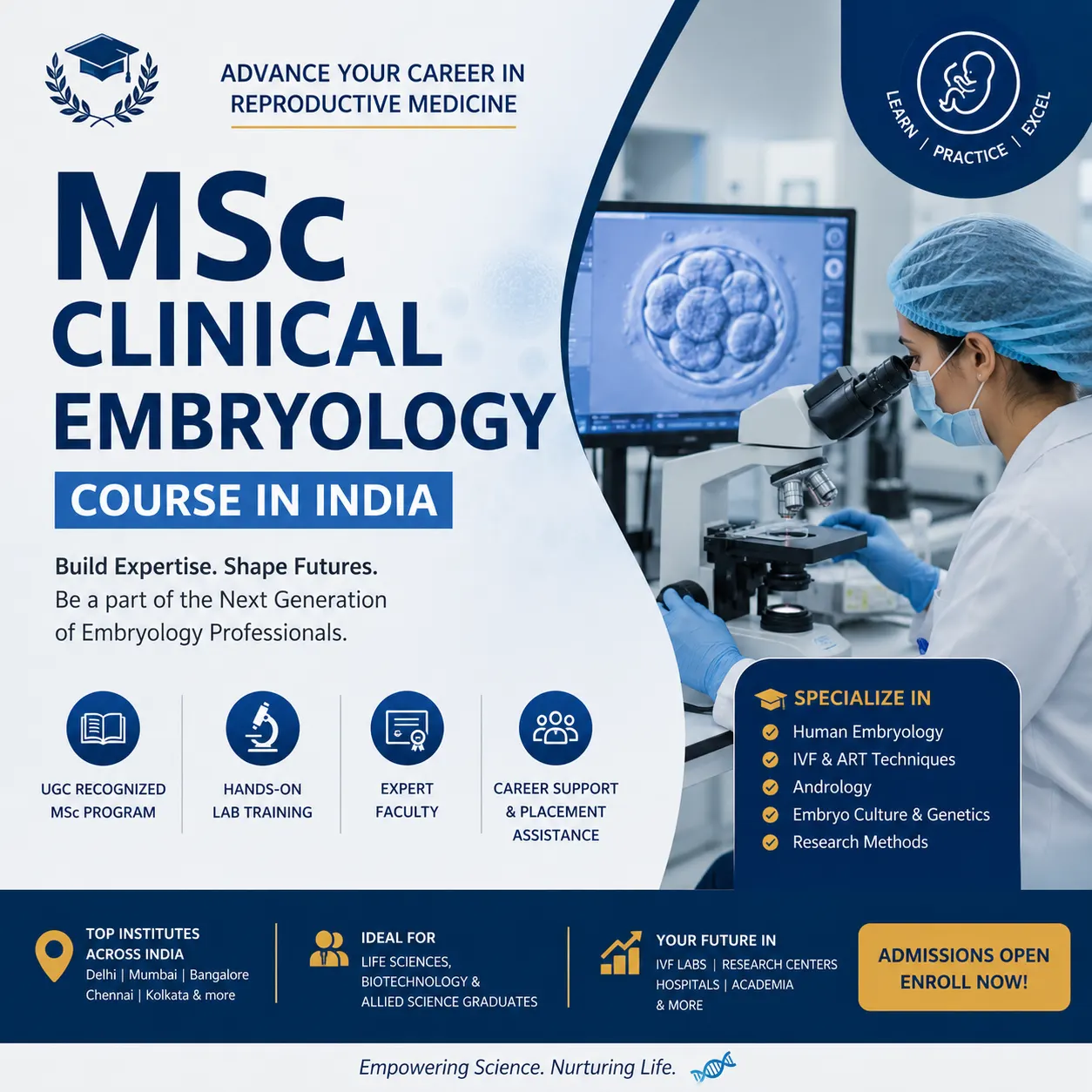 MSc Clinical Embryology