ART Course India | Clinical Embryology Training | EmbryoPath
The demand for highly trained professionals in assisted reproductive technology continues to grow across India as fertility care becomes increasingly advanced. Choosing an ART Course India can provide aspiring embryologists and life science graduates with the scientific knowledge, laboratory understanding, and practical exposure needed to pursue opportunities within IVF and reproductive medicine.
EmbryoPath, in academic collaboration with GD Goenka University, offers structured clinical embryology education designed to help students understand the principles of assisted reproductive technology, laboratory procedures, quality standards, and ethical practices. The curriculum combines academic learning with practical orientation, allowing students to develop confidence in a professional laboratory environment.
What is an ART Course?
An Assisted Reproductive Technology (ART) course focuses on the scientific and laboratory aspects of fertility treatment. Students gain an understanding of reproductive biology, embryology, gamete handling, embryo culture principles, laboratory quality management, cryopreservation concepts, and clinical workflows followed in IVF laboratories.
The program is suitable for learners who wish to strengthen both theoretical knowledge and laboratory awareness while preparing for careers in reproductive healthcare.
Why Study an ART Course India?
India has experienced significant growth in fertility care services, creating increasing demand for skilled embryology professionals who understand laboratory protocols and reproductive technologies. A professionally designed course helps students gain industry-relevant knowledge while understanding current laboratory standards.
- Growing IVF and fertility healthcare sector
- Increasing demand for trained embryology professionals
- Exposure to modern laboratory concepts
- Understanding of reproductive biology and embryology
- Career opportunities in private and institutional healthcare settings
- Academic learning supported by practical orientation
Who Can Apply?
The course is intended for students who are interested in developing specialized knowledge in reproductive science and embryology.
- Bachelor's degree holders in Life Sciences
- Biotechnology graduates
- Microbiology graduates
- Zoology graduates
- Biomedical Science graduates
- Medical laboratory science students
- Medical science graduates as per applicable eligibility requirements
Applicants should review the latest admission guidelines and eligibility criteria before applying.
What You Will Learn
The curriculum is designed to provide a balanced understanding of theoretical concepts and laboratory practices associated with assisted reproductive technology.
Foundations of Reproductive Biology
Students study human reproductive physiology, fertilization processes, embryonic development, and reproductive endocrinology to establish a strong scientific foundation.
Clinical Embryology Concepts
The course introduces learners to embryo development, gamete biology, embryo assessment principles, culture systems, laboratory documentation, and quality assurance practices.
IVF Laboratory Fundamentals
Students become familiar with laboratory workflow, equipment awareness, sterile techniques, environmental monitoring, laboratory safety, and professional operating procedures followed in fertility laboratories.
Cryopreservation Principles
The program introduces the concepts of cryobiology, storage procedures, quality management, and the scientific principles associated with preserving reproductive cells and embryos.
Quality Standards and Ethics
Modern embryology requires strict adherence to laboratory quality systems and ethical responsibilities. Students understand documentation, patient confidentiality, laboratory compliance, and quality improvement practices.
Learning Outcomes
After completing the program, students are expected to develop knowledge and professional understanding in areas including:
- Fundamentals of assisted reproductive technology
- Clinical embryology principles
- Laboratory quality management
- Reproductive biology concepts
- IVF laboratory workflow awareness
- Laboratory safety procedures
- Scientific documentation practices
- Professional communication within healthcare environments
- Ethical laboratory conduct
- Continuous learning and professional development
Why Choose EmbryoPath?
EmbryoPath is committed to providing quality education in clinical embryology with an emphasis on academic excellence, professional ethics, and practical understanding. Through its academic collaboration with GD Goenka University, students benefit from a structured learning environment that aligns with current educational standards.
Key advantages include:
- Industry-focused curriculum
- Academic collaboration with GD Goenka University
- Experienced faculty guidance
- Practical laboratory-oriented learning approach
- Focus on scientific accuracy and ethical practice
- Supportive learning environment
- Career-oriented education pathway
- Exposure to current laboratory methodologies
Importance of Practical Learning
Clinical embryology is a laboratory-based discipline where understanding scientific principles alongside practical laboratory processes is essential. Practical exposure enables students to appreciate laboratory workflows, equipment handling principles, quality control procedures, and professional standards expected in reproductive medicine settings.
Hands-on learning also helps improve analytical thinking, laboratory discipline, observation skills, documentation practices, and confidence while working within controlled scientific environments.
Career Scope After This Course
The expanding fertility sector offers opportunities for qualified professionals with appropriate educational backgrounds and specialized embryology training. Career prospects depend on academic qualifications, individual skills, employer requirements, and applicable regulatory standards.
Potential career pathways include:
- Clinical Embryology Laboratories
- IVF Centres
- Fertility Clinics
- Research Organizations
- Reproductive Healthcare Institutions
- Academic and Training Institutes
- Diagnostic Laboratories
- Healthcare Research Projects
Graduates may also continue their academic journey through advanced education and specialized training in reproductive medicine and related life science disciplines.
Skills Developed During the Program
- Scientific reasoning
- Laboratory observation
- Documentation accuracy
- Critical thinking
- Professional ethics
- Quality management awareness
- Communication skills
- Analytical problem-solving
- Team collaboration
- Continuous professional learning
Admission Guidance
Students interested in joining the program should carefully review the admission process, eligibility criteria, and required academic qualifications. Preparing academic documents in advance and seeking admission guidance can simplify the application process.
The admissions team at EmbryoPath assists prospective students by providing information regarding course structure, eligibility, documentation requirements, academic collaboration, and available learning opportunities.
Apply for Admission Guidance
If you are planning to build a professional future in clinical embryology, now is the right time to explore your options. Connect with EmbryoPath to receive admission guidance, understand eligibility requirements, learn about the curriculum, and discover how the ART Course India can support your educational and professional goals through academic collaboration with GD Goenka University.
Frequently Asked Questions
1. What is an ART Course India?
An ART Course India is an educational program focused on assisted reproductive technology and clinical embryology. It helps students understand reproductive biology, laboratory procedures, embryo development concepts, quality management, ethical practices, and IVF laboratory operations. Such programs are designed for learners interested in developing specialized knowledge for careers related to reproductive healthcare and fertility laboratories.
2. Who is eligible to apply for this course?
Eligibility generally depends on the institute's admission requirements. Many applicants come from life sciences, biotechnology, microbiology, zoology, biomedical sciences, medical laboratory sciences, and related academic backgrounds. Prospective students should review the latest eligibility guidelines and submit the required academic documents during the admission process before enrolling.
3. Why should students choose EmbryoPath?
EmbryoPath offers structured education in clinical embryology with academic collaboration from GD Goenka University. The curriculum emphasizes scientific learning, laboratory awareness, ethical practices, experienced faculty guidance, and career-focused education. Students benefit from an organized academic environment designed to support professional growth within the evolving field of assisted reproductive technology.
4. What career opportunities are available after completing the course?
Depending on educational qualifications, individual competence, employer expectations, and applicable regulations, graduates may explore opportunities in IVF centres, fertility clinics, embryology laboratories, research organizations, academic institutions, and reproductive healthcare facilities. Many learners also continue with higher education or specialized training to further strengthen their professional expertise.
5. Does the course include practical laboratory learning?
The curriculum is designed to combine theoretical understanding with practical laboratory orientation wherever applicable. Students gain exposure to laboratory workflows, quality systems, documentation practices, equipment awareness, and professional standards that contribute to a stronger understanding of clinical embryology and assisted reproductive technology within an educational environment.
6. How can I apply for admission?
Prospective students can contact EmbryoPath to receive detailed admission guidance. The admissions team provides information regarding eligibility, required documents, application procedures, course structure, academic collaboration with GD Goenka University, and other important details that help applicants make informed educational decisions before enrolling in the program.












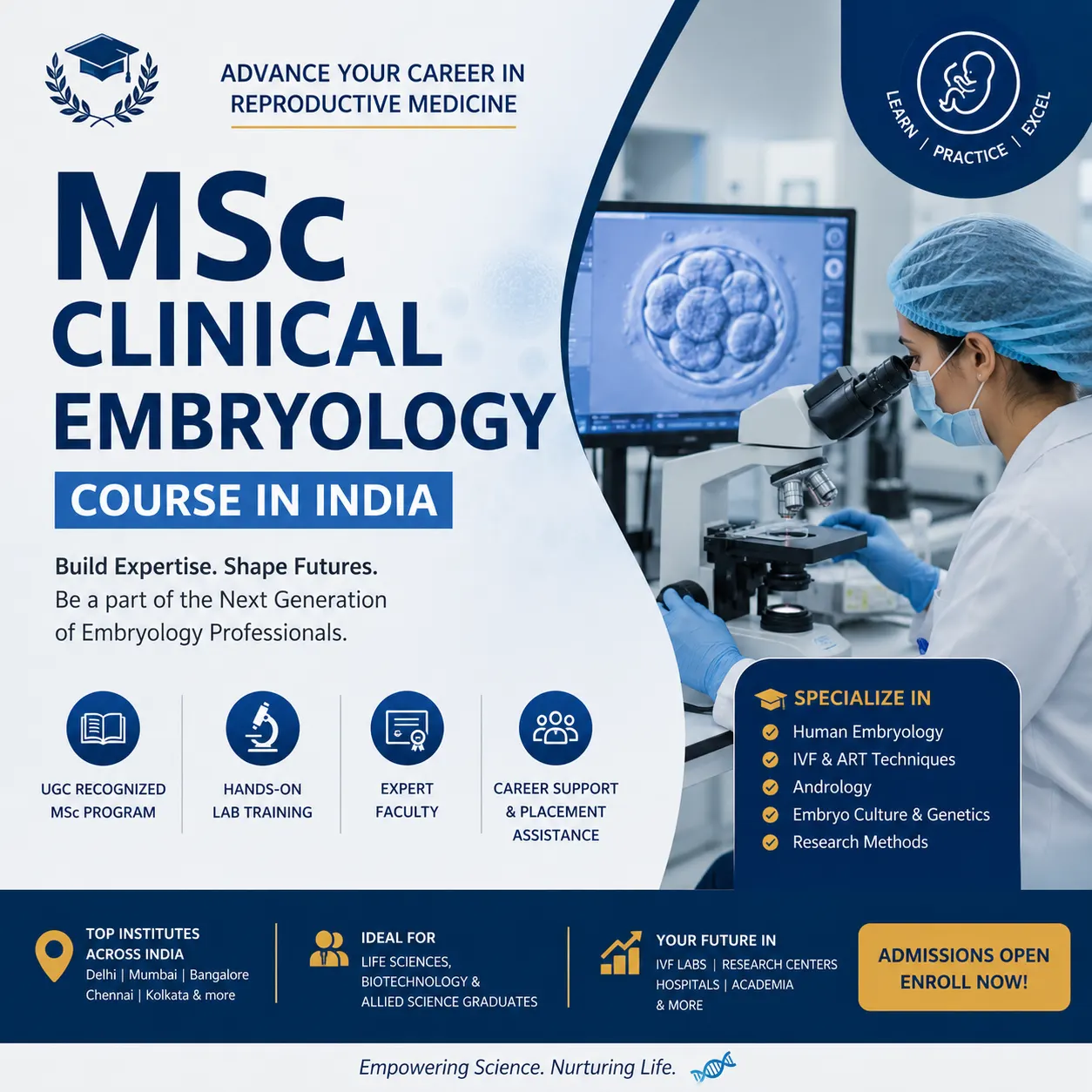 MSc Clinical Embryology