
PG Embryology Placement | EmbryoPath Admission Guide
Choosing a postgraduate program in clinical embryology is an important step for students who aspire to work in assisted reproductive technology (ART) and IVF laboratories. While academic excellence is essential, understanding PG Embryology Placement opportunities is equally important before selecting an institute. A quality educational institution should provide not only comprehensive academic knowledge but also practical laboratory exposure and career guidance that prepares students for professional opportunities.
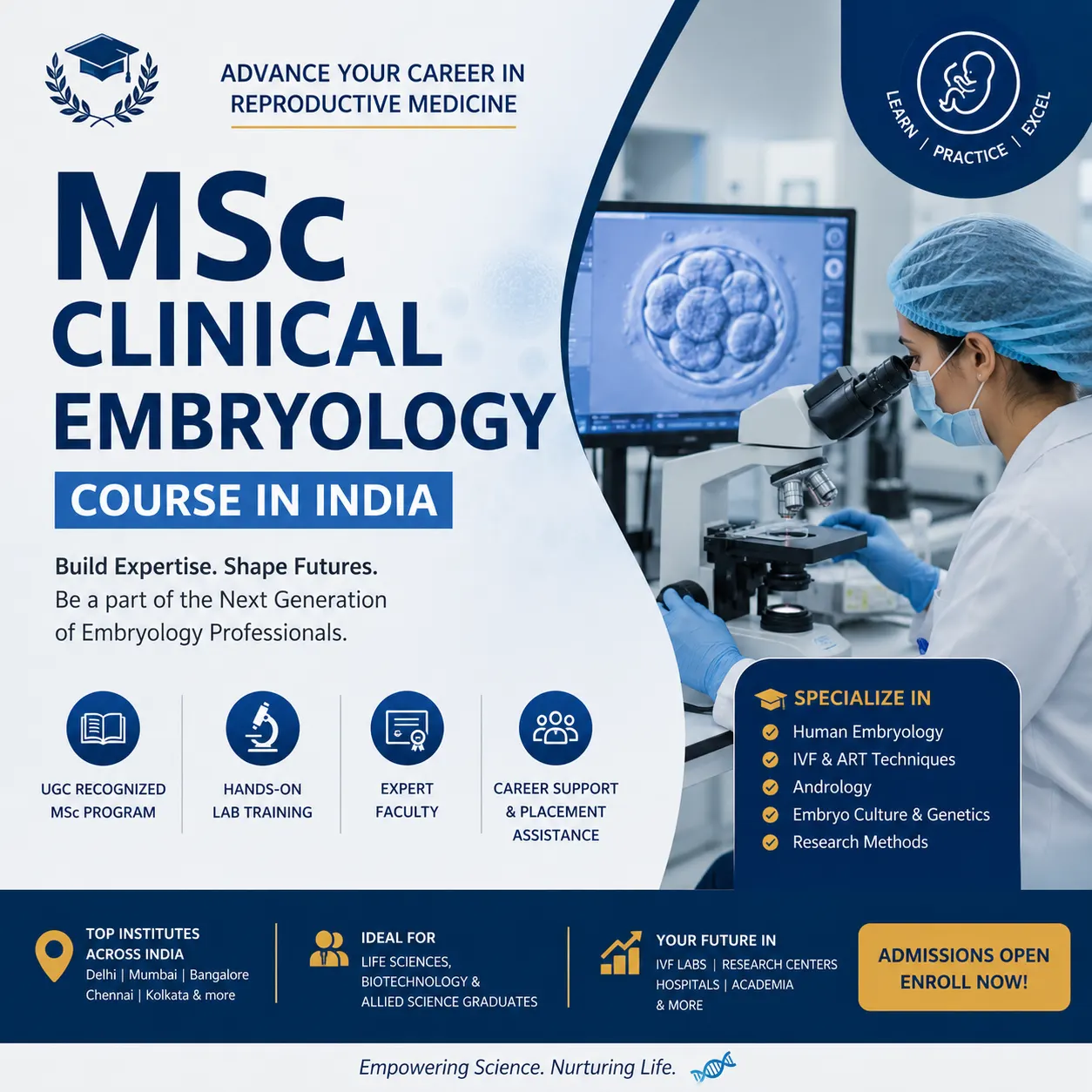
EmbryoPath, in academic collaboration with GD Goenka University, offers an industry-oriented learning environment that combines classroom education with practical laboratory training. The curriculum is designed to help students develop scientific understanding, laboratory confidence, and professional skills required in modern fertility centers and reproductive medicine laboratories across India.
Understanding PG Embryology Placement
PG Embryology Placement refers to the career guidance and employment support offered to students after completing postgraduate clinical embryology education. Placement readiness involves much more than job interviews. It includes developing technical competence, communication skills, ethical laboratory practices, professional confidence, and an understanding of IVF laboratory protocols.
Students who complete structured embryology education are generally better prepared to explore employment opportunities in fertility clinics, IVF centers, reproductive medicine hospitals, research organizations, and academic institutions depending on available openings and employer requirements.
Why Placement Support Matters
The rapidly growing IVF industry in India has increased the demand for skilled embryology professionals. Institutes that emphasize practical learning and career readiness help students become more competitive in the employment market.
- Professional career guidance
- Industry-oriented curriculum
- Laboratory skill development
- Interview preparation support
- Resume and professional profile guidance
- Exposure to modern IVF laboratory practices
- Understanding of workplace ethics and quality standards
Course Relevance in Today's IVF Industry
Clinical embryology has become one of the fastest-growing specialized fields within reproductive medicine. With increasing awareness about fertility treatments and advancements in assisted reproductive technology, trained embryology professionals are becoming increasingly valuable.
The program offered through EmbryoPath and GD Goenka University focuses on developing scientific knowledge alongside practical competencies that reflect current laboratory practices. Students gain exposure to laboratory procedures, quality assurance concepts, reproductive biology, embryo culture principles, cryopreservation concepts, and ethical responsibilities associated with embryology laboratories.
Eligibility for PG Clinical Embryology Programs
Students from life sciences, biotechnology, zoology, microbiology, medical sciences, veterinary sciences, pharmacy, and related biological science backgrounds may be eligible to apply depending on the admission requirements of the respective academic program.
Applicants should carefully review the latest eligibility criteria before applying. A strong academic foundation in biological sciences helps students understand advanced reproductive biology and laboratory procedures more effectively.
Learning Outcomes That Improve Career Readiness
A well-designed postgraduate embryology program aims to build technical expertise as well as professional confidence. Throughout the course, students develop both theoretical understanding and practical laboratory exposure.
- Advanced reproductive biology knowledge
- Understanding IVF laboratory workflow
- Embryo handling principles
- Laboratory quality management concepts
- Scientific documentation practices
- Laboratory safety procedures
- Ethical and professional responsibilities
- Critical thinking and analytical skills
- Research methodology awareness
- Professional communication skills
Practical Laboratory Exposure
Hands-on laboratory learning plays an important role in preparing future embryologists. Practical exposure allows students to connect classroom concepts with laboratory applications under expert supervision.
Students gain familiarity with laboratory equipment, controlled laboratory environments, quality standards, documentation procedures, and professional workflows commonly followed in IVF laboratories. This practical experience strengthens confidence before entering professional settings.
Professional Skills Beyond Technical Knowledge
Successful embryologists require more than scientific expertise. Employers also value professionalism, communication, accuracy, teamwork, ethical conduct, and the ability to work in high-precision laboratory environments.
Students are encouraged to develop soft skills that contribute to long-term career success, including effective communication, problem-solving, time management, laboratory discipline, and continuous professional learning.
Why Choose EmbryoPath?
EmbryoPath is committed to providing quality education that aligns with the evolving needs of the clinical embryology profession. Through its academic collaboration with GD Goenka University, students receive structured education designed to balance academic excellence with practical laboratory learning.
- Industry-oriented curriculum
- Academic collaboration with GD Goenka University
- Experienced faculty guidance
- Practical laboratory-focused education
- Modern learning environment
- Career-oriented academic support
- Professional skill development
- Focus on ethical laboratory practices
- Continuous academic mentoring
- Student-centered learning approach
Career Scope After This Course
Graduates who complete postgraduate clinical embryology education may explore career opportunities across various healthcare and research sectors based on their qualifications, skills, employer requirements, and available positions.
- IVF Laboratories
- Fertility Clinics
- Assisted Reproductive Technology Centres
- Reproductive Medicine Hospitals
- Clinical Research Organizations
- Medical Universities
- Academic Institutions
- Diagnostic Laboratories
- Healthcare Research Facilities
- Laboratory Management Roles
As India's reproductive healthcare sector continues to expand, professionals with specialized embryology education and practical laboratory skills may find diverse career pathways in both private and institutional healthcare settings.
Preparing for PG Embryology Placement
Students can improve their placement readiness by focusing on academic excellence, laboratory competence, communication abilities, and professional ethics throughout their education. Consistent learning, attention to detail, and practical confidence often contribute significantly during recruitment processes.
Participation in workshops, scientific discussions, laboratory demonstrations, and continuous skill enhancement further strengthens professional development and career preparedness.
Admission Guidance
Selecting the right postgraduate embryology program involves evaluating curriculum quality, faculty expertise, practical laboratory exposure, academic collaboration, learning facilities, and career support services. Prospective students should carefully review admission requirements, eligibility criteria, course objectives, and available academic resources before making their decision.
EmbryoPath supports aspiring students by providing detailed admission guidance, helping applicants understand the program structure, documentation process, and educational opportunities available through its collaboration with GD Goenka University.
Apply for Admission Guidance
If you are planning a career in clinical embryology and wish to understand PG Embryology Placement opportunities, EmbryoPath can help you explore suitable academic pathways. Connect with the admissions team to receive detailed information about eligibility, course structure, practical laboratory learning, academic collaboration with GD Goenka University, and the admission process. Taking informed decisions today can help you build a strong foundation for a professional future in assisted reproductive technology.
Frequently Asked Questions
1. What is meant by PG Embryology Placement?
PG Embryology Placement refers to the career guidance and employment assistance that helps students prepare for professional opportunities after completing postgraduate clinical embryology education. It generally includes career counselling, professional development, interview preparation, laboratory readiness, and guidance for exploring opportunities in IVF clinics, fertility centres, research organizations, and reproductive medicine laboratories.
2. Does practical laboratory training improve placement opportunities?
Practical laboratory exposure helps students develop confidence, technical understanding, and familiarity with professional laboratory environments. Hands-on learning allows students to connect theoretical concepts with laboratory procedures, making them better prepared for recruitment processes and professional responsibilities in assisted reproductive technology settings.
3. Who can apply for a postgraduate clinical embryology program?
Eligibility generally includes graduates from life sciences, biotechnology, zoology, microbiology, medical sciences, veterinary sciences, pharmacy, and related biological disciplines. Applicants should always review the latest admission criteria provided by the institution because eligibility requirements may vary depending on the academic program and university guidelines.
4. Why is EmbryoPath a suitable choice for clinical embryology education?
EmbryoPath focuses on industry-oriented education by combining academic learning with practical laboratory exposure. Its academic collaboration with GD Goenka University supports structured learning, experienced faculty guidance, modern laboratory-oriented education, and career-focused academic development designed to prepare students for professional growth.
5. What career opportunities are available after completing the program?
Graduates may explore opportunities in IVF laboratories, fertility clinics, reproductive medicine hospitals, research institutions, healthcare organizations, diagnostic laboratories, and academic environments. Career progression depends on educational qualifications, practical skills, professional performance, employer expectations, and available job openings within the reproductive healthcare sector.
6. How can students improve their placement readiness during the course?
Students should actively participate in practical laboratory sessions, strengthen theoretical understanding, develop communication skills, maintain professional ethics, and continuously improve technical competence. Engaging in workshops, scientific discussions, faculty mentoring, and professional skill development can further enhance confidence and overall career preparedness.

















 MSc Clinical Embryology