
BSc Clinical Embryology Colleges | EmbryoPath India
Choosing among the best BSc Clinical Embryology Colleges is an important decision for students interested in reproductive science, assisted reproductive technology, and laboratory-based healthcare careers. Clinical embryology has become one of the fastest-growing disciplines within fertility science, offering exciting opportunities for students from biology and life science backgrounds. A well-designed academic program combines theoretical knowledge with laboratory training to help students understand the scientific principles that support modern IVF procedures.
EmbryoPath, in academic collaboration with GD Goenka University, is committed to providing quality education that bridges classroom learning with practical laboratory exposure. The curriculum is designed to help students develop professional competencies, scientific thinking, ethical awareness, and technical skills required in contemporary embryology laboratories. Students benefit from structured learning that prepares them for careers in reproductive healthcare and advanced academic opportunities.
Why Clinical Embryology is Becoming a Preferred Career Choice
The field of clinical embryology plays a significant role in assisted reproductive technology. As fertility care continues to evolve in India and globally, there is growing demand for trained professionals who understand laboratory protocols, embryo development, gamete handling, quality assurance, and reproductive biology.
Students who pursue education in this field gain exposure to modern laboratory concepts while building analytical and technical skills. The discipline also encourages continuous learning because reproductive medicine is supported by ongoing scientific research and technological advancement.
What to Look for in BSc Clinical Embryology Colleges
Selecting the right institution involves evaluating several important academic and professional factors. Students should focus on colleges that emphasize practical education along with strong theoretical foundations.
- Industry-oriented curriculum
- Academic collaboration with recognized universities
- Experienced faculty members
- Laboratory-focused education
- Exposure to IVF laboratory practices
- Research-oriented learning environment
- Professional ethics and quality standards
- Career guidance and academic mentoring
- Modern laboratory infrastructure
- Skill-based learning opportunities
Course Relevance in Modern Healthcare
Clinical embryology supports fertility treatments through specialized laboratory procedures that require scientific accuracy, attention to detail, and ethical responsibility. Students develop an understanding of reproductive physiology, embryonic development, laboratory management, cryopreservation concepts, quality control, microbiology, genetics, and laboratory safety.
The combination of scientific education and practical laboratory learning prepares graduates to contribute to multidisciplinary fertility teams while understanding the importance of precision and patient-centered laboratory practices.
Eligibility for Admission
Students interested in pursuing clinical embryology generally require an educational background in science. Candidates who have completed higher secondary education with biology or graduates from life science disciplines often find this field aligned with their academic interests. Admission requirements may vary according to institutional policies, making it important for applicants to review eligibility criteria carefully before applying.
Learning Outcomes
A comprehensive clinical embryology education focuses on developing scientific understanding along with laboratory competence. Students progressively strengthen their knowledge through academic instruction, demonstrations, supervised practical sessions, and case-based learning.
- Understanding reproductive biology principles
- Knowledge of assisted reproductive technology
- Introduction to IVF laboratory workflows
- Laboratory quality management concepts
- Ethical and professional laboratory practices
- Scientific documentation and record keeping
- Critical thinking and analytical skills
- Teamwork and communication abilities
- Laboratory safety awareness
- Research methodology fundamentals
Practical Learning Experience
One of the defining characteristics of quality education is meaningful practical exposure. Students benefit from laboratory-oriented learning that complements classroom instruction. Demonstrations, supervised laboratory activities, scientific discussions, and faculty mentorship help learners understand the application of theoretical concepts in professional environments.
Practical learning also encourages confidence, accuracy, and familiarity with laboratory protocols that are essential for professional growth in reproductive science.
Why Choose EmbryoPath?
EmbryoPath has established itself as a dedicated institution focused on clinical embryology education through an academic collaboration with GD Goenka University. The learning environment is designed to encourage scientific curiosity, academic excellence, and professional development.
Students receive education from experienced faculty members who emphasize conceptual understanding along with practical knowledge. The curriculum reflects current developments in reproductive science while maintaining high academic standards. The institute promotes responsible laboratory practices, ethical conduct, quality-focused education, and continuous skill development.
EmbryoPath also supports students through structured academic guidance, interactive learning sessions, laboratory exposure, and career-oriented mentoring. This balanced approach helps learners build confidence for future academic and professional opportunities.
Career Scope After This Course
Graduates from quality clinical embryology programs can explore diverse career pathways across reproductive healthcare and scientific research. As fertility science continues to expand, qualified professionals are increasingly valued for their specialized laboratory knowledge.
- IVF laboratories
- Fertility centres
- Reproductive medicine hospitals
- Research laboratories
- Academic institutions
- Healthcare organizations
- Diagnostic laboratories
- Clinical research organizations
- Medical education sector
- Higher education and specialization programs
Career progression depends upon academic qualifications, practical skills, professional experience, institutional requirements, and continuous learning.
Importance of Professional Ethics
Clinical embryology is a highly responsible profession that requires scientific integrity, confidentiality, precision, and ethical decision-making. Students are encouraged to understand laboratory regulations, quality standards, patient confidentiality, documentation practices, and responsible handling of biological materials. Developing ethical values alongside technical competence contributes to professional excellence throughout one's career.
Future Learning Opportunities
Graduates interested in expanding their academic qualifications may pursue advanced education, specialized certifications, research projects, or postgraduate studies related to reproductive biology, embryology, biotechnology, genetics, or assisted reproductive technology. Lifelong learning enables professionals to remain updated with scientific innovations and evolving laboratory practices.
Admission Guidance
Students planning to apply should begin by reviewing eligibility criteria, academic requirements, course curriculum, faculty expertise, laboratory facilities, and institutional recognition. Understanding the educational approach before admission helps students make informed decisions about their future.
EmbryoPath guides prospective students throughout the admission process by providing information about academic programs, documentation requirements, eligibility, and available learning opportunities in collaboration with GD Goenka University. Early planning allows applicants to prepare their documents and complete the admission process smoothly.
Apply for Admission Guidance
If you are passionate about reproductive science and wish to build a meaningful career in clinical embryology, EmbryoPath welcomes your interest. Learn more about the curriculum, admission process, academic collaboration with GD Goenka University, laboratory-focused education, and future career opportunities. Connect with the admissions team to receive guidance and take the next step toward developing specialized knowledge in one of the most promising healthcare disciplines.
Frequently Asked Questions
1. What should students consider while selecting BSc Clinical Embryology Colleges?
Students should evaluate curriculum quality, university collaboration, faculty expertise, laboratory infrastructure, practical learning opportunities, academic support, ethical training, and career guidance. Institutions that balance theoretical education with laboratory exposure can provide stronger preparation for future careers in reproductive science and assisted reproductive technology. Comparing these factors helps applicants make an informed educational decision.
2. Who is eligible to pursue a clinical embryology course?
Eligibility generally depends on institutional admission policies. Students with science backgrounds, particularly those who have studied biology, life sciences, biotechnology, or related subjects, often find clinical embryology suitable for their academic interests. Applicants should carefully review official eligibility criteria before submitting their admission application.
3. What skills do students develop during a clinical embryology program?
Students develop knowledge of reproductive biology, laboratory procedures, scientific documentation, quality management, ethical practices, laboratory safety, analytical thinking, communication, teamwork, and research fundamentals. These competencies contribute to professional readiness while supporting continued academic and career development within reproductive healthcare and laboratory sciences.
4. Why is practical laboratory learning important in clinical embryology?
Practical learning helps students understand how scientific concepts are applied in laboratory settings. Supervised laboratory activities strengthen technical understanding, improve observational skills, encourage scientific accuracy, and develop confidence in professional environments. Practical education complements classroom instruction and contributes to overall competency development throughout the academic journey.
5. What career opportunities are available after completing a clinical embryology program?
Graduates may explore opportunities in IVF laboratories, fertility centres, research institutions, hospitals, diagnostic laboratories, academic organizations, healthcare facilities, and clinical research environments. Some students also continue with advanced studies or specialized training to expand their expertise and pursue additional academic or professional opportunities.
6. Why choose EmbryoPath in academic collaboration with GD Goenka University?
EmbryoPath combines academic learning with practical orientation through its collaboration with GD Goenka University. Students benefit from structured education, experienced faculty, laboratory-focused learning, ethical training, academic mentoring, and career guidance. The institution aims to prepare learners with scientific knowledge and professional skills relevant to the evolving field of clinical embryology.




















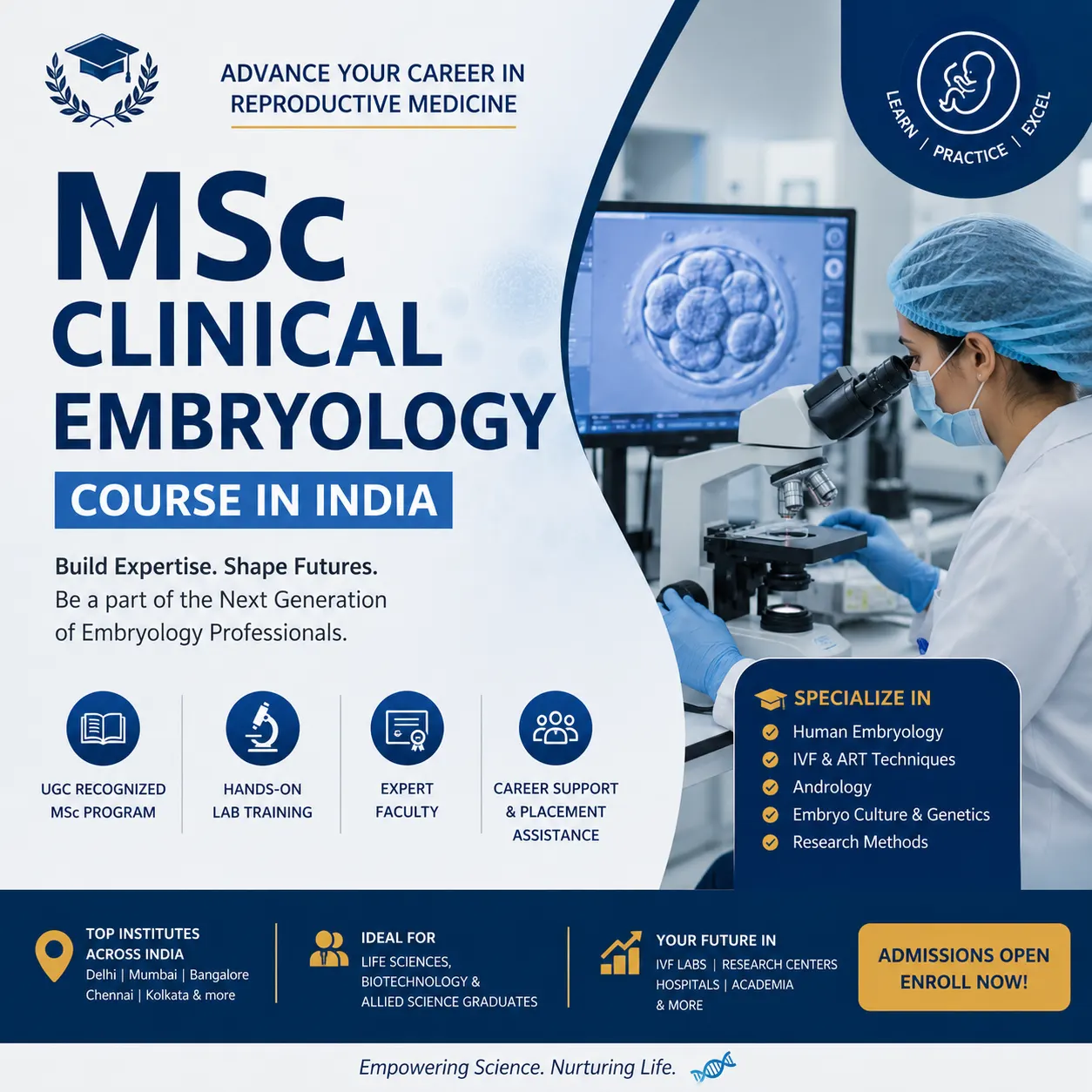 MSc Clinical Embryology