
MSc Clinical Embryology Admission Eligibility | EmbryoPath
Pursuing a postgraduate degree in Clinical Embryology is an excellent choice for students who wish to build a career in assisted reproductive technology (ART), IVF laboratories, reproductive medicine, and advanced biological sciences. Understanding MSc Clinical Embryology Admission Eligibility is the first step toward joining this specialized academic field. The programme is designed for graduates with relevant educational backgrounds who aspire to gain scientific knowledge, laboratory exposure, and professional skills required in modern fertility care.
EmbryoPath, in academic collaboration with GD Goenka University, provides students with academic guidance and industry-oriented learning to help them prepare for careers in Clinical Embryology. The programme combines theoretical understanding with practical laboratory exposure while emphasizing ethical practices, scientific accuracy, and professional development.
Understanding MSc Clinical Embryology Admission Eligibility
The eligibility criteria are established to ensure that students possess the scientific foundation required for advanced study in reproductive biology and embryology. Applicants are generally expected to have completed an undergraduate degree in a relevant discipline from a recognized institution.
Depending on the applicable admission requirements, eligible educational backgrounds may include:
- Life Sciences
- Biological Sciences
- Biotechnology
- Microbiology
- Zoology
- Genetics
- Biochemistry
- Biomedical Sciences
- Medical Laboratory Technology
- Veterinary Sciences
- MBBS, BDS, BHMS, BAMS or other eligible medical science qualifications, where applicable
- Other allied health science disciplines as per university norms
Applicants should always review the latest admission guidelines issued by the respective academic institution before applying.
Who Should Apply?
The programme is suitable for graduates who have a strong interest in reproductive science, laboratory research, and IVF technology. It is particularly beneficial for students who enjoy biology, cellular science, laboratory procedures, and evidence-based healthcare.
- Life science graduates
- Biotechnology students
- Medical graduates
- Biomedical science professionals
- Laboratory science graduates
- Students interested in IVF laboratory careers
- Researchers seeking specialization in reproductive biology
Why Clinical Embryology is an Emerging Career
Clinical Embryology has become one of the fastest-growing areas within reproductive medicine due to increasing awareness of fertility treatment and advancements in assisted reproductive technologies. Skilled embryology professionals contribute to laboratory procedures that support fertility specialists and multidisciplinary healthcare teams.
The growing number of fertility centres and reproductive healthcare facilities has increased the demand for qualified professionals with specialized academic training and laboratory competence.
What Students Learn During the Programme
The curriculum is designed to provide both academic understanding and practical exposure. Students gradually develop knowledge of reproductive biology while learning laboratory protocols commonly associated with embryology education.
Core Academic Topics
- Human reproductive biology
- Cell biology
- Developmental biology
- Embryology fundamentals
- Reproductive endocrinology
- Genetics
- Molecular biology
- Laboratory quality systems
- Research methodology
- Bioethics and professional practices
Laboratory Learning Areas
- Laboratory safety and protocols
- Microscopy techniques
- Gamete handling principles
- Embryo culture concepts
- Cryopreservation principles
- Quality assurance practices
- Laboratory documentation
- Scientific observation skills
Learning Outcomes
Students completing the programme are expected to gain a comprehensive understanding of reproductive science while improving laboratory competency and professional confidence.
- Strong scientific foundation in reproductive biology
- Knowledge of assisted reproductive technology concepts
- Laboratory analytical skills
- Professional documentation practices
- Understanding of laboratory quality management
- Research-oriented thinking
- Ethical and responsible professional conduct
- Preparation for careers in reproductive medicine laboratories
Why Choose EmbryoPath?
EmbryoPath is committed to delivering structured education in Clinical Embryology through an academic environment that emphasizes quality learning and professional development. In academic collaboration with GD Goenka University, students receive education that combines classroom instruction with practical laboratory exposure.
Some key advantages include:
- Industry-focused curriculum
- Experienced academic faculty
- Modern laboratory learning environment
- Comprehensive practical exposure
- Research-oriented academic approach
- Student mentoring and academic guidance
- Focus on professional ethics and quality standards
- Career-oriented educational support
Career Scope After This Course
Graduates may explore professional opportunities across reproductive healthcare, laboratory sciences, academics, and research. Career pathways depend on educational qualifications, institutional requirements, experience, and applicable regulations.
Possible career opportunities include:
- Clinical Embryology laboratories
- IVF centres
- Fertility hospitals
- Research laboratories
- Academic institutions
- Diagnostic laboratories
- Biotechnology companies
- Clinical research organizations
- Healthcare education institutions
- Research support organizations
Students may also consider pursuing further academic research, advanced certifications, or doctoral studies based on their career objectives.
Admission Guidance
Understanding the admission process can help applicants prepare their documents and complete each stage efficiently. Prospective students are encouraged to review programme-specific eligibility requirements, maintain academic records, and seek guidance whenever necessary.
The admission process generally includes reviewing eligibility criteria, submitting the application, providing required academic documents, completing institutional formalities, and receiving admission confirmation after successful evaluation according to university policies.
EmbryoPath offers admission guidance to help students understand programme requirements, documentation, curriculum, and career pathways associated with Clinical Embryology education.
Apply for Admission Guidance
If you are planning to build a career in reproductive science and IVF laboratory practice, now is an ideal time to explore your academic options. EmbryoPath, in academic collaboration with GD Goenka University, provides dedicated admission guidance to help eligible students understand the programme, eligibility criteria, application process, and future career opportunities. Connect with the admissions team to receive accurate information and take the next step toward a professional career in Clinical Embryology.
Frequently Asked Questions
1. What is the basic MSc Clinical Embryology Admission Eligibility?
Admission eligibility generally requires applicants to hold a bachelor's degree in life sciences, biological sciences, biotechnology, microbiology, zoology, biochemistry, medicine, veterinary science, or another relevant discipline from a recognized institution. Specific eligibility requirements may vary according to university regulations, so applicants should always verify the latest admission guidelines before submitting their application.
2. Can biotechnology graduates apply for this programme?
Yes. Biotechnology graduates are commonly considered suitable applicants because their academic background includes molecular biology, genetics, microbiology, and laboratory sciences. Final eligibility depends on the admission requirements established by the university and programme, making it important to review the official criteria before applying.
3. Is laboratory experience mandatory for admission?
Laboratory experience is not always mandatory for admission. Many eligible graduates apply directly after completing their undergraduate education. However, prior laboratory exposure may help students adapt more quickly to practical learning during the programme. Admission decisions are based on the applicable institutional eligibility requirements.
4. What career opportunities are available after completing the programme?
Graduates may pursue opportunities in IVF centres, fertility hospitals, reproductive medicine laboratories, biotechnology organizations, research institutions, academic organizations, and healthcare laboratories. Career progression depends on academic qualifications, practical skills, professional experience, and recruitment requirements established by employers.
5. Why should students choose EmbryoPath for Clinical Embryology education?
EmbryoPath offers a structured academic learning environment with practical laboratory exposure through its academic collaboration with GD Goenka University. The programme focuses on scientific learning, laboratory skills, research orientation, ethical practices, and career-focused education, helping students prepare for professional opportunities within the field of Clinical Embryology.
6. How can students apply for admission?
Students can begin by reviewing the programme eligibility criteria and preparing their academic documents. They should then follow the official admission process, complete the required application procedures, and seek guidance from the EmbryoPath admissions team whenever clarification is needed regarding eligibility, documentation, or programme details.




















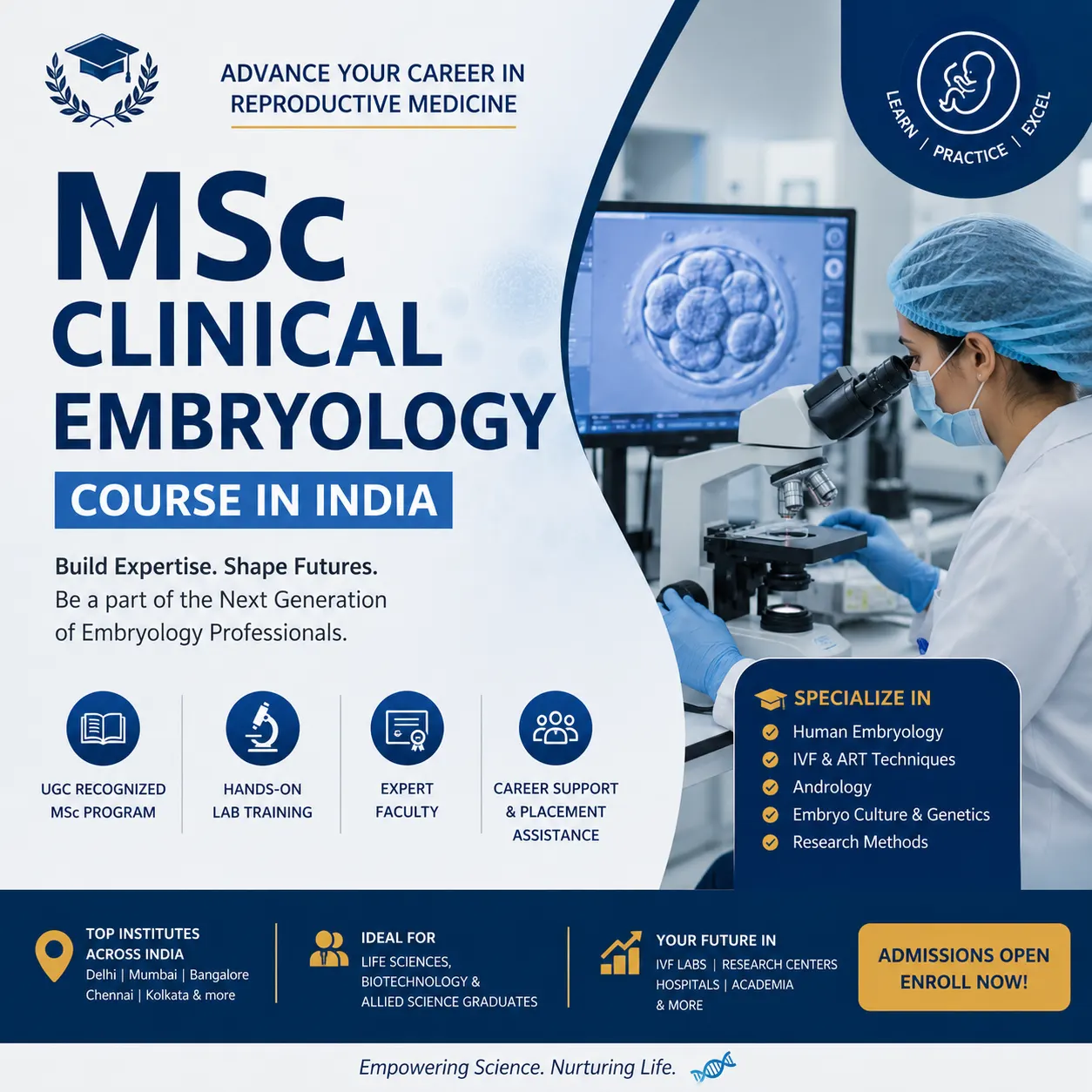 MSc Clinical Embryology