PG Clinical Embryology India | EmbryoPath
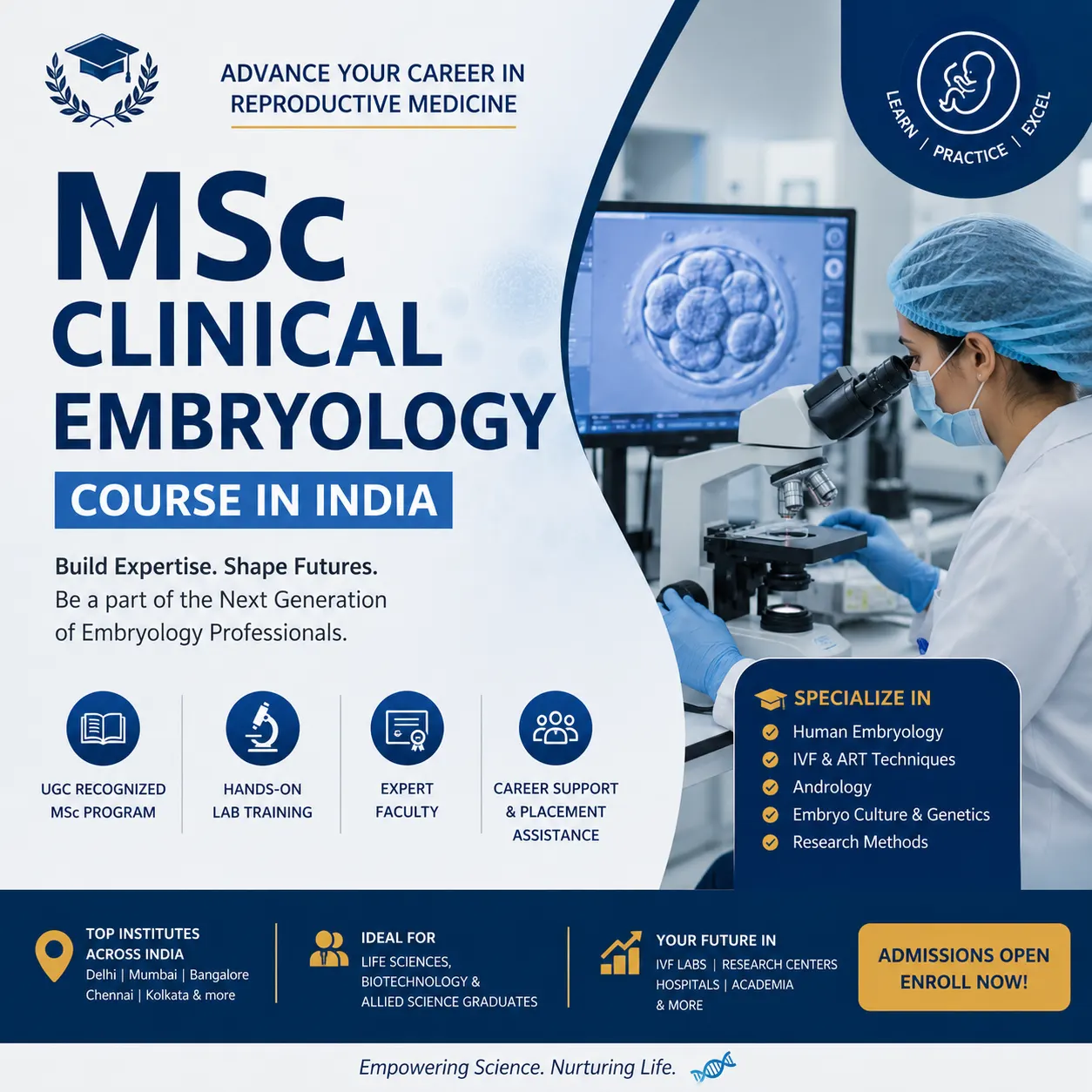
The demand for qualified professionals in reproductive medicine continues to grow as fertility care becomes more advanced across India. A specialized education in clinical embryology helps students understand the science behind assisted reproductive technology (ART), laboratory procedures, embryo development, gamete handling, cryopreservation, and quality management. Choosing PG Clinical Embryology India can provide graduates with a structured academic pathway to develop industry-relevant knowledge and laboratory competence.
EmbryoPath, in academic collaboration with GD Goenka University, offers a professionally designed learning environment that combines academic excellence with practical laboratory exposure. The curriculum is developed to help students understand current IVF laboratory practices while building confidence through supervised learning and hands-on training.
What is PG Clinical Embryology?
Clinical embryology is a specialized branch of reproductive science focused on the handling of human gametes and embryos during assisted reproductive procedures. Professionals in this field work within IVF laboratories and contribute to various stages of fertility treatment while maintaining laboratory quality standards and ethical practices.
A postgraduate program provides advanced theoretical understanding alongside practical laboratory experience. Students learn scientific concepts, laboratory protocols, equipment handling, documentation, safety procedures, and professional responsibilities required in modern embryology laboratories.
Why Choose PG Clinical Embryology India?
India has witnessed significant growth in fertility services, creating increasing demand for trained embryology professionals. Educational programs that combine classroom learning with laboratory experience help students prepare for evolving industry requirements.
- Industry-focused curriculum
- Comprehensive reproductive biology education
- Practical IVF laboratory exposure
- Learning from experienced faculty
- Understanding laboratory quality management
- Professional ethics and patient confidentiality
- Career-oriented academic approach
- Modern laboratory learning environment
Academic Collaboration with GD Goenka University
EmbryoPath works in academic collaboration with GD Goenka University to provide students with a structured educational framework. This collaboration combines academic standards with practical learning, allowing students to develop scientific knowledge alongside laboratory competence.
The curriculum is designed to encourage critical thinking, professional development, research awareness, and practical application of reproductive science concepts.
Who Can Apply?
The program is suitable for graduates who wish to pursue careers in reproductive medicine and assisted reproductive technology. Students from biological sciences and related academic backgrounds often seek specialized education to enter IVF laboratory careers.
- Life Science Graduates
- Biotechnology Graduates
- Microbiology Graduates
- Zoology Graduates
- Genetics Graduates
- Biochemistry Graduates
- Medical Science Graduates
- Pharmacy Graduates (where applicable)
- Candidates meeting institutional eligibility criteria
What Students Learn During the Course
The curriculum covers both theoretical concepts and practical laboratory applications to prepare students for professional responsibilities in embryology laboratories.
Core Academic Topics
- Human reproductive biology
- Male and female reproductive physiology
- Embryo development
- Gamete biology
- IVF laboratory fundamentals
- Embryo culture techniques
- Cryopreservation principles
- Laboratory quality assurance
- Laboratory documentation
- Ethics in reproductive medicine
Practical Learning Areas
- Laboratory workflow understanding
- Equipment familiarization
- Specimen handling protocols
- Laboratory safety practices
- Quality control procedures
- Professional laboratory documentation
- Standard operating procedures
- Observation-based clinical learning
Learning Outcomes
Upon successful completion of the program, students develop a strong academic foundation along with practical understanding of IVF laboratory operations. The course aims to prepare learners to work responsibly within professional laboratory environments while following established scientific and ethical standards.
- Understanding reproductive science concepts
- Knowledge of IVF laboratory workflow
- Awareness of laboratory quality standards
- Improved analytical and observational skills
- Professional communication abilities
- Ethical decision-making in laboratory practice
- Confidence in laboratory procedures under supervision
Why Choose EmbryoPath?
EmbryoPath focuses on delivering education that balances academic knowledge with practical skill development. Students benefit from structured learning, experienced faculty guidance, laboratory exposure, and an educational approach aligned with current industry practices.
- Academic collaboration with GD Goenka University
- Practical laboratory-oriented education
- Industry-relevant curriculum
- Experienced academic mentors
- Modern laboratory infrastructure
- Professional learning environment
- Student-focused academic support
- Career-oriented educational approach
Career Scope After This Course
Clinical embryology offers opportunities within India's growing fertility and reproductive healthcare sector. Graduates with specialized education may explore professional roles depending on institutional requirements, individual qualifications, experience, and employer recruitment processes.
Potential career pathways include:
- Clinical Embryology Professional
- IVF Laboratory Associate
- Embryology Laboratory Assistant
- ART Laboratory Professional
- Research Laboratory Associate
- Quality Assurance Support
- Academic and Training Support Roles
- Clinical Research Opportunities
As fertility centres continue expanding throughout India, demand for qualified professionals with specialized laboratory education is expected to remain significant.
Skills Developed During the Program
- Scientific understanding
- Laboratory discipline
- Attention to detail
- Professional ethics
- Analytical thinking
- Documentation skills
- Quality management awareness
- Communication skills
- Team collaboration
- Continuous learning mindset
Admission Guidance
Students interested in pursuing postgraduate education in clinical embryology should carefully review eligibility criteria, academic qualifications, admission timelines, and required documentation before applying.
The admission process generally includes application submission, academic document verification, eligibility review, and guidance from the admissions team. Prospective students are encouraged to connect with EmbryoPath for updated information regarding admission procedures and program availability.
Apply for Admission Guidance
If you are planning to build a career in reproductive science, EmbryoPath can help you explore suitable educational opportunities through its academic collaboration with GD Goenka University. Speak with the admissions team to understand eligibility requirements, course structure, learning outcomes, and the application process. Early guidance can help you prepare confidently for your educational journey in clinical embryology.
Frequently Asked Questions
1. What is PG Clinical Embryology India?
PG Clinical Embryology India refers to postgraduate education focused on reproductive biology, assisted reproductive technology, and IVF laboratory practices. The program combines theoretical learning with laboratory-oriented education to help eligible graduates develop professional knowledge required for careers in embryology and reproductive medicine while following ethical and scientific standards.
2. Who is eligible to apply for this course?
Eligibility generally depends on the academic requirements specified by the institution. Graduates from life sciences, biotechnology, microbiology, zoology, genetics, biochemistry, medical sciences, and other relevant disciplines may be eligible, subject to admission guidelines. Applicants should always verify current eligibility requirements before submitting their application.
3. Why should students choose EmbryoPath?
EmbryoPath provides a structured educational environment that combines academic learning with practical laboratory exposure. Through its academic collaboration with GD Goenka University, students receive industry-relevant education designed to strengthen scientific understanding, laboratory awareness, professional ethics, and practical knowledge suitable for careers in reproductive medicine.
4. What career opportunities are available after completing the program?
Graduates may explore opportunities in IVF laboratories, fertility centres, reproductive research environments, quality management support, laboratory assistance, academic settings, and related healthcare organizations. Career prospects depend on academic qualifications, practical skills, employer requirements, professional experience, and applicable regulatory guidelines.
5. Does the course include practical laboratory learning?
Yes. The educational approach emphasizes practical exposure alongside classroom instruction. Students gain supervised learning experiences related to laboratory procedures, quality standards, documentation, equipment familiarization, workflow understanding, and professional laboratory practices to complement their theoretical knowledge throughout the program.
6. How can I apply for admission?
Prospective students can begin by contacting the admissions team at EmbryoPath to understand eligibility criteria, documentation requirements, application procedures, important dates, and available academic guidance. Following the official admission process ensures applicants receive accurate and updated information before enrolling in the program.

















 MSc Clinical Embryology