
MSc Clinical Embryology Admission in India | EmbryoPath
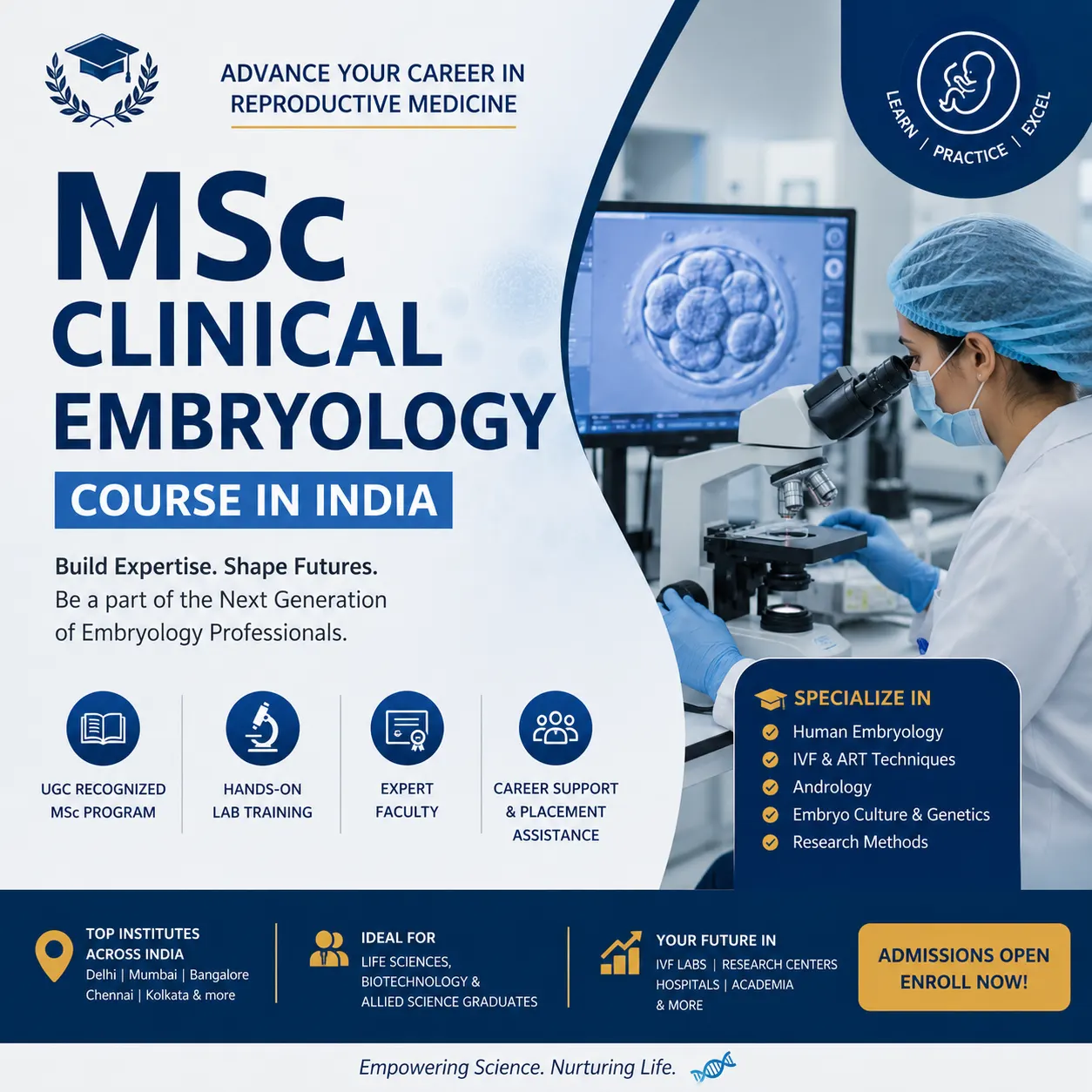
The field of assisted reproductive technology has transformed fertility care across India, creating an increasing demand for qualified clinical embryologists. Students seeking MSc Clinical Embryology Admission in India can pursue advanced education that combines reproductive biology, laboratory science, embryo culture, and IVF laboratory practices. EmbryoPath, in academic collaboration with GD Goenka University, offers a structured academic environment designed to help students develop scientific knowledge and practical laboratory skills required for careers in reproductive medicine.
This postgraduate program is suitable for graduates from life sciences, biotechnology, microbiology, zoology, medical sciences, pharmacy, biotechnology, biomedical sciences, and other related disciplines who wish to build a professional career in clinical embryology. The curriculum focuses on academic excellence, laboratory exposure, ethical practices, and industry-oriented learning that aligns with evolving healthcare requirements.
Why Choose MSc Clinical Embryology?
Clinical embryology is one of the fastest-growing specializations within reproductive healthcare. As fertility awareness increases and IVF services expand throughout India, the demand for trained professionals continues to rise. An MSc in Clinical Embryology provides students with specialized education that extends beyond traditional life science programs.
The course introduces students to reproductive physiology, embryonic development, gamete biology, laboratory quality management, cryopreservation principles, IVF laboratory operations, genetics, ethics, and research methodology. Graduates develop the academic foundation needed to work within multidisciplinary fertility care teams.
Course Highlights
- Comprehensive postgraduate curriculum in clinical embryology.
- Academic collaboration with GD Goenka University.
- Industry-oriented learning approach.
- Exposure to modern embryology laboratory practices.
- Focus on reproductive biology and assisted reproductive technology.
- Experienced faculty members and academic mentors.
- Practical understanding of laboratory quality standards.
- Career-oriented education for India's growing fertility sector.
Eligibility for MSc Clinical Embryology Admission in India
Students applying for this postgraduate program generally require a bachelor's degree in a relevant discipline from a recognized institution. Suitable academic backgrounds may include Life Sciences, Biotechnology, Zoology, Microbiology, Biochemistry, Biomedical Sciences, Medical Laboratory Technology, Pharmacy, Nursing, Veterinary Sciences, Medicine, or related biological sciences.
Applicants should possess a genuine interest in reproductive biology, laboratory sciences, research, and assisted reproductive technologies. Admission requirements may vary according to university guidelines and applicable academic policies.
What Students Learn During the Program
The curriculum is designed to provide balanced academic knowledge and laboratory-oriented learning across multiple areas of reproductive science.
Core Academic Subjects
- Human reproductive biology
- Cell biology and developmental biology
- Clinical embryology principles
- Gamete physiology
- Embryo development
- Reproductive endocrinology
- Genetics and molecular biology
- Laboratory quality management
- Research methodology
- Bioethics in reproductive medicine
Practical Learning Areas
- IVF laboratory workflow
- Embryo culture techniques
- Semen analysis fundamentals
- Cryopreservation principles
- Laboratory documentation
- Quality assurance practices
- Equipment handling and maintenance awareness
- Professional laboratory communication
Importance of Practical Learning
Clinical embryology is a laboratory-based discipline where practical understanding complements academic knowledge. Students benefit from learning environments that encourage observation, scientific thinking, laboratory discipline, documentation, and quality-focused procedures. Practical exposure helps learners understand professional laboratory workflows while strengthening confidence for future employment.
Hands-on educational experiences also support analytical thinking, precision, teamwork, ethical responsibility, and continuous learning—qualities valued in reproductive healthcare environments.
Why Choose EmbryoPath?
EmbryoPath is committed to delivering quality education in clinical embryology through an academic framework that combines scientific learning with professional development. In academic collaboration with GD Goenka University, the institute emphasizes student-centered education supported by experienced faculty and structured laboratory learning.
Students benefit from a curriculum that reflects current academic developments in reproductive science while encouraging research-oriented thinking and ethical professional practice. The learning environment is designed to help students understand both theoretical concepts and practical laboratory applications.
- Academic collaboration with GD Goenka University.
- Focused specialization in clinical embryology.
- Experienced faculty and academic guidance.
- Industry-oriented curriculum.
- Laboratory-based educational exposure.
- Professional learning environment.
- Career-focused academic support.
- Emphasis on ethics, quality, and scientific excellence.
Career Scope After This Course
Graduates completing MSc Clinical Embryology may pursue opportunities across India's expanding reproductive healthcare sector. With the continued growth of fertility services, skilled professionals are increasingly required in IVF laboratories, research institutions, academic organizations, diagnostic laboratories, and healthcare facilities.
Potential career pathways include:
- Clinical Embryology Laboratory Professional
- IVF Laboratory Executive
- Research Associate
- Academic Educator
- Quality Assurance Professional
- Laboratory Coordinator
- Clinical Research Associate
- Healthcare Education Specialist
- Reproductive Science Consultant
- Scientific Support Professional
Students may also choose to pursue higher academic studies, research projects, or specialized professional development programs within reproductive medicine and related biomedical sciences.
Admission Guidance
Students interested in MSc Clinical Embryology Admission in India should begin by reviewing eligibility requirements, preparing academic documents, and understanding the admission process. Selecting a recognized institution with an industry-oriented curriculum, experienced faculty, and structured laboratory education is an important step toward building a successful career.
EmbryoPath provides admission guidance to help applicants understand course details, eligibility, documentation requirements, academic structure, and available learning opportunities. Prospective students are encouraged to seek timely information to complete the admission process efficiently.
Benefits of Studying Clinical Embryology in India
India has emerged as a significant destination for reproductive healthcare education due to its growing healthcare infrastructure and expanding fertility services. Students gain exposure to evolving scientific practices while preparing for opportunities within an increasingly specialized healthcare field.
- Growing demand for trained embryology professionals.
- Expanding IVF and fertility healthcare sector.
- Opportunities for interdisciplinary scientific learning.
- Research-oriented educational environment.
- Career pathways across healthcare and academia.
- Continuous technological advancements in reproductive medicine.
Apply for Admission Guidance
If you are planning to build a future in reproductive science, EmbryoPath welcomes aspiring students seeking quality education in clinical embryology. Learn more about eligibility, academic collaboration with GD Goenka University, curriculum structure, laboratory learning opportunities, and the admission process. Connect with the admissions team to receive personalized guidance and take the next step toward a rewarding academic and professional journey in clinical embryology.
Frequently Asked Questions
1. Who can apply for MSc Clinical Embryology Admission in India?
Graduates with relevant educational backgrounds such as Life Sciences, Biotechnology, Zoology, Microbiology, Biochemistry, Biomedical Sciences, Pharmacy, Medical Laboratory Technology, Veterinary Sciences, Medicine, Nursing, and related biological science disciplines may be eligible to apply, subject to the admission requirements and academic guidelines established by the university and institution.
2. What is the duration of an MSc Clinical Embryology program?
Most MSc Clinical Embryology programs are designed as postgraduate degree courses completed over two academic years. The curriculum generally includes theoretical learning, laboratory-oriented education, practical exposure, assessments, and project work that collectively help students build a strong academic foundation in reproductive science and clinical embryology.
3. Why should students choose EmbryoPath for clinical embryology education?
EmbryoPath offers specialized education focused on clinical embryology through academic collaboration with GD Goenka University. Students benefit from experienced faculty, structured learning, industry-oriented curriculum, laboratory exposure, academic guidance, and an educational environment that supports professional growth while emphasizing ethical and scientific excellence throughout the program.
4. What career opportunities are available after completing the course?
Graduates may explore opportunities within IVF laboratories, fertility centres, healthcare organizations, diagnostic laboratories, research institutions, academic organizations, quality management departments, and biomedical research environments. Career progression depends on academic qualifications, practical competence, professional development, and organizational requirements within the reproductive healthcare industry.
5. Does the course include laboratory-based learning?
Yes. Laboratory-oriented education forms an important component of clinical embryology programs. Students typically gain exposure to laboratory workflows, reproductive biology concepts, quality management principles, documentation practices, embryo culture awareness, cryopreservation concepts, and professional laboratory standards under structured academic supervision where applicable.
6. How can students begin the admission process?
Students should review eligibility requirements, collect academic documents, understand university admission guidelines, and contact EmbryoPath for detailed admission assistance. Receiving professional guidance early helps applicants understand the application process, important timelines, course information, and documentation requirements before completing admission formalities.




















 MSc Clinical Embryology