Fertility Institute | Clinical Embryology Courses | EmbryoPath
A successful career in reproductive science begins with quality education, structured laboratory learning, and guidance from experienced professionals. EmbryoPath, in academic collaboration with GD Goenka University, offers students an excellent opportunity to develop knowledge and practical competencies in clinical embryology. As a trusted Fertility Institute focused on education, EmbryoPath provides industry-oriented learning designed for graduates who aspire to contribute to assisted reproductive technology and IVF laboratory practice.
Clinical embryology has become one of the most promising healthcare disciplines as fertility services continue to expand across India. Students seeking specialized education require an institute that combines academic excellence with practical exposure, ethical learning, and career-focused training. EmbryoPath supports learners through comprehensive programs that prepare them for professional opportunities in reproductive medicine.
Why Clinical Embryology Matters
Clinical embryology plays an essential role in assisted reproductive technology by supporting laboratory procedures involved in fertility treatments. Professionals in this field work alongside fertility specialists to maintain laboratory standards, handle reproductive cells, monitor embryo development, and contribute to quality laboratory practices.
As healthcare technology advances, the demand for qualified embryology professionals continues to increase. Students with specialized education and practical laboratory experience are better prepared to meet industry expectations and contribute to modern reproductive healthcare.
What Makes a Good Fertility Institute?
Choosing the right educational institute is an important decision for every student. A quality institute should provide experienced faculty, structured academics, practical laboratory exposure, ethical learning practices, and an environment that encourages professional development.
- Industry-oriented curriculum
- Experienced academic mentors
- Modern laboratory learning environment
- Focus on practical competency
- Academic collaboration with recognized institutions
- Professional learning resources
- Student-focused guidance
- Career-oriented educational approach
About EmbryoPath
EmbryoPath is dedicated to providing quality clinical embryology education for students interested in reproductive sciences. Through its academic collaboration with GD Goenka University, the institute combines academic standards with practical learning opportunities that support professional growth.
The learning environment encourages students to understand laboratory protocols, reproductive biology, embryology principles, laboratory ethics, quality assurance, and emerging developments in assisted reproductive technology. Students benefit from a structured educational framework designed to strengthen both theoretical understanding and laboratory readiness.
Who Can Apply?
The programs are suitable for students who wish to pursue advanced education in reproductive sciences and clinical embryology.
- B.Sc. Life Sciences graduates
- B.Sc. Biotechnology graduates
- B.Sc. Microbiology graduates
- B.Sc. Zoology graduates
- M.Sc. Life Science students
- Medical science graduates
- Pharmacy graduates
- Biochemistry graduates
- Biotechnology professionals seeking specialization
- Students interested in IVF laboratory careers
Learning Outcomes
Students develop both academic knowledge and laboratory awareness through carefully planned educational modules. The objective is to prepare learners with the skills expected in professional reproductive science environments.
- Understanding reproductive biology concepts
- Knowledge of clinical embryology principles
- Introduction to assisted reproductive technology
- Laboratory workflow understanding
- Quality control and laboratory standards
- Professional documentation practices
- Ethical responsibilities in laboratory settings
- Scientific communication and analytical thinking
- Awareness of laboratory safety procedures
- Career readiness for IVF laboratory environments
Industry-Relevant Education
The reproductive healthcare sector continues to evolve with advancements in laboratory technologies, patient care, and scientific research. Students benefit from learning that reflects current industry practices while maintaining strong academic foundations.
EmbryoPath encourages continuous learning through structured coursework, faculty interaction, laboratory demonstrations, and professional guidance. This balanced educational approach helps students gain confidence before entering the professional workforce.
Why Choose EmbryoPath?
EmbryoPath is committed to delivering education that aligns with academic excellence and professional expectations. The institute focuses on creating a supportive learning environment where students can strengthen their knowledge while understanding practical laboratory procedures.
- Academic collaboration with GD Goenka University
- Professional clinical embryology education
- Industry-focused curriculum
- Supportive faculty guidance
- Modern laboratory learning environment
- Student-centred academic approach
- Emphasis on ethical laboratory practices
- Focus on practical competency development
- Career-oriented educational planning
- Commitment to academic excellence
Career Scope After This Course
Clinical embryology offers diverse opportunities for students interested in reproductive medicine, laboratory sciences, and healthcare technology. As fertility services continue to grow across India, qualified professionals remain valuable contributors to multidisciplinary fertility teams.
Graduates may explore opportunities in:
- IVF laboratories
- Fertility centres
- Reproductive medicine facilities
- Clinical research organizations
- Healthcare laboratories
- Academic institutions
- Biomedical research centres
- Laboratory quality management
- Scientific education
- Healthcare technology organizations
Professional Skills Students Develop
In addition to academic learning, students strengthen transferable professional skills that are valuable across healthcare and laboratory settings.
- Critical thinking
- Scientific observation
- Laboratory discipline
- Attention to detail
- Ethical decision-making
- Documentation skills
- Professional communication
- Analytical reasoning
- Team collaboration
- Continuous learning mindset
Admission Guidance
Students interested in clinical embryology education are encouraged to review eligibility requirements and choose the program that best matches their academic background and career goals. EmbryoPath provides admission guidance to help applicants understand course objectives, learning structure, documentation requirements, and the admission process.
Prospective students can connect with the admissions team to receive information regarding eligibility, academic schedules, program details, and application procedures.
Apply for Admission Guidance
Take the next step toward building a rewarding career in reproductive science with EmbryoPath. If you are passionate about laboratory sciences, assisted reproductive technology, and clinical embryology, our academic team is ready to guide you through the admission process. Learn about eligibility, available programs, academic collaboration with GD Goenka University, and educational opportunities that can support your long-term professional goals. Contact EmbryoPath today to begin your journey toward specialized clinical embryology education.
Frequently Asked Questions
1. What is a Fertility Institute in the context of education?
A Fertility Institute focused on education provides specialized academic programs related to reproductive sciences, clinical embryology, and assisted reproductive technology. Rather than offering patient treatment, institutes like EmbryoPath emphasize structured learning, laboratory exposure, scientific knowledge, and professional skill development for students preparing for careers in IVF laboratories and reproductive healthcare environments.
2. Who is eligible to apply for clinical embryology programs?
Students from life sciences, biotechnology, microbiology, zoology, pharmacy, biochemistry, medical sciences, and related academic backgrounds may be eligible depending on the specific program requirements. Applicants should review the eligibility criteria and consult the admissions team at EmbryoPath for detailed guidance regarding suitable courses and admission procedures.
3. Why is practical laboratory learning important in clinical embryology?
Laboratory learning helps students understand professional workflows, laboratory standards, scientific procedures, documentation practices, and ethical responsibilities. Practical exposure complements classroom education by improving confidence and developing the observational and analytical skills expected in modern reproductive science laboratories while reinforcing theoretical concepts through guided learning experiences.
4. How does the collaboration with GD Goenka University benefit students?
The academic collaboration with GD Goenka University supports structured education through recognized academic standards and a quality-focused learning environment. Students benefit from an educational framework that combines theoretical understanding with practical learning while encouraging academic excellence, professional development, and continuous learning aligned with industry expectations.
5. What career opportunities are available after studying clinical embryology?
Students may explore opportunities within IVF laboratories, fertility centres, reproductive medicine facilities, healthcare laboratories, research organizations, academic institutions, and scientific support roles. Career prospects depend on educational qualifications, professional competence, practical learning, and the requirements of individual employers within the reproductive healthcare sector.
6. Why should students choose EmbryoPath for clinical embryology education?
EmbryoPath offers industry-focused clinical embryology education supported by academic collaboration with GD Goenka University. Students benefit from experienced academic guidance, structured learning, laboratory-oriented education, ethical teaching practices, and a curriculum designed to build knowledge, practical awareness, and professional readiness for careers in reproductive science and assisted reproductive technology.
















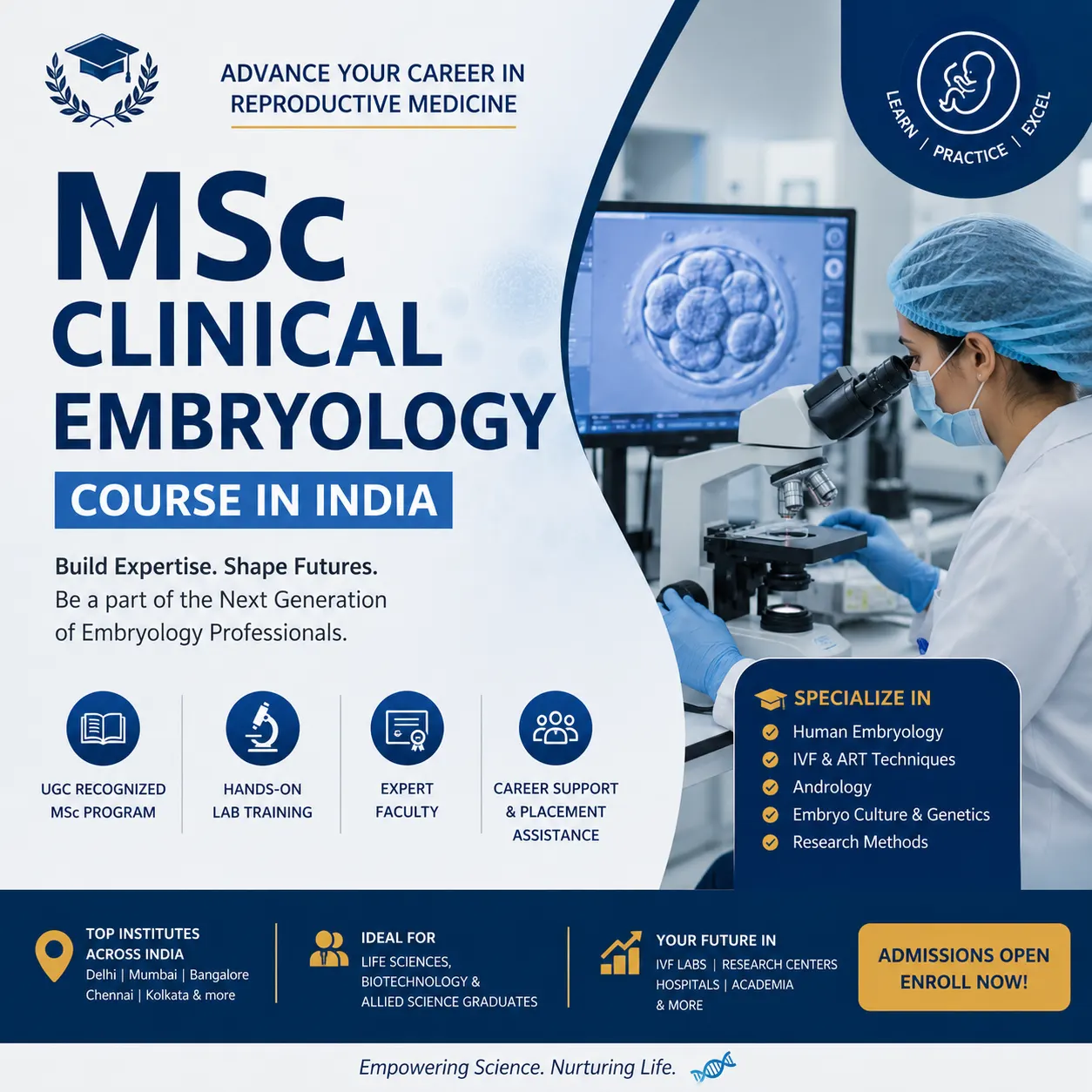 MSc Clinical Embryology