IVF Practical Training | EmbryoPath India
IVF Practical Training is one of the most important learning pathways for students who wish to build a career in Clinical Embryology and Assisted Reproductive Technology (ART). Modern fertility laboratories require professionals who understand laboratory protocols, quality standards, scientific principles, and practical workflows. A structured learning environment helps students gain confidence while understanding how different IVF laboratory procedures contribute to successful fertility treatment.
EmbryoPath, in academic collaboration with GD Goenka University, offers a professional learning environment where students are introduced to laboratory concepts through guided practical exposure, experienced faculty, and industry-oriented education. The curriculum is designed to help learners bridge the gap between academic knowledge and laboratory practice while preparing for future opportunities in reproductive medicine.
Why IVF Practical Training Matters
The field of reproductive medicine continues to evolve with advancements in laboratory technology and scientific research. Practical training enables students to understand laboratory processes, maintain quality standards, and develop professional confidence before entering the IVF industry.
Hands-on learning helps students become familiar with laboratory equipment, documentation practices, quality assurance procedures, specimen handling principles, laboratory ethics, and internationally accepted protocols. Practical education complements theoretical learning and strengthens overall professional competence.
Who Should Enroll?
This training is suitable for learners who want to pursue careers in reproductive science and laboratory-based healthcare.
- B.Sc. graduates in Life Sciences
- M.Sc. students and graduates
- Biotechnology students
- Microbiology graduates
- Zoology graduates
- Biomedical Science students
- Medical laboratory professionals
- Pharmacy graduates
- MBBS and allied medical graduates interested in fertility science
- Individuals planning a career in Clinical Embryology
Course Objectives
The primary objective of IVF Practical Training is to help students understand laboratory operations while developing professional laboratory skills through structured academic guidance.
- Understand IVF laboratory workflow
- Learn laboratory safety practices
- Develop scientific observation skills
- Understand embryo culture concepts
- Learn documentation procedures
- Understand quality assurance principles
- Become familiar with ART laboratory equipment
- Develop professional laboratory discipline
What You Will Learn
The curriculum is carefully planned to provide students with knowledge of laboratory procedures commonly associated with assisted reproductive technology.
Laboratory Orientation
Students are introduced to IVF laboratory infrastructure, workflow management, laboratory organization, cleanroom concepts, equipment handling, environmental monitoring, and standard operating procedures followed in professional embryology laboratories.
Gamete Handling Concepts
The course introduces scientific principles related to sperm and oocyte handling, laboratory preparation techniques, specimen identification, and quality management under expert supervision.
Embryology Laboratory Fundamentals
Students learn the theoretical concepts behind fertilization, embryo development, embryo grading principles, incubation systems, culture media, and laboratory best practices followed in modern IVF laboratories.
Cryopreservation Basics
The curriculum explains the scientific principles of cryopreservation, storage procedures, sample traceability, documentation requirements, and quality control measures that support laboratory operations.
Quality Management
Students gain knowledge of laboratory quality systems, equipment maintenance awareness, contamination prevention, documentation standards, internal quality checks, and professional compliance practices.
Learning Outcomes
After completing the program, students will have a stronger understanding of IVF laboratory practices and professional expectations.
- Improved laboratory knowledge
- Better understanding of embryology principles
- Awareness of laboratory quality standards
- Professional documentation skills
- Knowledge of ART laboratory workflow
- Understanding of ethical laboratory practices
- Enhanced confidence for future career opportunities
- Preparation for advanced embryology education
Why Choose EmbryoPath?
EmbryoPath focuses on industry-oriented education designed to support future embryologists through practical learning and academic excellence. In collaboration with GD Goenka University, the institute combines structured education with laboratory exposure that helps students understand real-world reproductive science environments.
- Academic collaboration with GD Goenka University
- Industry-focused curriculum
- Experienced academic mentors
- Practical laboratory exposure
- Modern learning environment
- Comprehensive academic guidance
- Professional skill development
- Student-focused learning approach
Benefits of Practical IVF Learning
Practical education enables students to strengthen scientific understanding while improving laboratory confidence. Instead of relying only on classroom theory, learners observe laboratory workflows, understand professional standards, and become familiar with routine laboratory procedures that are important in fertility science.
Students also improve analytical thinking, scientific observation, laboratory discipline, teamwork, communication skills, documentation accuracy, and ethical awareness—qualities that are highly valued in healthcare and laboratory environments.
Career Scope After This Course
Clinical Embryology continues to be an expanding area within reproductive healthcare. As fertility services continue to grow, there is increasing demand for qualified professionals who possess both theoretical understanding and practical laboratory exposure.
After completing IVF Practical Training, students may prepare for opportunities in areas such as:
- IVF laboratories
- Fertility centres
- Clinical embryology departments
- Research laboratories
- Academic institutions
- Assisted Reproductive Technology laboratories
- Healthcare diagnostic laboratories
- Biotechnology and reproductive science organizations
Many students also continue with advanced education, research programs, specialized embryology training, or higher academic qualifications to further strengthen their professional profile.
Admission Guidance
Students interested in IVF Practical Training should review the academic eligibility requirements and understand the course structure before applying. Selecting a recognized institute with structured practical learning, experienced faculty, and an industry-oriented curriculum is important for long-term career development.
EmbryoPath provides academic guidance throughout the admission process, helping applicants understand eligibility, course objectives, learning outcomes, and available educational pathways. Prospective students are encouraged to prepare their academic documents and discuss their career goals with the admission team before enrollment.
Apply for Admission Guidance
If you are planning a career in Clinical Embryology, IVF laboratory science, or Assisted Reproductive Technology, EmbryoPath offers professional academic guidance to help you make informed educational decisions. With academic collaboration from GD Goenka University, the institute supports students through structured learning, practical laboratory exposure, and career-oriented education. Connect with the admission team today to learn more about eligibility, curriculum, and upcoming admissions.
Frequently Asked Questions
1. What is IVF Practical Training?
IVF Practical Training is a structured educational program that introduces students to laboratory practices associated with assisted reproductive technology. It combines theoretical learning with supervised laboratory exposure, helping students understand laboratory workflows, quality standards, documentation, embryo culture concepts, and professional practices commonly followed in modern fertility laboratories.
2. Who can apply for IVF Practical Training?
The program is generally suitable for graduates and students from Life Sciences, Biotechnology, Microbiology, Zoology, Biomedical Science, Pharmacy, Medical Laboratory Technology, and related healthcare disciplines. Applicants should review the specific eligibility criteria provided by the institute before submitting their admission application.
3. Why is practical laboratory training important in Clinical Embryology?
Practical laboratory education helps students understand professional laboratory environments beyond classroom theory. It develops scientific observation, laboratory discipline, documentation accuracy, quality awareness, and familiarity with laboratory equipment, making learners better prepared for future educational opportunities and professional responsibilities within reproductive medicine.
4. What makes EmbryoPath different?
EmbryoPath focuses on structured Clinical Embryology education with practical learning opportunities and academic collaboration with GD Goenka University. The institute emphasizes professional guidance, industry-oriented teaching, laboratory awareness, and skill development designed to support students pursuing careers in assisted reproductive technology and embryology.
5. What career opportunities are available after completing IVF Practical Training?
Students may prepare for opportunities in IVF laboratories, fertility centres, reproductive science research laboratories, academic institutions, biotechnology organizations, and healthcare laboratories. Many learners also continue with advanced embryology education, specialized certifications, postgraduate programs, or research-oriented academic pathways.
6. How can I apply for admission?
Interested candidates can contact EmbryoPath to receive admission guidance, understand eligibility requirements, review course details, and complete the application process. Speaking with the academic counselors helps students choose an appropriate learning pathway based on their educational background and long-term career aspirations.












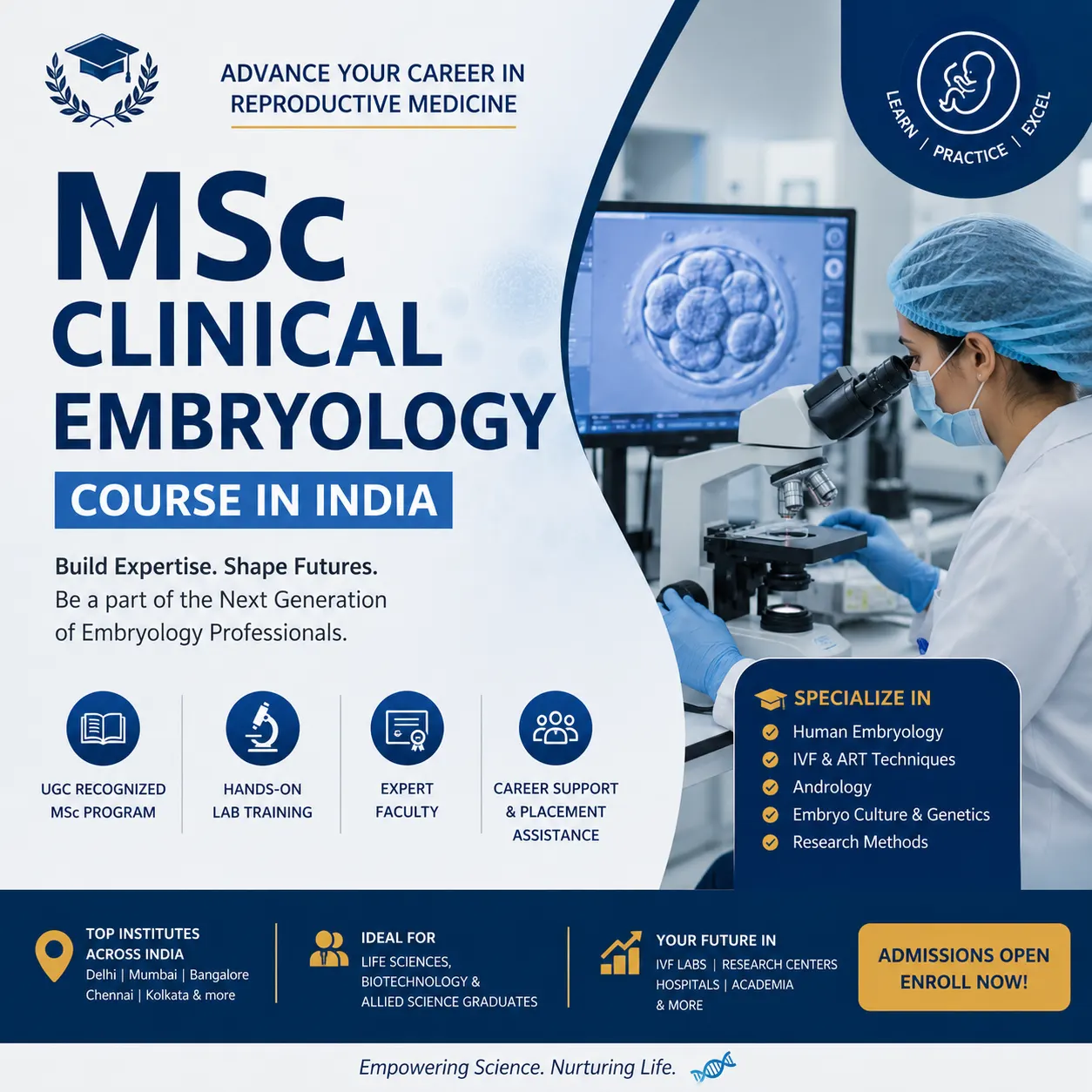 MSc Clinical Embryology