Reproductive Medicine Institute | EmbryoPath Course
The field of reproductive healthcare and Assisted Reproductive Technology (ART) is growing at an unprecedented pace across India. Driven by profound demographic changes, expanded diagnostic infrastructure, and rising institutional awareness of fertility solutions, the establishment of specialized fertility centers and dedicated IVF wings within multi-specialty hospitals has accelerated significantly. This rapid institutional growth has created a substantial, critical, and long-term demand for highly technical, laboratory-ready professionals who possess a firm grasp of cellular mechanics and clinical safety. To address this structural talent gap, EmbryoPath, operating as a leading Reproductive Medicine Institute in an elite academic collaboration with GD Goenka University, offers professional courses engineered to transform life science graduates, biological science students, and medical career aspirants into highly proficient, ethical, and industry-ready clinical professionals.
While traditional undergraduate and postgraduate biological degrees provide an excellent and comprehensive understanding of general cellular biology, genetics, and biochemical theories, they rarely afford the rigorous, high-precision technical training required to manipulate and handle fragile, living human gametes. Operating within the high-stakes environment of an active IVF cleanroom demands meticulous muscle memory, strict adherence to aseptic techniques, and advanced familiarity with sophisticated diagnostic machinery. Our program serves as a comprehensive educational bridge, converting academic scientific knowledge into practical, clinical competencies that are instantly recognized and highly valued by clinical directors, chief embryologists, and hospital recruitment panels across the contemporary healthcare market.
The Structural Relevance of a Specialized Training Institute
Working inside a modern fertility laboratory carries immense clinical responsibility and leaves zero margin for technical or operational error. Every distinct protocol, from basic semen analysis and processing to advanced micromanipulation techniques, directly impacts the viability of biological samples and the ultimate success rates of patient treatments. Because of these exceptionally high stakes, leading corporate fertility chains, private clinics, and reproductive research facilities prioritize candidates who have successfully completed an organized course at a credible Reproductive Medicine Institute over those who only possess generalized or non-specialized scientific degrees.
A structured laboratory program ensures that students learn the exact fluid dynamics, strict environmental control measures, and digital documentation systems utilized by elite global fertility setups. By mastering these specialized procedures under controlled, simulated laboratory environments, students build the professional confidence and precise behavioral habits necessary to function as immediate operational assets. This minimizes the need for extensive on-the-job training phases when entering a clinic and places our students on an accelerated track toward senior clinical roles.
Eligibility Criteria for the Technical Program
The highly technical and delicate nature of the clinical embryology curriculum requires candidates to possess a solid foundational background in life sciences, allied health sciences, or medical disciplines. The following eligibility criteria ensure that incoming trainees can effectively comprehend and execute the advanced biochemical, genetic, and cellular protocols taught throughout the course:
- B.Sc., M.Sc., or Ph.D. graduates in biological and life sciences streams, including Biotechnology, Microbiology, Zoology, Biochemistry, Genetics, or Molecular Biology.
- Medical graduates holding MBBS, BDS, BAMS, BHMS, or BVSc degrees looking to transition into reproductive endocrinology, fertility management, or laboratory operations.
- Allied health science graduates, including those with degrees in B.Sc. Nursing, Bachelor of Pharmacy, or Bachelor of Medical Laboratory Technology (BMLT/MMLT).
- Existing laboratory technicians, field researchers, and diagnostic professionals aiming to formalize, validate, and upgrade their specialized skillset according to updated national clinical guidelines.
Core Learning Outcomes and Technical Competencies
The primary objective of the program at EmbryoPath is to instill precise, repeatable laboratory habits alongside deep scientific comprehension. Our educational framework focuses on technical outcomes that match the specific recruitment needs of modern fertility institutions, ensuring our graduates emerge as completely competent professionals.
1. Laboratory Instrumentation and Cleanroom Mechanics
Students achieve complete operational familiarity with standard cleanroom instruments. This includes mastering the workflow, calibration, and routine maintenance of laminar flow benches, stereomicroscopes, carbon dioxide/tri-gas incubators, heating stages, and specialized anti-vibration tables. Understanding the underlying engineering mechanics allows students to identify and troubleshoot subtle machine fluctuations before they affect biological specimens.
2. Culture Media and Dish Preparation Protocols
Trainees develop absolute expertise in maintaining sterile laboratory conditions, identifying various culture media compositions (sequential vs. single-step systems), preparing precise working media volumes, setting up specialized culture dishes, and mastering advanced oil overlay techniques to prevent evaporation and maintain osmotic stability.
3. Advanced Andrology and Sperm Processing
The program delivers comprehensive proficiency in basic and advanced semen analysis according to the latest global health guidelines. Students learn strict morphology scoring, vitality assessments, and diverse sperm preparation methods—such as density gradient centrifugation and swim-up techniques—tailored for intrauterine insemination (IUI) and classical IVF workflows.
4. Oocyte and Embryo Handling Workflows
Tutors guide students through the practical understanding of oocyte handling, identification protocols during follicular aspiration procedures, morphological grading scales, and enzymatic denudation techniques. Trainees gain a deep perspective on embryo development stages, tracking cellular cleavage from zygote to blastocyst development.
5. Quality Control and Environmental Risk Management
The curriculum places extreme emphasis on laboratory Quality Control (QC) and Quality Assurance (QA) metrics. Students learn real-time monitoring of critical environmental variables, including temperature calibration, volatile organic compound (VOC) filtration tracking, gas line purity validation, and pH measurement tools.
6. Digital Documentation, Bioethics, and Legal Compliance
Graduates achieve a clear comprehension of institutional documentation, patient sample double-witnessing tracking systems, cryogenic inventory control, risk management protocols, and ethical medical compliance guidelines outlined by national regulatory registries in India.
Why Choose EmbryoPath?
EmbryoPath offers a balanced, highly ethical educational framework that prioritizes clinical safety, institutional transparency, and hands-on laboratory accuracy. Our strategic academic collaboration with GD Goenka University ensures that our program maintains high university-level academic standards while focusing entirely on practical execution. We purposely avoid large, overcrowded batches, opting instead for a personalized setup where each trainee receives dedicated attention, direct access to premium equipment, and routine performance assessments from experienced mentors.
Our teaching facility features modern diagnostic instruments that replicate the exact cleanroom environments found in top-tier IVF centers. Rather than offering generic career lectures, we focus heavily on technical skill validation, portfolio building, and professional interview preparation. This rigorous, supportive, and science-driven educational approach ensures that our graduates transition smoothly into the professional arena with a distinct competitive edge, allowing them to advance their careers with complete confidence.
Career Scope After This Course
Completing a certified, university-aligned laboratory program in reproductive sciences opens up a diverse array of sustainable, lucrative, and rewarding career pathways throughout India's rapidly growing healthcare sector. The consistent expansion of corporate IVF chains, private fertility networks, and standalone reproductive centers ensures a steady, long-term demand for qualified personnel.
Graduates are highly qualified to pursue immediate employment as Junior Embryologists, Andrology Specialists, and IVF Lab Technicians. Additionally, individuals who possess an analytical aptitude for research or administrative leadership can comfortably advance into roles such as Clinical Research Coordinators, Lab Quality Assurance Managers, Regulatory Compliance Officers, or Technical Application Specialists for international biomedical manufacturing firms and laboratory equipment suppliers operating globally.
Admission Guidance and Career Mentorship
Entering a specialized branch of medicine requires clear planning, accurate industry data, and trusted academic mentorship. EmbryoPath provides dedicated, transparent career counseling to help prospective students, graduates, and their parents evaluate the requirements, financial investments, and professional opportunities within the field of reproductive science.
Our experienced advisors review your academic background, discuss batch timelines, and establish realistic professional goals without relying on misleading claims, fake testimonials, or exaggerated placement promises. Through steady mentoring and objective skill tracking, we guide applicants from their initial registration steps through to final certification and initial professional onboarding alongside GD Goenka University, ensuring a proud and fulfilling educational transition.
Apply for Admission Guidance
Taking the first definitive step into a specialized medical career demands reliable guidance, a structured plan, and an institutional framework you can trust completely. Our dedicated admissions team is available to evaluate your scientific profile, discuss scheduling parameters, and assist you with the step-by-step enrollment process. Do not leave your professional transition to chance; contact our helpdesk today to understand how our industry-aligned training layout can effectively help you achieve your long-term career goals.
Frequently Asked Questions
What makes EmbryoPath a preferred Reproductive Medicine Institute for clinical training?
EmbryoPath stands out due to its intensive, hands-on methodology and its strategic academic collaboration with GD Goenka University. Unlike courses that rely heavily on theoretical lectures, we prioritize direct laboratory practice, ensuring students spend substantial time working with precise laboratory equipment. Guided by active embryologists, students master crucial skills like micropipetting, media preparation, and quality control, making them immediately employable in modern healthcare facilities across India.
Who is eligible to enroll in this laboratory training program?
This course is designed for individuals with a foundational science background. Eligible applicants include graduates and postgraduates in life sciences fields such as biotechnology, microbiology, zoology, and biochemistry. It is equally suitable for medical professionals including MBBS, BDS, BAMS, and BHMS doctors, as well as allied health graduates in nursing and medical laboratory technology who wish to specialize in reproductive medicine.
Will I receive a recognized certificate after completing the course?
Yes, upon successful completion of the training modules and practical assessments, students receive a formal professional credential. This certification is issued by EmbryoPath in academic collaboration with GD Goenka University. It serves as a verified testament to your practical competence, understanding of laboratory safety, and compliance with ethical protocols, significantly enhancing your profile value among top-tier clinical recruiters.
What job profiles can I apply for after completing this course?
Graduates can target multiple specialized roles within the reproductive healthcare industry. The most common entry points are Junior Embryologist, Andrologist, and IVF Laboratory Technician. With accumulated experience and proven consistency, professionals routinely move into advanced senior roles, laboratory operational directors, clinical researchers, or technical specialists for global biomedical instrumentation firms operating in the fertility sector.
Is prior experience in a fertility clinic required to join?
Prior experience in an active fertility facility is not required. The curriculum is constructed systematically to guide trainees from basic cleanroom behavior and microscope operation up to advanced gamete processing techniques. While a background in biological science or medicine is necessary to understand the core concepts, our mentors ensure all laboratory skills are taught from the ground up with patience.
How does the institute support students during the admission process?
EmbryoPath provides comprehensive admission guidance to ensure candidates select the right professional path. Our academic counselors offer detailed insights regarding the curriculum layout, laboratory hours, and potential career progressions. We guide students and parents transparently through the registration process, clearly detailing the course prerequisites and the distinct structural benefits provided by our collaboration with GD Goenka University.












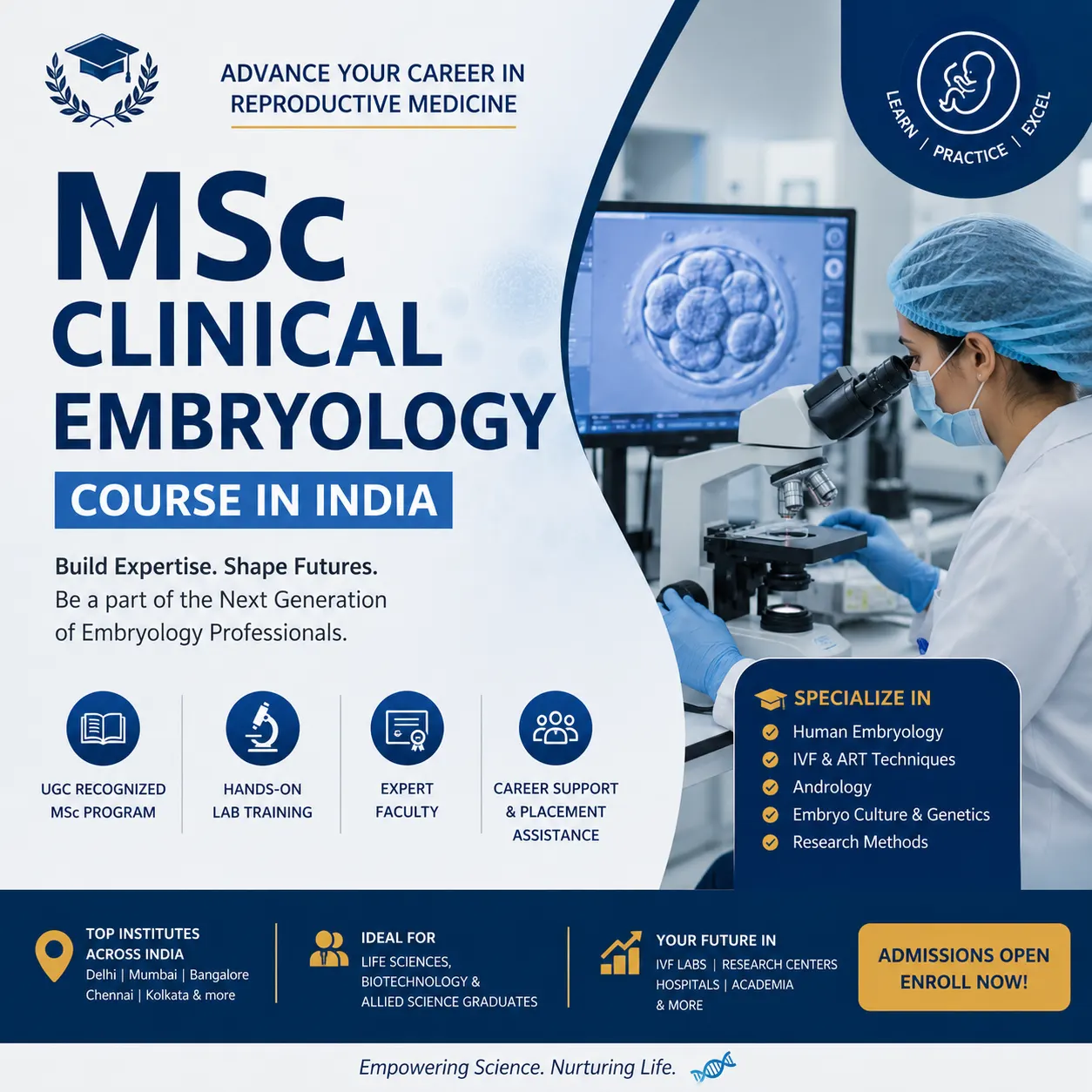 MSc Clinical Embryology