Embryologist Qualification | Eligibility & Career Guide
Choosing a career in clinical embryology offers an opportunity to contribute to one of the most advanced areas of reproductive science. Understanding Embryologist Qualification is the first step for students who wish to work in reproductive science laboratories and science institutes. Clinical embryologists play an important role in reproductive laboratory science, supporting laboratory scientists through laboratory procedures that require scientific knowledge, precision, and professional ethics.
EmbryoPath, in academic collaboration with GD Goenka University, provides industry-oriented education designed to help students develop both theoretical understanding and practical laboratory skills. The curriculum is created to prepare aspiring embryologists for professional opportunities in India's growing reproductive science education sector while emphasizing responsible laboratory practices and continuous learning.
What is an Embryologist Qualification?
Embryologist Qualification refers to the educational background, academic eligibility, scientific knowledge, and specialized clinical embryology training required to pursue a career in reproductive science laboratories. Since embryologists work with reproductive cells and embryos in controlled laboratory environments, they require a solid foundation in biological sciences along with hands-on laboratory exposure.
A structured educational program helps students understand reproductive biology, laboratory quality standards, embryo development, cryobiology principles, and laboratory safety protocols essential for professional practice.
Who Can Pursue Clinical Embryology?
Students from various science and academic backgrounds may be eligible to pursue clinical embryology education depending on course-specific admission criteria. Common academic backgrounds include:
- Life Sciences graduates
- Biotechnology students
- Microbiology graduates
- Zoology graduates
- Genetics students
- Biochemistry graduates
- Medical graduates
- Veterinary science graduates
- Pharmacy graduates where applicable
- Other eligible biological science disciplines as per institutional requirements
Applicants should always review the latest admission guidelines provided by the institute before applying.
Essential Skills Required for an Embryologist
Academic qualifications are only one part of becoming a successful embryologist. Employers also value professional skills that support laboratory accuracy and scientifically-focused academic work.
- Excellent laboratory discipline
- Attention to detail
- Scientific thinking and analytical ability
- Manual precision
- Understanding of laboratory ethics
- Documentation and record management
- Problem-solving skills
- Team collaboration
- Communication skills
- Commitment to continuous professional learning
Why Clinical Embryology Education Matters
Modern reproductive science laboratories depend on trained professionals who understand every stage of embryo handling and laboratory management. A comprehensive embryology program bridges the gap between classroom learning and practical laboratory application.
Students gain exposure to reproductive biology, laboratory workflows, quality assurance practices, reproductive laboratory science techniques, laboratory instrumentation, and internationally accepted professional standards. This integrated learning approach helps prepare graduates for real-world laboratory environments.
Learning Outcomes of a Clinical Embryology Course
A professionally designed embryology program enables students to build competencies that are relevant to reproductive science laboratory practice.
- Understanding human reproductive biology
- Knowledge of reproductive laboratory science
- Laboratory safety and quality management
- Gamete handling principles
- Embryo culture concepts
- Cryobiology fundamentals
- Laboratory documentation procedures
- Ethical practices in reproductive science
- Research awareness
- Professional laboratory communication
Why Choose EmbryoPath?
EmbryoPath is committed to delivering quality clinical embryology education through an academic collaboration with GD Goenka University. The institute focuses on combining academic excellence with practical laboratory exposure to help students build confidence for professional careers.
Students benefit from an industry-focused curriculum, experienced faculty guidance, structured practical learning, and exposure to laboratory protocols commonly followed in reproductive laboratory science. The learning environment encourages scientific curiosity, technical competence, and responsible professional development.
Key advantages include:
- Academic collaboration with GD Goenka University
- Industry-oriented curriculum
- Practical laboratory learning
- Experienced academic mentors
- Focus on laboratory quality standards
- Student-centered learning environment
- Career-oriented educational approach
- Professional skill development
Career Scope After This Course
The reproductive science education sector continues to expand in India, creating opportunities for trained embryology professionals. After completing appropriate education and meeting applicable employment requirements, graduates may explore careers in various science and research settings.
- Reproductive science laboratories
- Science institutes
- Reproductive laboratory science centres
- Clinical research organizations
- Academic institutions
- Science laboratories
- Research laboratories
- Science education organizations
- Reproductive science projects
- Laboratory quality management roles
Career growth depends on educational qualifications, practical experience, continuous skill enhancement, employer requirements, and applicable regulatory standards.
How to Prepare for an Embryology Career
Students interested in becoming embryologists should focus on developing strong academic foundations in biological sciences while actively improving laboratory competencies. Reading scientific literature, participating in laboratory-based education, learning standard operating procedures, and understanding ethical practices contribute significantly to long-term professional success.
Developing communication skills, maintaining scientific accuracy, and adopting a mindset of continuous learning are equally important for building a sustainable career in reproductive science.
Admission Guidance
Students planning to pursue clinical embryology should begin by reviewing eligibility criteria, academic requirements, and admission procedures carefully. Selecting an institute that combines academic excellence with practical laboratory learning can make a significant difference in career preparation.
EmbryoPath provides structured admission guidance to help prospective students understand program details, eligibility requirements, curriculum, learning methodology, and future career pathways. The academic collaboration with GD Goenka University further supports a quality-focused educational experience.
Apply for Admission Guidance
If you are planning to build a future in clinical embryology, now is an excellent time to explore your educational options. Connect with the admissions team at EmbryoPath to receive guidance on eligibility, course structure, academic collaboration with GD Goenka University, learning outcomes, and the admission process. A well-planned educational journey can help you develop the scientific knowledge and practical laboratory skills required for a rewarding career in reproductive science and reproductive laboratory science.
Frequently Asked Questions
1. What educational qualification is required to become an embryologist?
An embryologist generally requires an academic background in life sciences, biotechnology, microbiology, zoology, medicine, genetics, biochemistry, or another relevant biological science discipline, followed by specialized education in clinical embryology. Eligibility may vary depending on institutional admission criteria, so applicants should carefully review the latest academic requirements before applying to any program.
2. Is practical laboratory training important in clinical embryology?
Yes, practical laboratory exposure is an essential component of clinical embryology education. Along with theoretical knowledge, students benefit from learning laboratory protocols, quality standards, reproductive biology techniques, documentation practices, laboratory safety, and professional ethics. Practical learning helps prepare students for professional environments commonly found in reproductive science laboratories and science institutes.
3. Can life science graduates pursue a clinical embryology course?
Many clinical embryology programs accept graduates from life science and related biological science disciplines, subject to institutional eligibility criteria. Students from biotechnology, microbiology, zoology, genetics, biochemistry, pharmacy, medicine, and similar academic backgrounds often explore this field because of its strong scientific foundation and growing career opportunities.
4. What career opportunities are available after studying clinical embryology?
Graduates may explore opportunities in reproductive science laboratories, science institutes, reproductive science facilities, research laboratories, science education institutions, and clinical research organizations. Career progression depends on educational qualifications, practical experience, professional competence, employer expectations, and continued learning throughout one's professional journey.
5. Why should students choose EmbryoPath for clinical embryology education?
EmbryoPath emphasizes industry-oriented learning through its academic collaboration with GD Goenka University. The institute focuses on combining classroom education with practical laboratory exposure, experienced academic guidance, professional skill development, and structured learning designed to help students prepare for careers in reproductive laboratory science and reproductive science.
6. How can students apply for admission to a clinical embryology program?
Students should first review the eligibility requirements and admission process provided by the institute. They can then contact the admissions team to understand available programs, required academic documents, important deadlines, curriculum details, and career guidance. Early planning allows applicants to complete the admission process smoothly and prepare effectively for their educational journey.


















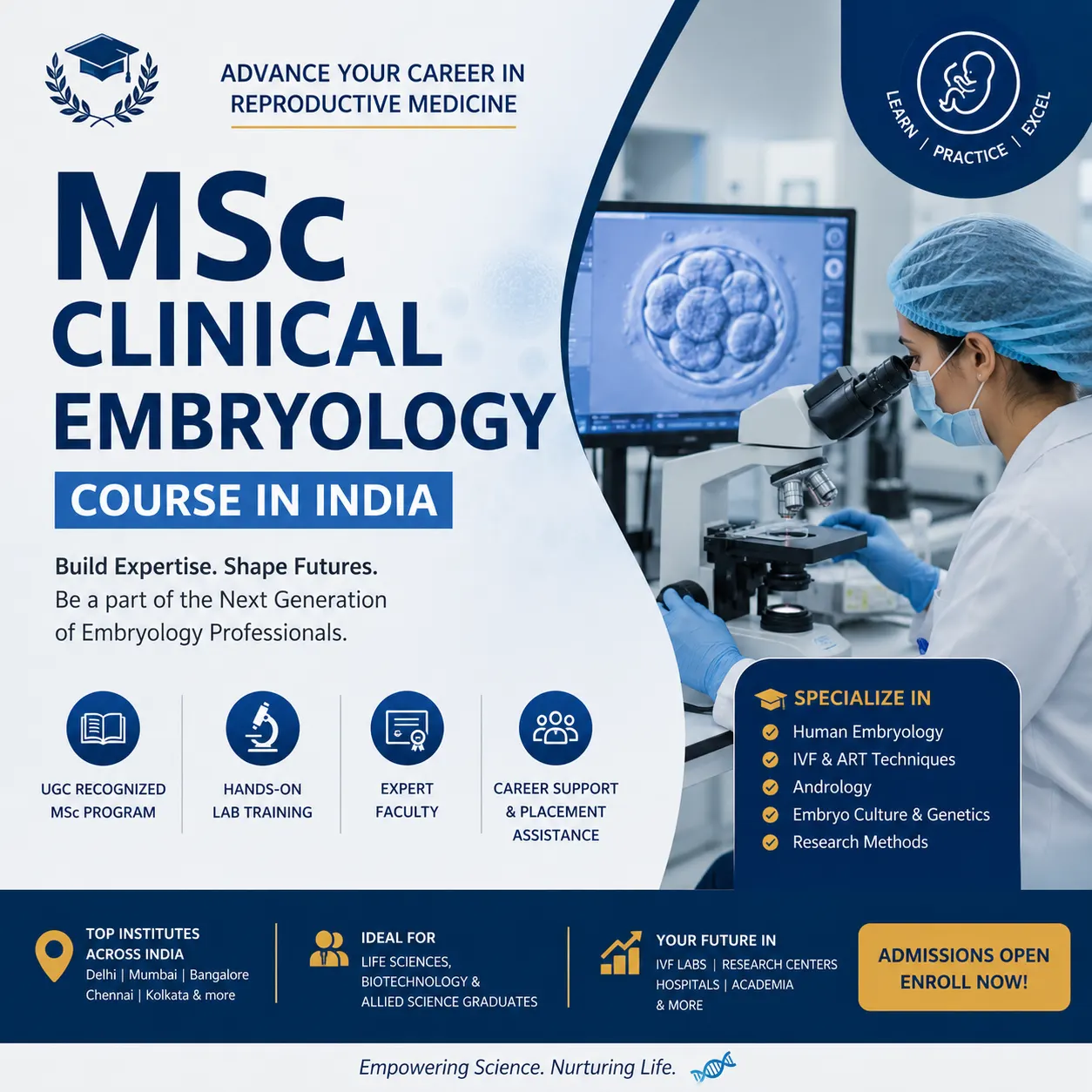 MSc Clinical Embryology