
MSc Clinical Embryology Entrance Guide | EmbryoPath
If you are exploring a career in reproductive science and assisted reproductive technology, understanding the MSc Clinical Embryology entrance process is an important first step. This postgraduate specialization opens doors to a growing field within healthcare, combining laboratory precision with a deep understanding of human reproductive biology. Whether you are a life sciences graduate, a biology enthusiast, or someone considering a shift toward IVF-related careers, this guide walks you through eligibility, learning outcomes, and how EmbryoPath, in academic collaboration with GD Goenka University, can support your journey.
What Is MSc Clinical Embryology?
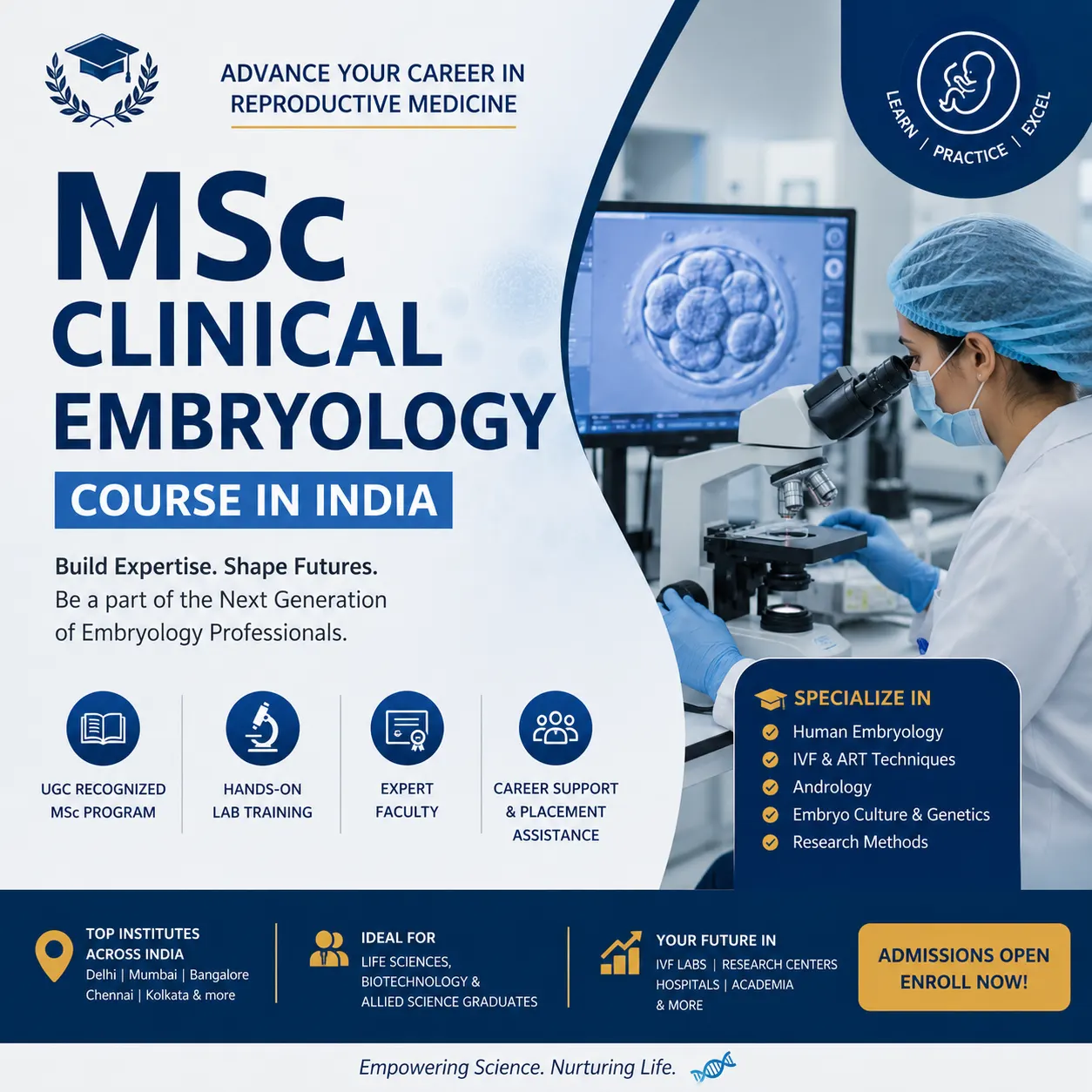
MSc Clinical Embryology is a postgraduate program designed to build expertise in reproductive biology, embryo development, and IVF laboratory procedures. Students learn the scientific and technical foundations required to work in fertility clinics, reproductive research centers, and IVF laboratories. The program typically blends theoretical coursework with practical, hands-on laboratory training, preparing graduates for real-world clinical environments.
Why This Course Matters Today
India's assisted reproductive technology sector has been expanding steadily, driven by increasing awareness around fertility treatments and growing demand for trained laboratory professionals. As IVF centers and fertility clinics continue to grow across the country, there is a rising need for individuals who understand embryo handling, cryopreservation, and reproductive laboratory protocols. Pursuing an MSc in Clinical Embryology positions candidates to enter this specialized and evolving healthcare segment with relevant, focused training.
Eligibility Criteria for MSc Clinical Embryology Entrance
While exact requirements can vary between institutions, general eligibility expectations for MSc Clinical Embryology entrance typically include:
- A bachelor's degree in Life Sciences, Biotechnology, Zoology, Microbiology, or a related biological/medical science discipline
- Minimum aggregate marks as prescribed by the affiliating university
- Basic understanding of human biology, genetics, or reproductive science (preferred but not always mandatory)
- Completion of any required entrance interaction, counseling session, or academic assessment as part of the admission process
Students are encouraged to confirm the most current eligibility norms directly with EmbryoPath, since academic requirements can be updated periodically by the affiliating university.
What You Will Learn
An MSc Clinical Embryology curriculum is designed to build both conceptual clarity and practical competence. Common areas of study include:
- Fundamentals of human reproductive anatomy and physiology
- Embryo culture techniques and development stages
- IVF and ICSI laboratory procedures
- Cryopreservation and vitrification methods
- Andrology and semen analysis techniques
- Quality control and laboratory safety standards in reproductive labs
- Ethical and regulatory aspects of assisted reproduction in India
This combination of theory and applied laboratory learning helps students build confidence before entering real clinical settings.
Why Choose EmbryoPath?
EmbryoPath, in academic collaboration with GD Goenka University, focuses on structured, guidance-oriented learning for students pursuing careers in clinical embryology. Rather than offering generic study material, EmbryoPath emphasizes clarity around entrance requirements, curriculum expectations, and admission procedures, helping students make informed decisions about their academic path.
Students working with EmbryoPath benefit from a dedicated point of contact for admission-related queries, access to structured information about the MSc Clinical Embryology pathway, and support in understanding how their existing academic background aligns with entrance requirements. This approach is particularly useful for students who may not have prior exposure to embryology as a specialization and need clear, honest guidance before committing to the course.
Career Scope After This Course
Graduates of MSc Clinical Embryology programs can explore opportunities across several areas of the healthcare and life sciences sector, including:
- Clinical embryologist roles in IVF and fertility centers
- IVF laboratory technician or laboratory associate positions
- Reproductive biology research roles in academic or clinical research settings
- Andrology laboratory positions focused on male fertility assessment
- Further academic pursuits such as doctoral research in reproductive sciences
Career growth in this field often depends on hands-on laboratory experience, ongoing skill development, and staying updated with evolving reproductive technology practices. As with any specialized medical science career, outcomes vary based on individual performance, chosen institution, and regional opportunities.
Admission Guidance
Navigating the MSc Clinical Embryology entrance process can feel overwhelming, especially for students unfamiliar with specialized postgraduate admissions in medical sciences. EmbryoPath simplifies this by offering step-by-step guidance covering:
- Understanding whether your undergraduate background meets entrance criteria
- Clarifying documentation required for the application process
- Explaining the academic structure offered in collaboration with GD Goenka University
- Addressing common questions from students and parents about the course and its scope
This guidance is intended to help prospective students approach their application with clarity, rather than uncertainty.
Apply for Admission Guidance
If you are considering the MSc Clinical Embryology entrance pathway and want clear, honest guidance on eligibility, application steps, and academic structure, EmbryoPath is here to help. Connect with our admission guidance team to understand how your academic background fits this specialization, in collaboration with GD Goenka University, and take a well-informed step toward a career in clinical embryology.
Frequently Asked Questions
What is the basic eligibility for MSc Clinical Embryology entrance?
Generally, candidates need a bachelor's degree in Life Sciences, Biotechnology, Zoology, Microbiology, or a closely related biological or medical science field, along with minimum aggregate marks as specified by the affiliating university. Some programs may also require basic familiarity with human biology or genetics. Since exact requirements can vary between academic sessions, it is advisable to confirm current eligibility norms directly with EmbryoPath before applying, to ensure your academic background aligns with entrance expectations.
Is MSc Clinical Embryology a good career choice in India?
MSc Clinical Embryology can be a meaningful career choice for students interested in reproductive science and laboratory-based healthcare roles, given the steady growth of India's assisted reproductive technology sector. However, like any specialized field, career outcomes depend on factors such as practical training quality, individual performance, and regional job availability. Students should research thoroughly and speak with academic advisors, such as those at EmbryoPath, to understand realistic expectations before enrolling.
Does EmbryoPath offer the MSc Clinical Embryology course directly?
EmbryoPath works in academic collaboration with GD Goenka University to support students pursuing the MSc Clinical Embryology pathway. This partnership allows EmbryoPath to provide structured admission guidance, eligibility clarification, and application support, while academic delivery follows the university's established framework. Students are encouraged to reach out to EmbryoPath directly for the most accurate and updated information regarding program structure and collaboration details.
What subjects are covered in the MSc Clinical Embryology curriculum?
The curriculum typically covers reproductive anatomy and physiology, embryo culture techniques, IVF and ICSI procedures, cryopreservation methods, andrology basics, and laboratory quality standards. Ethical and regulatory considerations related to assisted reproduction in India are also generally included. This combination of theoretical and practical components is designed to prepare students for real-world clinical embryology laboratory environments after graduation.
What career options are available after completing this course?
Graduates can explore roles such as clinical embryologist, IVF laboratory technician, andrology laboratory associate, or reproductive biology researcher. Some students also choose to pursue further academic research in reproductive sciences. Actual opportunities depend on practical training, chosen specialization areas, and regional demand within fertility clinics, hospitals, and research institutions across India.
How can I get admission guidance for this course from EmbryoPath?
You can reach out to EmbryoPath directly through the official website to receive personalized admission guidance for the MSc Clinical Embryology entrance pathway. The team can help clarify eligibility based on your academic background, explain documentation requirements, and provide details about the collaborative academic structure with GD Goenka University, helping you make an informed decision about your application.




















 MSc Clinical Embryology