
Clinical Embryology Institute Fees | EmbryoPath India
Understanding Clinical Embryology Institute Fees is one of the first steps for students planning a career in reproductive science and assisted reproductive technology. While fee structures are an important consideration, selecting the right institute should also involve evaluating academic quality, practical laboratory exposure, experienced faculty, university collaboration, and long-term career opportunities.
EmbryoPath, in academic collaboration with GD Goenka University, offers an academically structured learning environment designed to help aspiring clinical embryologists develop industry-relevant knowledge and laboratory competencies. The program combines theoretical education with practical learning, enabling students to prepare confidently for careers in IVF laboratories and reproductive medicine.
Why Clinical Embryology Education Matters
Clinical embryology plays a significant role in modern fertility treatment. Professionals in this field contribute to laboratory procedures that support assisted reproductive technologies such as IVF, ICSI, embryo culture, cryopreservation, and embryo transfer preparation.
As fertility healthcare continues to expand across India, qualified embryologists are increasingly valued by IVF centres, fertility hospitals, research organizations, and reproductive healthcare institutions. Choosing a quality education program provides the academic foundation necessary to enter this specialized healthcare profession.
Understanding Clinical Embryology Institute Fees
When researching Clinical Embryology Institute Fees, students should understand that educational investment extends beyond tuition alone. The overall value of a program depends on the quality of education, access to advanced laboratory facilities, faculty expertise, academic recognition, and career-oriented learning.
Rather than comparing fees alone, prospective students should evaluate the complete educational experience, including practical sessions, laboratory exposure, structured curriculum, and institutional reputation. These factors contribute significantly to future employability and professional development.
Factors That Influence Institute Fees
- Academic collaboration with a recognized university.
- Modern IVF laboratory infrastructure.
- Availability of practical laboratory sessions.
- Experienced faculty members and mentors.
- Industry-focused curriculum.
- Clinical exposure and laboratory demonstrations.
- Career guidance and placement assistance.
- Student support services and academic resources.
Eligibility for Clinical Embryology Programs
Eligibility requirements may vary depending on the academic program. Generally, applicants with educational backgrounds in life sciences, biotechnology, microbiology, zoology, medicine, pharmacy, nursing, or allied healthcare sciences are encouraged to apply.
Graduates seeking specialized knowledge in reproductive science can benefit from structured clinical embryology education that bridges academic learning with laboratory practice.
A comprehensive clinical embryology curriculum introduces students to both scientific concepts and practical laboratory procedures. The learning approach emphasizes professional ethics, laboratory precision, and evidence-based practices.
- Human reproductive biology
- Reproductive endocrinology
- Gamete biology
- Semen analysis techniques
- Oocyte handling procedures
- Embryo culture principles
- ICSI concepts
- Cryopreservation fundamentals
- Laboratory quality management
- Clinical documentation
- Patient confidentiality and ethics
- Laboratory safety standards
Practical Learning Experience
Clinical embryology is a laboratory-intensive discipline. Practical learning enables students to observe laboratory workflows, understand scientific protocols, and become familiar with equipment commonly used in IVF laboratories.
EmbryoPath emphasizes experiential learning through structured demonstrations, guided practical sessions, and laboratory-based education that complements classroom instruction.
Why Choose EmbryoPath?
EmbryoPath has established itself as a dedicated institution focused on clinical embryology education. Through its academic collaboration with GD Goenka University, students benefit from an organized curriculum designed to meet current educational standards while supporting professional growth.
- Academic collaboration with GD Goenka University
- Industry-focused curriculum
- Experienced academic mentors
- Emphasis on practical laboratory education
- Modern educational approach
- Student-centered academic support
- Professional learning environment
- Career-oriented guidance
Benefits of Choosing a Quality Institute
Selecting a reputed institution offers advantages beyond classroom education. Students gain confidence through structured learning, laboratory exposure, mentorship, and academic support that prepares them for future professional responsibilities.
A recognized educational environment also helps students understand current laboratory standards, quality assurance principles, and ethical responsibilities expected in reproductive medicine.
Career Scope After This Course
The demand for trained clinical embryologists continues to grow with the expansion of fertility treatment services throughout India. After completing a recognized clinical embryology program, graduates may explore opportunities across various healthcare and research settings.
- IVF laboratories
- Fertility centres
- Reproductive medicine hospitals
- Clinical research organizations
- Academic institutions
- Medical laboratory services
- Healthcare education organizations
- Research laboratories
Career progression often depends on educational qualifications, practical skills, continuous professional development, and individual performance within the reproductive healthcare sector.
How to Evaluate an Institute Before Admission
Before selecting a clinical embryology institute, students should compare multiple academic parameters instead of focusing solely on fees.
- University collaboration
- Curriculum quality
- Faculty experience
- Practical laboratory facilities
- Student mentoring
- Learning resources
- Industry relevance
- Career guidance support
A thoughtful evaluation helps students make an informed educational decision that aligns with their career aspirations.
Admission Guidance
The admission process generally begins with reviewing eligibility requirements, submitting academic documents, completing the application process, and interacting with the admissions team for counselling. Prospective students are encouraged to understand the course structure, learning methodology, academic schedule, and available student support before confirming admission.
EmbryoPath provides admission guidance to help applicants understand program expectations and make informed educational decisions based on their academic background and career goals.
Apply for Admission Guidance
If you are planning a future in reproductive science, now is an excellent time to explore your educational options. Connect with the admissions team at EmbryoPath to learn about eligibility, program structure, academic collaboration with GD Goenka University, practical learning opportunities, and the admission process. Professional guidance can help you select the most suitable pathway toward a rewarding career in clinical embryology.
Frequently Asked Questions
1. Why should students compare Clinical Embryology Institute Fees before applying?
Comparing Clinical Embryology Institute Fees helps students understand the overall educational value offered by different institutions. Rather than considering tuition alone, applicants should evaluate curriculum quality, practical laboratory exposure, faculty expertise, university collaboration, student support, and career guidance. These factors collectively influence the quality of education and future professional opportunities.
2. Who is eligible to apply for a clinical embryology course?
Most clinical embryology programs welcome graduates from life sciences, biotechnology, microbiology, zoology, pharmacy, medicine, nursing, and related healthcare disciplines. Eligibility requirements may differ between institutions, so applicants should carefully review admission criteria before submitting their applications and ensure they meet the academic qualifications specified by the institute.
3. What practical skills are developed during clinical embryology education?
Students are introduced to laboratory procedures related to reproductive science, including semen analysis concepts, embryo culture principles, cryopreservation fundamentals, laboratory quality management, documentation practices, reproductive biology, and ethical laboratory operations. Practical exposure helps learners understand professional laboratory environments while strengthening their scientific and technical knowledge.
4. Why is GD Goenka University collaboration important?
An academic collaboration with GD Goenka University strengthens the educational framework by supporting a structured curriculum and recognized academic standards. Students benefit from organized learning, academic guidance, and a comprehensive educational environment that aligns with current developments in reproductive science and clinical embryology education.
5. What career opportunities are available after completing the course?
Graduates may pursue opportunities in IVF laboratories, fertility centres, reproductive medicine hospitals, research organizations, healthcare education institutions, and laboratory services. Career advancement depends on academic qualifications, practical competencies, professional ethics, and continuous learning as reproductive healthcare continues to expand across India.
6. Why should students choose EmbryoPath for clinical embryology education?
EmbryoPath focuses on providing structured clinical embryology education supported by academic collaboration with GD Goenka University. The institute emphasizes practical learning, experienced academic guidance, laboratory-oriented education, industry relevance, and student development. This balanced approach helps aspiring embryologists build knowledge, technical confidence, and professional readiness for future careers.




















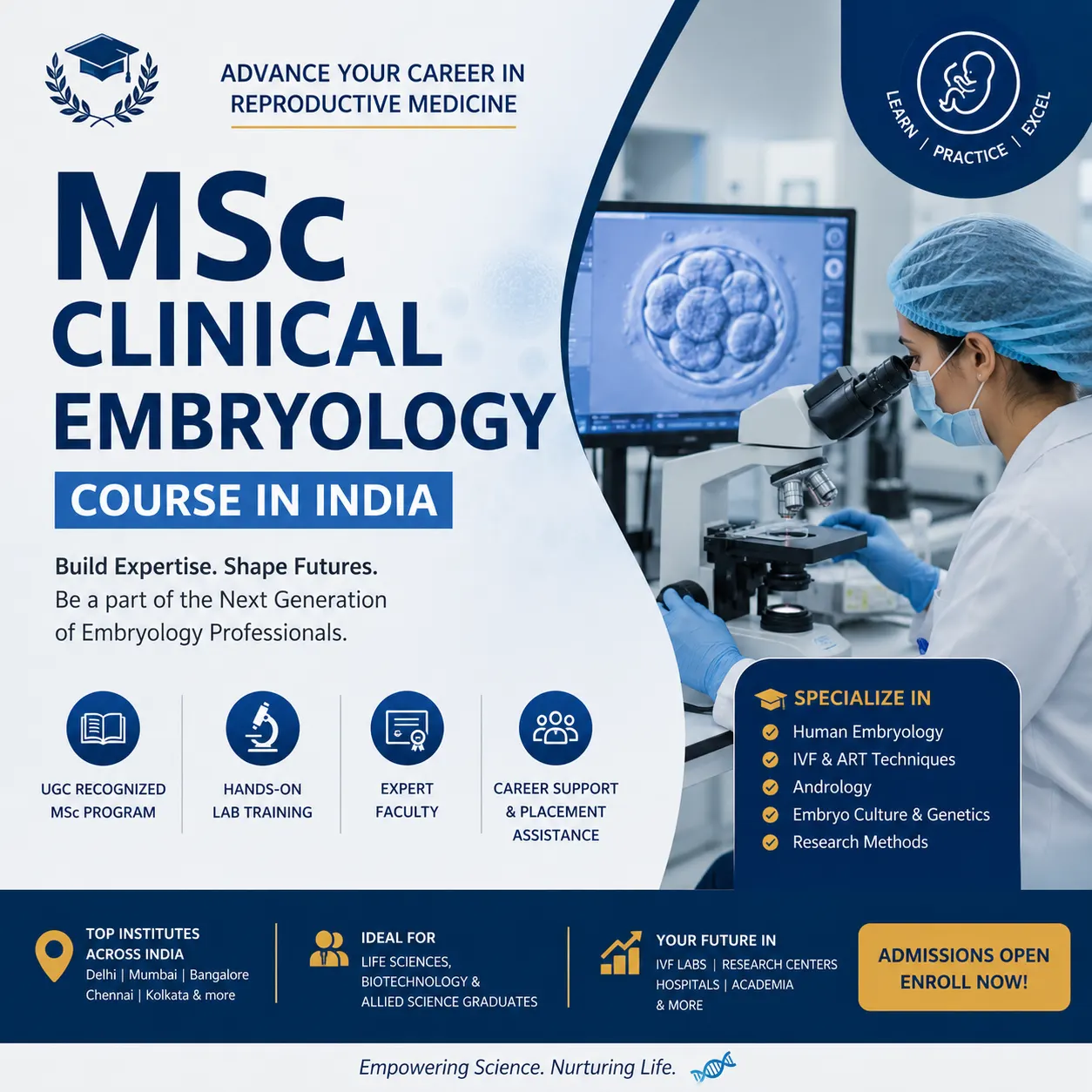 MSc Clinical Embryology