
MSc Clinical Embryology Eligibility Criteria & Guide
Clinical embryology is one of the most specialized and rewarding fields within reproductive science, playing a critical role in embryology laboratories and reproductive science centres across India. If you are exploring a career in this domain, understanding MSc Clinical Embryology eligibility is the first and most important step. This guide explains the qualifying criteria, academic background required, and admission process for students interested in enrolling with EmbryoPath, offered in academic collaboration with GD Goenka University.
What is MSc Clinical Embryology?
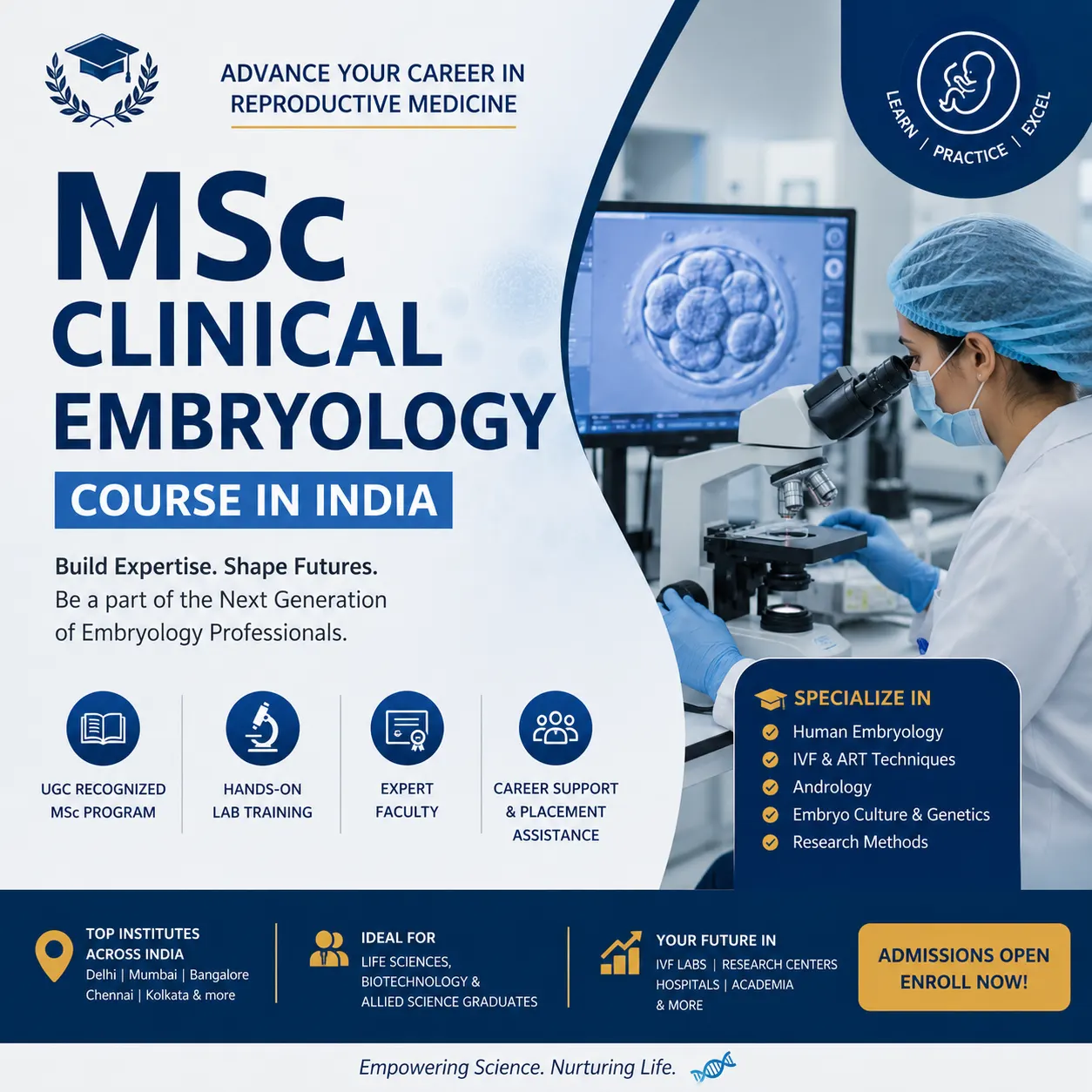
MSc Clinical Embryology is a postgraduate program designed to train students in embryo handling, gamete assessment, cryobiology concepts, and laboratory techniques used in reproductive science education. The course blends theoretical foundations with hands-on laboratory exposure, preparing graduates for roles in research institutions, academic laboratories, and reproductive biology settings. As demand for skilled embryologists continues to grow across India, this specialization has become an attractive career path for life science and medical graduates.
MSc Clinical Embryology Eligibility Criteria
Eligibility requirements for MSc Clinical Embryology are designed to ensure that candidates have a strong foundational understanding of biology and human physiology. While specific criteria may vary slightly depending on the institution, the general eligibility norms followed by EmbryoPath in association with GD Goenka University include:
- A bachelor's degree (B.Sc.) in Life Sciences, Biology, Zoology, Biotechnology, Microbiology, Genetics, or a related discipline from a recognized university.
- Candidates holding an MBBS, BDS, BAMS, BHMS, or equivalent medical degree are also eligible to apply.
- A minimum aggregate score, typically as prescribed by the university's admission guidelines, is required in the qualifying degree.
- Basic understanding of human reproductive biology and cell biology is beneficial, though not always mandatory at the entry stage.
- Candidates should meet any additional entrance or interview requirements specified during the admission process.
Since exact eligibility norms may be updated periodically, prospective students are encouraged to confirm the latest criteria directly with EmbryoPath's admissions team before applying.
Why Eligibility Matters for This Course
Clinical embryology involves working directly with human gametes and embryos in sensitive laboratory environments. Because of this responsibility, a strong academic foundation in biological sciences is essential. The eligibility framework ensures that students entering the MSc program already possess the conceptual groundwork needed to grasp advanced topics such as fertilization biology, embryo culture systems, and reproductive endocrinology with greater ease.
Learning Outcomes of the MSc Clinical Embryology Program
Students who complete this program with EmbryoPath, in collaboration with GD Goenka University, gain exposure to both theoretical knowledge and applied laboratory skills. Key learning outcomes typically include:
- Understanding of human reproductive physiology and gametogenesis.
- Practical exposure to laboratory protocols and embryo culture techniques.
- Knowledge of cryobiology concepts for gametes and embryos.
- Familiarity with quality control and laboratory safety standards in reproductive science centres.
- Preparation for professional roles within research institutions and reproductive science laboratories.
Why Choose EmbryoPath?
EmbryoPath has been developed with a clear focus on structured, industry-relevant clinical embryology education. In academic collaboration with GD Goenka University, EmbryoPath offers students access to a curriculum designed around current practices in reproductive science and laboratory embryology. The program emphasizes practical training alongside academic learning, helping students build both confidence and competence before entering the workforce.
Choosing EmbryoPath means learning from a program that values transparency in admissions, structured academic support, and a curriculum aligned with the evolving needs of India's reproductive science education sector.
Career Scope After This Course
India's clinical embryology sector has been expanding steadily, creating growing demand for trained embryology professionals. Graduates of the MSc Clinical Embryology program can explore opportunities such as:
- Clinical Embryologist in reproductive science laboratories.
- Laboratory Technologist in reproductive biology labs.
- Research Associate in academic or research institutions.
- Andrology and cryobiology specialist roles.
- Further academic pursuits such as research or doctoral studies in reproductive sciences.
Career growth in this field often depends on hands-on laboratory experience, continued learning, and staying updated with advancements in reproductive laboratory science.
Admission Guidance
The admission process for MSc Clinical Embryology at EmbryoPath typically involves submission of academic transcripts, verification of eligibility criteria, and completion of the university's application formalities under GD Goenka University's academic framework. Prospective students are advised to:
- Verify their qualifying degree matches the eligibility requirements.
- Prepare academic documents and mark sheets in advance.
- Reach out to EmbryoPath's admission counsellors for personalized guidance.
- Stay informed about application deadlines and intake schedules.
Since admission cycles and specific requirements can change, connecting directly with the EmbryoPath admissions team ensures accurate, up-to-date information tailored to individual academic backgrounds.
Apply for Admission Guidance
If you meet the eligibility criteria and are ready to explore a career in clinical embryology, EmbryoPath is here to guide you through every step of the admission process. Connect with our academic counsellors today to understand how the MSc Clinical Embryology program, offered in collaboration with GD Goenka University, can help shape your future in reproductive science and laboratory-based embryology education.
Frequently Asked Questions
What is the basic eligibility for MSc Clinical Embryology?
The basic eligibility generally requires a bachelor's degree in Life Sciences, Biology, Zoology, Biotechnology, Microbiology, or a related field from a recognized university. Candidates with medical degrees such as MBBS, BDS, BAMS, or BHMS are also considered eligible. A minimum aggregate score in the qualifying degree is usually required. Since criteria may be updated, applicants should confirm the latest eligibility details with EmbryoPath before applying.
Can MBBS graduates apply for MSc Clinical Embryology?
Yes, MBBS graduates are generally eligible to apply for MSc Clinical Embryology, as their medical background provides a strong foundation in human physiology and reproductive biology. Many institutions, including EmbryoPath in collaboration with GD Goenka University, welcome applications from medical graduates who wish to specialize further in reproductive science and embryology-related laboratory practices.
Is a biology background mandatory for this course?
A background in biology or a related life science discipline is typically required, as the course involves in-depth study of reproductive physiology, cell biology, and embryo development. This foundation helps students grasp advanced embryology concepts more effectively. Candidates from non-biology backgrounds are generally not eligible unless they hold an equivalent medical or biological science qualification.
Does GD Goenka University offer this program directly?
EmbryoPath offers the MSc Clinical Embryology program in academic collaboration with GD Goenka University. This partnership combines EmbryoPath's specialized focus on clinical embryology training with the university's academic framework, providing students with a structured and recognized postgraduate learning pathway in reproductive science.
What documents are required during the admission process?
Typically, candidates need to submit their academic mark sheets, degree certificates, identity proof, and any additional documents specified during the application process. Since document requirements can vary, it is advisable to consult EmbryoPath's admission counsellors directly to receive an accurate checklist tailored to your qualifying degree and application stage.
How can I confirm my eligibility before applying?
The most reliable way to confirm eligibility is by reaching out directly to EmbryoPath's admissions team. They can assess your academic background against the current eligibility criteria for the MSc Clinical Embryology program and guide you through the necessary next steps, including documentation and application timelines under the GD Goenka University academic collaboration.





















 MSc Clinical Embryology