
MSc Clinical Embryology Admission Last Date | EmbryoPath
If you are planning to build a professional career in assisted reproductive technology, staying informed about the MSc Clinical Embryology Admission Last Date is essential. Applying within the admission schedule helps you complete documentation, secure your seat, and prepare for the academic journey ahead. EmbryoPath, in academic collaboration with GD Goenka University, offers a postgraduate programme designed for graduates who wish to gain advanced knowledge and practical understanding of clinical embryology and modern IVF laboratory practices.
The programme combines scientific education with laboratory-oriented learning, enabling students to understand reproductive biology, embryo culture, laboratory quality standards, cryopreservation, ethics, and professional responsibilities. Whether you are a life science graduate or a medical science aspirant, planning your admission before the closing date allows you to begin your educational journey with confidence.
Why the MSc Clinical Embryology Admission Last Date Matters
Admission timelines are an important part of every academic programme. Being aware of the application deadline allows students to prepare all necessary academic documents, complete the application process, and avoid unnecessary delays.
- Complete your application on time.
- Arrange academic certificates and supporting documents.
- Prepare for counselling or interview rounds if applicable.
- Receive timely updates regarding admission procedures.
- Plan your academic calendar without last-minute pressure.
Students are encouraged to regularly check official admission announcements and begin their application process well before the final deadline.
About the MSc Clinical Embryology Programme
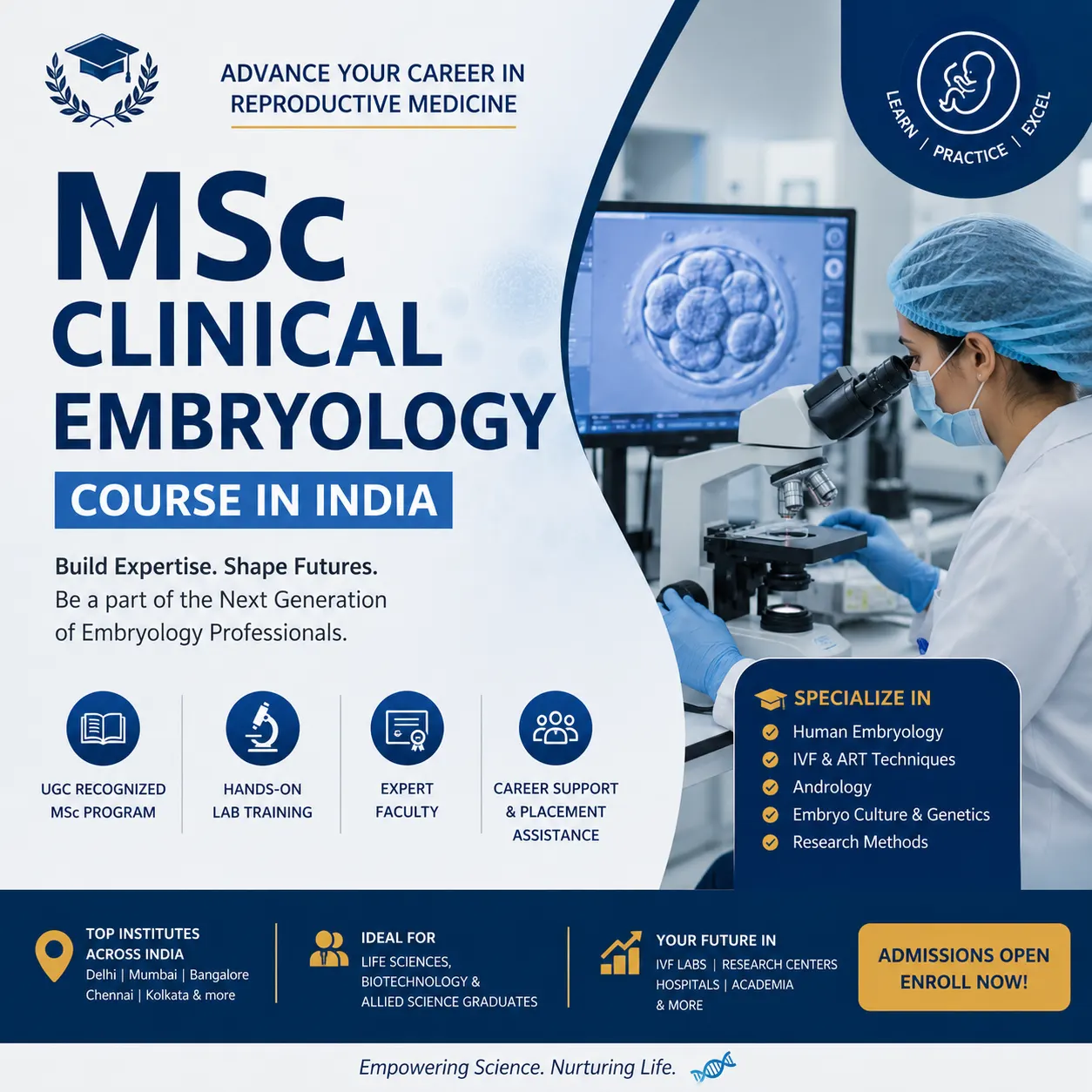
The MSc Clinical Embryology programme focuses on reproductive biology and advanced embryology practices used in assisted reproductive technology laboratories. It introduces students to the scientific principles behind fertilization, embryo development, laboratory safety, quality management, and ethical practices.
Through academic learning and laboratory exposure, students gain a comprehensive understanding of procedures commonly performed in IVF settings while developing analytical and professional skills relevant to reproductive healthcare.
Who Can Apply?
The programme is suitable for graduates who have completed qualifying degrees in biological, medical, or allied health sciences according to the applicable admission requirements.
- Bachelor's degree in Life Sciences
- Biotechnology graduates
- Microbiology graduates
- Zoology graduates
- Genetics graduates
- Biochemistry graduates
- Medical laboratory science graduates
- Pharmacy graduates (where eligible)
- Medical science graduates meeting university criteria
Applicants should review the latest eligibility guidelines before submitting their application.
What Students Learn During the Programme
The curriculum is designed to build both theoretical understanding and laboratory competence. Students are introduced to the principles that support reproductive medicine and embryology practice.
Core Academic Areas
- Human reproductive biology
- Clinical embryology fundamentals
- Gamete biology
- Embryo development
- Embryo culture techniques
- Cryopreservation principles
- Laboratory quality assurance
- IVF laboratory management
- Medical ethics and patient confidentiality
- Research methodology and scientific documentation
The programme aims to develop scientific thinking, laboratory discipline, and professional responsibility while preparing students for future opportunities in reproductive healthcare.
Learning Outcomes
Upon successful completion of the programme, students are expected to develop a strong academic foundation along with practical laboratory awareness.
- Understand reproductive physiology and embryology.
- Interpret laboratory procedures used in assisted reproduction.
- Follow laboratory safety and quality protocols.
- Apply scientific reasoning to embryology-related challenges.
- Develop research and analytical skills.
- Strengthen communication and professional ethics.
Why Choose EmbryoPath?
EmbryoPath is committed to delivering quality education in clinical embryology through an academically structured learning environment. In collaboration with GD Goenka University, the programme is designed to help students build knowledge that aligns with current developments in reproductive science.
- Academic collaboration with GD Goenka University.
- Industry-relevant curriculum.
- Experienced faculty guidance.
- Laboratory-oriented academic learning.
- Focus on ethical and scientific practices.
- Student-centric learning approach.
- Career guidance and academic support.
- Emphasis on professional development.
The institute encourages continuous learning and prepares students for evolving opportunities within reproductive medicine and embryology.
Career Scope After This Course
Clinical embryology continues to grow alongside advancements in assisted reproductive technology. Graduates with specialised education may explore opportunities across healthcare, laboratory science, education, and research.
- Clinical Embryology Laboratories
- IVF Centres
- Fertility Clinics
- Research Institutions
- Medical Diagnostic Laboratories
- Academic Institutions
- Biotechnology Organisations
- Healthcare Research Projects
- Reproductive Health Centres
- Laboratory Quality Management
Career opportunities may vary depending on qualifications, skills, experience, employer requirements, and applicable regulations.
Admission Guidance
Students interested in applying should begin preparations early instead of waiting until the final stage of admissions. Monitoring the MSc Clinical Embryology Admission Last Date allows applicants to complete each step of the process comfortably.
Typical admission preparation includes:
- Review eligibility requirements.
- Complete the application form accurately.
- Keep academic documents ready.
- Submit required supporting documents.
- Follow communication from the admission team.
- Complete admission formalities within the specified timeline.
Early applications also provide additional time for document verification and academic planning before the commencement of classes.
Why Early Application is Recommended
Applying before the admission deadline offers several practical benefits. Students have sufficient time to organise documentation, understand the admission process, communicate with counsellors, and prepare financially and academically for postgraduate education.
Early applicants can also make informed decisions regarding accommodation, travel, educational planning, and future career preparation without unnecessary last-minute stress.
Apply for Admission Guidance
If you are planning to pursue postgraduate education in clinical embryology, do not wait until the final admission deadline. Contact the admission guidance team at EmbryoPath to understand eligibility requirements, documentation, application procedures, and important admission updates. Beginning your application early helps ensure a smoother admission experience and allows you to prepare confidently for a rewarding academic journey in reproductive science.
Frequently Asked Questions
1. What is the importance of the MSc Clinical Embryology Admission Last Date?
The admission last date marks the final opportunity to submit your application for the academic session. Applying before the deadline helps ensure that your documents are processed on time and reduces the possibility of missing important admission-related communications. Students should always verify the latest schedule through official admission channels.
2. Who is eligible to apply for the MSc Clinical Embryology programme?
The programme is generally intended for graduates from life sciences, biological sciences, biotechnology, microbiology, zoology, genetics, biochemistry, medical laboratory sciences, and other eligible academic backgrounds. Applicants should carefully review the latest eligibility criteria published for the admission cycle before submitting their applications.
3. Why should I choose EmbryoPath for Clinical Embryology education?
EmbryoPath offers an academically structured learning environment in collaboration with GD Goenka University. The programme focuses on scientific knowledge, laboratory-oriented education, professional ethics, and career development. Students benefit from experienced academic guidance and a curriculum designed to support learning in reproductive science and embryology.
4. What career opportunities are available after completing this programme?
Graduates may explore opportunities in IVF laboratories, fertility centres, reproductive healthcare institutions, research organisations, biotechnology companies, academic institutions, and laboratory quality management roles. Career progression depends on academic performance, practical skills, employer expectations, and relevant professional experience gained after graduation.
5. What documents are generally required during admission?
Applicants are typically expected to provide educational certificates, mark sheets, identity proof, passport-sized photographs, and any additional documents requested during the admission process. The exact document requirements may vary depending on university guidelines and the admission cycle, so students should review official instructions carefully.
6. How can I stay updated about the admission schedule?
The most reliable approach is to remain in contact with the admission team and regularly monitor official announcements from EmbryoPath. Students should avoid waiting until the final deadline and instead begin preparations early to ensure they have adequate time for document submission, verification, and completion of all admission formalities.



















 MSc Clinical Embryology