
MSc Clinical Embryology Colleges | EmbryoPath
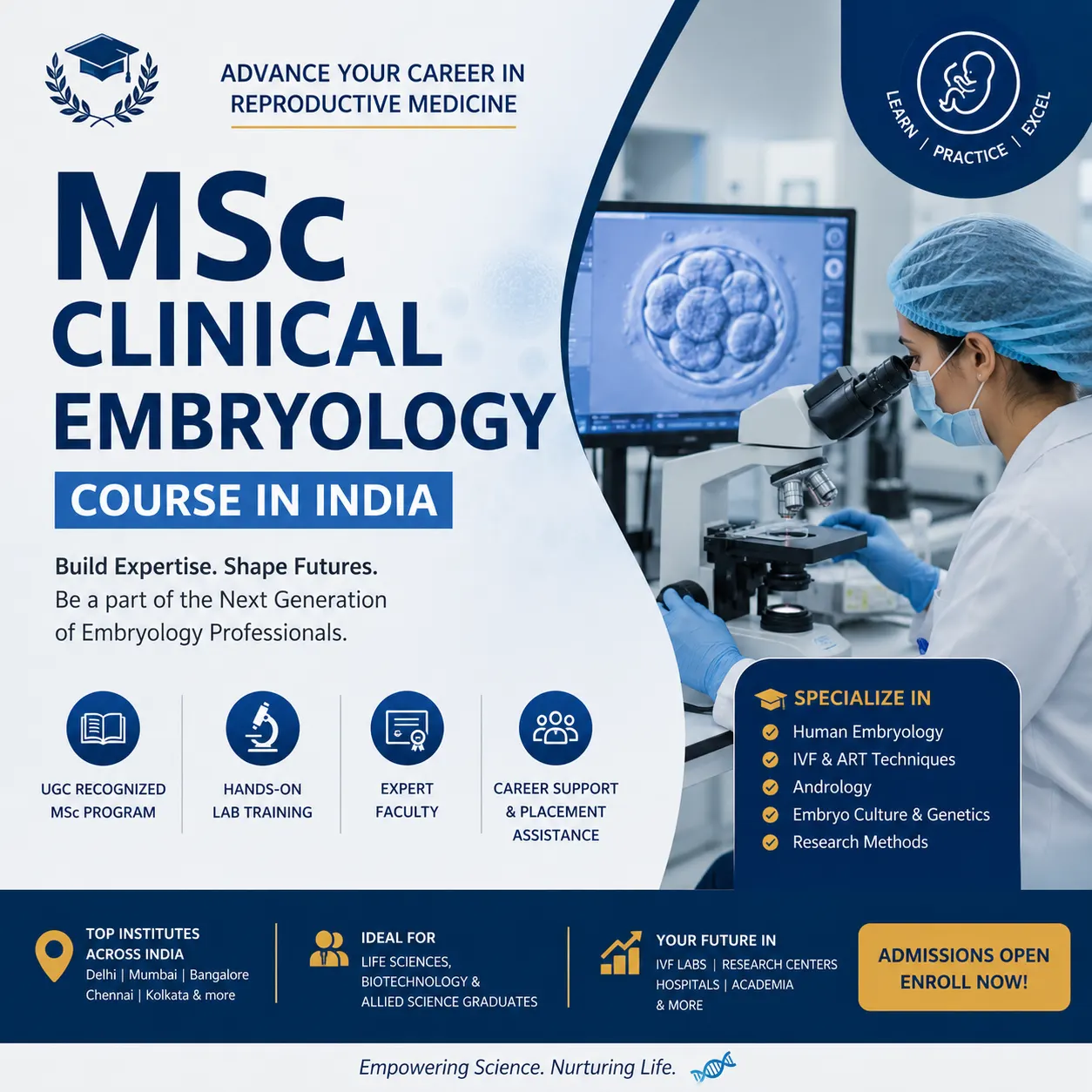
Choosing the right institute among MSc Clinical Embryology Colleges is one of the most important decisions for students planning a career in reproductive science and clinical embryology laboratory education. As clinical embryology and reproductive science continue to advance across India, the demand for trained clinical embryology professionals continues to grow steadily. EmbryoPath, in academic collaboration with GD Goenka University, offers a structured MSc Clinical Embryology program designed to help students build strong theoretical knowledge alongside practical laboratory skills.
This guide explains what to look for in MSc Clinical Embryology Colleges, who is eligible to apply, what students can expect to learn, and how this qualification can shape a rewarding career in clinical embryology, reproductive science, and advanced laboratory environments.
Why MSc Clinical Embryology Is a Growing Field of Study
Clinical embryology and reproductive science have become important areas of academic and laboratory-based learning in India. This growth has created a consistent need for qualified professionals who understand laboratory protocols, reproductive biology, embryology principles, specimen handling concepts, quality systems, and professional laboratory practices. An MSc in Clinical Embryology equips students with the scientific foundation and practical laboratory training required to work confidently in clinical embryology laboratories, research settings, healthcare institutions, and academic environments.
Who Should Consider This Course
MSc Clinical Embryology is designed for students who have a genuine interest in reproductive biology and laboratory-based scientific work. It is particularly suitable for:
- Biology or life sciences graduates seeking specialization in reproductive science
- Medical science students interested in clinical laboratory careers
- Zoology, biotechnology, or microbiology graduates
- Students aiming to work in clinical embryology laboratories, research organizations, or diagnostic labs
- Graduates exploring long-term career opportunities in embryology and andrology
Eligibility Criteria for MSc Clinical Embryology
While specific eligibility requirements may vary slightly between institutions, most MSc Clinical Embryology Colleges, including programs offered through EmbryoPath and GD Goenka University, generally require:
- A bachelor's degree in Life Sciences, Biology, Zoology, Biotechnology, Microbiology, or a related field
- Minimum aggregate marks as specified by the affiliating university
- Basic understanding of human anatomy, physiology, and cell biology (preferred but not always mandatory)
Students are encouraged to check current admission guidelines, as academic requirements can be updated periodically by the university.
What Students Learn During the Course
The MSc Clinical Embryology curriculum is designed to combine classroom learning with practical laboratory training. Core learning areas typically include:
- Fundamentals of reproductive biology and human embryology
- Laboratory assessment and preparation techniques
- Embryo development principles and laboratory observation methods
- Basics of cryobiology and preservation concepts in laboratory education
- Andrology and laboratory analysis concepts
- Quality control and laboratory safety standards in advanced laboratory settings
- Ethical and regulatory aspects of reproductive science education in India
This blend of theory and practical exposure helps students develop the technical confidence needed to work in professional laboratory environments.
Why Choose EmbryoPath?
EmbryoPath, in academic collaboration with GD Goenka University, focuses on delivering structured, industry-relevant education for students pursuing MSc Clinical Embryology. The program is designed with a strong emphasis on practical skill-building, mentorship, and career readiness. Students benefit from a curriculum that reflects current laboratory practices used in clinical embryology and reproductive science environments, along with academic support to help them understand complex embryological concepts clearly.
EmbryoPath aims to bridge the gap between classroom learning and real-world laboratory application, helping students feel prepared as they enter the professional field of reproductive science.
Career Scope After This Course
Graduates of MSc Clinical Embryology programs can explore a range of career paths within the healthcare, research, education, and life sciences sector, including:
- Clinical Embryology Professional in advanced laboratory environments
- Andrology Laboratory Technician
- Reproductive Science Researcher
- Laboratory Quality Analyst
- Academic or teaching roles in embryology-related programs
As clinical embryology and reproductive science education continue to grow across urban and semi-urban India, opportunities in this field are expected to expand further, particularly for candidates with strong practical training and a recognized academic qualification.
Admission Guidance
Selecting the right institute among MSc Clinical Embryology Colleges requires careful evaluation of curriculum quality, practical training exposure, faculty expertise, and academic affiliation. Prospective students should review course structure, eligibility criteria, and available support services before applying.
EmbryoPath assists interested candidates by providing clear information about the admission process, academic requirements, and program structure under its collaboration with GD Goenka University. This guidance helps students make informed decisions based on their academic background and long-term career goals.
Apply for Admission Guidance
If you are exploring MSc Clinical Embryology Colleges and want to understand your eligibility, course details, or admission process, EmbryoPath is here to help. Connect with our academic guidance team to get accurate, updated information about the program offered in collaboration with GD Goenka University and take the next step toward a career in clinical embryology.
Frequently Asked Questions
What is the duration of the MSc Clinical Embryology program?
The MSc Clinical Embryology program typically spans two years, divided into semesters that combine theoretical coursework with practical laboratory training. The exact structure may vary slightly depending on the affiliating university's academic calendar. Students should confirm detailed semester-wise information during the admission process to plan their studies effectively and understand how theory and practical training are distributed throughout the course.
Is a biology background mandatory for admission?
Most MSc Clinical Embryology Colleges require candidates to hold a bachelor's degree in Life Sciences, Biology, Zoology, Biotechnology, or a closely related field. A strong foundational understanding of biological sciences helps students grasp embryology concepts more easily. Candidates from other science backgrounds should verify specific eligibility requirements with the institute, as some flexibility may exist depending on university guidelines and prior academic coursework.
Does EmbryoPath provide practical laboratory training?
Yes, the program is designed to include practical laboratory components alongside academic instruction. Practical training helps students understand professional laboratory workflows, documentation practices, quality systems, equipment handling principles, and clinical embryology laboratory concepts. This practical exposure, combined with theoretical learning under the EmbryoPath and GD Goenka University collaboration, aims to prepare students for the academic and professional demands of reproductive science environments.
What career opportunities are available after completing this course?
Graduates can pursue roles such as clinical embryology professional, andrology laboratory technician, laboratory quality analyst, or reproductive science researcher within clinical embryology laboratories, research organizations, healthcare institutions, diagnostic laboratories, and academic settings. Some graduates also explore academic or teaching positions related to embryology. Candidates with a recognized MSc qualification and practical training may be well-positioned for entry-level laboratory and research-oriented roles.
How is GD Goenka University involved in this program?
EmbryoPath operates in academic collaboration with GD Goenka University, which supports the academic framework and structure of the MSc Clinical Embryology program. This collaboration helps ensure that the curriculum aligns with recognized educational standards. Students interested in specific accreditation or affiliation details are encouraged to confirm current information directly through the official admission guidance process before applying.
How can I get admission guidance for this course?
Students interested in MSc Clinical Embryology Colleges can reach out to EmbryoPath for detailed admission guidance, including eligibility criteria, course structure, and application procedures. The guidance team helps clarify academic requirements based on the applicant's educational background, ensuring candidates have accurate information before making a decision about pursuing this specialized program under the GD Goenka University collaboration.





















 MSc Clinical Embryology