MSc Clinical Embryology Course with Placement
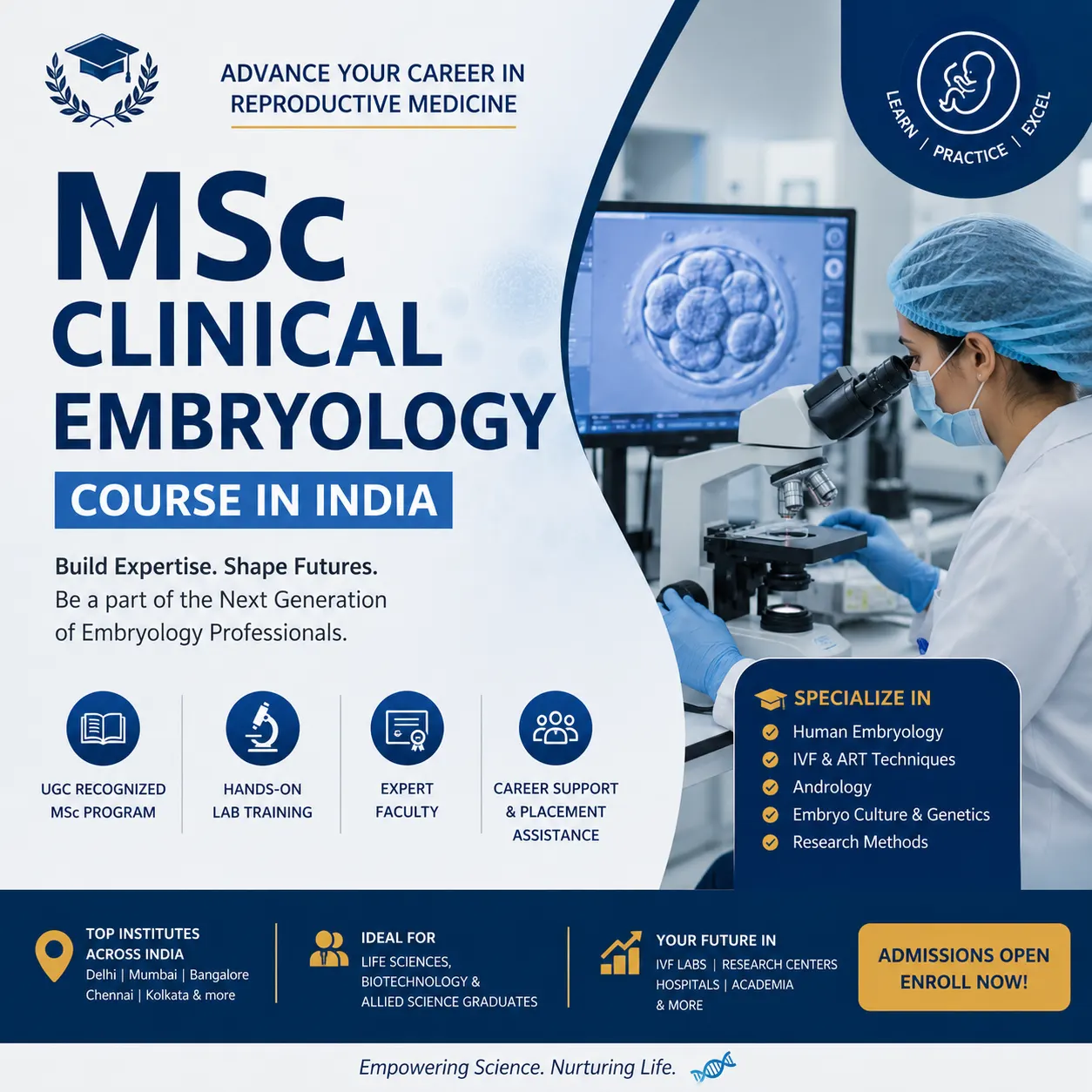
The MSc Clinical Embryology Course with Placement is an excellent choice for graduates who wish to build a rewarding career in clinical embryology, reproductive science, and laboratory-based education. As clinical embryology and reproductive science continue to advance across India, there is a growing demand for well-trained clinical embryology professionals who possess both scientific knowledge and practical laboratory competence.
EmbryoPath, in academic collaboration with GD Goenka University, offers a professionally designed postgraduate program that combines academic excellence with extensive practical learning. Students benefit from industry-oriented education, laboratory exposure, experienced faculty, and structured placement guidance that helps them prepare for employment opportunities in modern clinical embryology laboratories, research organizations, healthcare institutions, and academic environments.
Why Choose an MSc Clinical Embryology Course?
Clinical embryology is a specialized field of reproductive science that focuses on laboratory-based scientific processes, embryology principles, quality systems, documentation, cryobiology concepts, and professional laboratory practices. This program enables students to understand both the scientific principles and practical applications required in contemporary clinical embryology laboratories.
As India's reproductive science and healthcare education sector continues to expand, professionally trained clinical embryology professionals are becoming valuable members of multidisciplinary academic, laboratory, and research environments. A structured master's degree helps students develop technical expertise, ethical awareness, laboratory management skills, and scientific thinking required in this evolving discipline.
Who Can Apply?
The program is designed for graduates who have an educational background in biological or medical sciences and wish to pursue specialization in reproductive science.
- B.Sc. in Life Sciences
- B.Sc. Biotechnology
- B.Sc. Microbiology
- B.Sc. Zoology
- B.Sc. Genetics
- B.Pharm graduates
- B.Sc. Nursing graduates (subject to eligibility norms)
- Medical and allied health science graduates
- Other eligible life science graduates as per university guidelines
Applicants should always verify the latest admission eligibility requirements before applying.
What Students Learn During the Program
The curriculum integrates classroom education with laboratory-based practical learning, ensuring students develop theoretical understanding alongside technical competence.
Core Academic Subjects
- Human Reproductive Biology
- Clinical Embryology
- Gamete Biology
- Embryo Development
- Reproductive Endocrinology
- Genetics and Molecular Biology
- Research Methodology
- Biostatistics
- Laboratory Quality Management
- Bioethics in Reproductive Science
Practical Laboratory Exposure
- Clinical embryology laboratory orientation
- Microscope handling
- Laboratory analysis techniques
- Laboratory specimen preparation concepts
- Embryology laboratory concepts
- Cryobiology and preservation concepts
- Laboratory documentation
- Quality control practices
- Laboratory safety protocols
- Professional reporting standards
Learning Outcomes
Upon successful completion of the program, students are expected to develop knowledge and practical competencies required for professional growth within clinical embryology and reproductive science laboratories.
- Strong understanding of reproductive biology
- Knowledge of clinical embryology laboratory workflows
- Laboratory quality assurance awareness
- Scientific problem-solving skills
- Research and analytical capabilities
- Professional ethics and confidentiality awareness
- Team-based laboratory communication
- Documentation and laboratory record management
Industry-Oriented Practical Training
One of the strengths of this postgraduate program is its emphasis on practical education. Students receive exposure to laboratory environments that help bridge the gap between academic learning and professional practice. Practical sessions enable learners to observe laboratory workflows, understand equipment usage, and appreciate the importance of quality standards followed in advanced clinical laboratory settings.
This practical approach supports confidence building while preparing students for future professional responsibilities in clinical embryology laboratory settings.
Placement Support for Career Development
The program includes placement guidance designed to assist students in preparing for employment opportunities after completing their degree. Placement support may include career counselling, interview preparation, resume guidance, professional communication skills, and industry interaction.
Career outcomes depend upon individual academic performance, practical competence, employer requirements, interview performance, geographical preferences, and prevailing recruitment opportunities.
Why Choose EmbryoPath?
EmbryoPath has established itself as a dedicated institute focused on clinical embryology education. In academic collaboration with GD Goenka University, the institute aims to provide students with quality education that combines scientific knowledge, laboratory learning, academic mentoring, and career-oriented guidance.
- Academic collaboration with GD Goenka University
- Specialized focus on clinical embryology education
- Experienced academic faculty
- Modern laboratory learning environment
- Industry-relevant curriculum
- Hands-on practical exposure
- Research-oriented learning approach
- Professional placement guidance
- Student-focused mentoring
- Ethics-driven educational philosophy
Career Scope After This Course
The clinical embryology and reproductive science education sector in India continues to grow, creating opportunities for trained professionals with specialized knowledge in reproductive science and embryology. Graduates may pursue careers across private healthcare institutions, clinical embryology laboratories, research organizations, and academic settings.
- Clinical Embryology Professional
- Clinical Embryology Laboratory Professional
- Clinical Laboratory Executive
- Embryology Research Associate
- Laboratory Quality Coordinator
- Academic Tutor in Reproductive Sciences
- Clinical Research Professional
- Scientific Support Executive
- Laboratory Documentation Specialist
- Healthcare Education Professional
Graduates may also pursue higher academic qualifications, research opportunities, or specialized professional certifications to further enhance their careers.
Skills Developed During the Program
- Scientific reasoning
- Laboratory precision
- Critical thinking
- Professional communication
- Quality management awareness
- Ethical decision-making
- Research interpretation
- Documentation accuracy
- Analytical ability
- Professional teamwork
Admission Guidance
Students interested in pursuing the MSc Clinical Embryology Course with Placement should begin the admission process by reviewing eligibility criteria, preparing academic documents, and completing the application process within the specified admission schedule.
The admissions team at EmbryoPath provides guidance regarding program details, eligibility requirements, documentation, academic counselling, and application procedures, enabling students and parents to make informed educational decisions.
Apply for Admission Guidance
If you aspire to build a professional career in reproductive science and clinical embryology laboratory practice, this postgraduate program offers a strong academic foundation supported by practical learning and placement guidance. EmbryoPath, in collaboration with GD Goenka University, welcomes motivated graduates who are committed to developing specialized expertise in clinical embryology. Contact the admissions team today to learn about eligibility, admission schedules, curriculum details, and career opportunities.
Frequently Asked Questions
1. What is an MSc Clinical Embryology Course with Placement?
An MSc Clinical Embryology Course with Placement is a postgraduate program that combines advanced academic education in reproductive science with practical laboratory learning and structured career guidance. Students gain knowledge of clinical embryology, laboratory procedures, research methods, quality systems, and professional practices while receiving support that helps them prepare for employment opportunities after graduation.
2. Who is eligible to apply for this program?
The course is generally suitable for graduates from life sciences, biotechnology, microbiology, zoology, genetics, pharmacy, medical sciences, and other eligible allied disciplines. Applicants should review the latest eligibility requirements issued by the university and admissions department before submitting their applications to ensure they meet the academic criteria.
3. Does the course include practical laboratory training?
Yes. Practical laboratory exposure forms an important part of the curriculum. Students receive supervised learning experiences that help them understand clinical embryology laboratory workflows, laboratory quality practices, documentation standards, equipment handling, and professional laboratory procedures, complementing their theoretical education throughout the postgraduate program.
4. What career opportunities are available after completing the course?
Graduates may explore opportunities in clinical embryology laboratories, research organizations, healthcare institutions, laboratory management, clinical research, and academic environments. Career progression depends upon qualifications, professional competence, practical experience, employer expectations, and ongoing professional development after graduation.
5. Why should students choose EmbryoPath for this course?
EmbryoPath offers specialized education in clinical embryology with academic collaboration from GD Goenka University. The institute focuses on combining theoretical education, practical laboratory exposure, experienced faculty guidance, research-oriented learning, ethical professional practices, and placement support to help students prepare for careers in clinical embryology and reproductive science.
6. How can students apply for admission?
Interested candidates can begin by contacting the admissions team for detailed guidance regarding eligibility, application procedures, documentation requirements, admission timelines, and program information. Early application allows students sufficient time to complete the admission process and prepare for the upcoming academic session with confidence.




















 MSc Clinical Embryology